


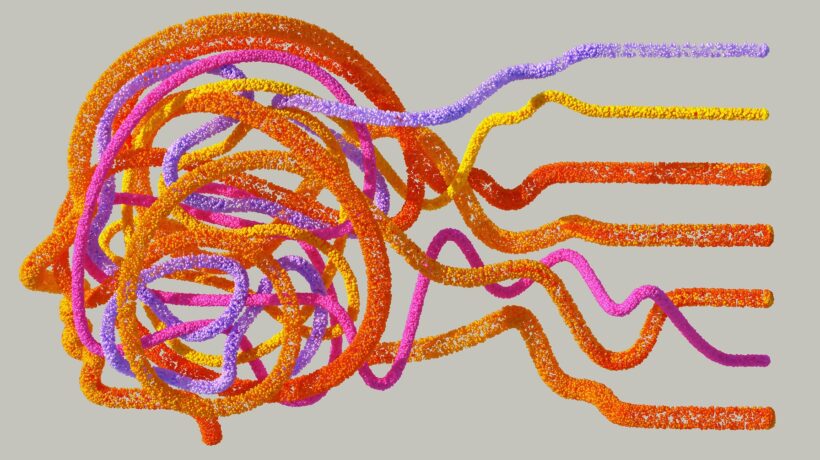
AI in Students’ Creative Development: From Generating Stories to Composing Music
In the world of education, art and creativity have always been seen as the last, inviolable bastion of the human soul. Lessons in Polish, art or music are spaces where we shape sensitivity, empathy and the ability to express ourselves in an original way. That’s why, when artificial intelligence entered the scene, capable of painting pictures, composing melodies and writing poems in the blink of an eye, many of us woke up with fear. Is this the end of authentic creativity? Can an algorithm, cold and logical by nature, replace the spark of human genius?
This fear, although understandable, stems from a misperception of the role of technology. Artificial intelligence is not the new artist that is supposed to replace us. It is the most advanced and versatile toolkit humanity has ever created – a digital brush, an infinite library of sheet music, and a smart pen. In this article, which is an extensive excerpt from my author’s guide “Artificial Intelligence for Schools and Teachers”, I invite you to abandon your fears and discover how artificial intelligence in education can become a powerful catalyst for creativity. We will explore how this digital partner helps students break through creative blocks, explore previously unknown paths and develop their imagination in ways that were impossible until recently.
The Art of Dialogue with a Machine: Creative Writing with ChatGPT in a New Version
- AI in Students' Creative Development: From Generating Stories to Composing Music
- The Art of Dialogue with a Machine: Creative Writing with ChatGPT in a New Version
- AI Story Generator – Not a Ready-Made Machine, but an Inspiration Engine
- Writing poems with AI – Unlocking the potential of Poetic Language
- AI in art class – From digital inspiration to tangible work
- How does AI create images? The secret of digital sleep
- Practical designs that unleash visual creativity
- AI-Generated Music – A Symphony for Everyone, Regardless of Skill
- Get ready for a creative future today
- Assessing creativity in the AI era
- New grading rubric: What matters more than the final oPicture?
- AI as an Inclusive Tool: Unleashing Every Student's Creativity
- Breaking barriers: Supporting students with dysgraphia and motor difficulties
- A Voice for Introverts: AI as a Safe Space for Experimentation
- Beyond the Boundaries of the Subject – Interdisciplinary Creative Projects with AI
September 20, 2026
Humanities subjects, especially the Polish language, were the first to feel the influence of AI. However, instead of seeing this as a threat to writing skills, we can treat AI as an infinitely patient partner for literary workshops, available 24/7 for every student.
AI Story Generator – Not a Ready-Made Machine, but an Inspiration Engine
The biggest mistake is using an AI story generator to create finished works. It’s like using an advanced telescope to look at the tips of your own shoes. The real value lies in the interaction and use of AI to stimulate the thought process.
- World-building workshop: Instead of writing an entire story, a student can use AI to build a rich background for their story. Prompt: “Create a detailed description of a fantastic city called Aethelgard. Describe its architecture, which combines nature with technology, its social system, and its most important legend. Focus on sensual details: scents, sounds and colours.” With such a rich, generated world, the student can easily embed their own characters and plot in it, making storytelling with AI an extremely engaging process.
- Deepening the psychology of the character: The student has created a hero, but he is flat and one-dimensional. He can start a “therapy session” for his character with the AI. Prompt: “Take on the role of a psychologist. My character is a young knight who is afraid of failure. Ask him five questions that will help me understand the source of his fear and inner conflicts.” This process forces the young author to reflect deeply on the motivations and psychology of the characters, which is crucial for creating a believable narrative.
Writing poems with AI – Unlocking the potential of Poetic Language
Poetry is a condensation of emotions and a mastery of words. Writing poems with AI is not about generating rhymes, but about using a machine to analyze and explore language, which allows students to better understand its mechanisms.
- Master of Poetic Forms: A student who wants to understand what a sonnet is can not only ask for a definition, but enter an interactive workshop. Prompt: “I want to write a sonnet about autumn. Help me by guiding me step by step. First, let’s create the first, four-line stanza together, taking care of the number of syllables and the arrangement of rhymes. Then we’ll move on to the next one.” The AI becomes a patient teacher who demonstrates the principles of form in practice.
- Style Exploration: How would Julian Tuwim write if he were alive today and used a smartphone? Students can have an AI perform a fascinating exercise. Prompt: “Write a short poem about social media in a poetic style characteristic of the Skamandrites, using dynamism, colloquialisms and fascination with modernity.” Analyzing the result, discussing what the AI “understood” from the style and where it made mistakes, is an extremely developing lesson in the history of literature.
AI in art class – From digital inspiration to tangible work
Image generators like Midjourney have revolutionized the world of graphics. The introduction of Midjourney in education opens the door for art teachers to a world in which the technical proficiency of the student ceases to be a limitation, and only his imagination becomes a limitation.
How does AI create images? The secret of digital sleep
To use these tools effectively, we need to “disenchant” them. This can be explained to students in a simple way: imagine an artist who has seen every painting, photo and drawing that has ever been created in his life. He learned how millions of different words (“dragon”, “forest”, “sadness”, “neon light”) connect with shapes, colors and styles. When we give him a new command – “cyberpunk dragon in a neon forest” – he doesn’t glue the finished pieces together. He “dreams” a completely new image, based on all his visual knowledge. Our prompt is like a request addressed to this dreaming artist. The more precisely we describe our dream, the more interesting the picture we get.
Practical designs that unleash visual creativity
- Conceptual Design and Storyboarding: The students are tasked with creating a comic book. Before they draw the first line, they can use AI to create a professional “wall of inspiration.”
Prompts: “Create a detective character design in noir style, movie lighting.”, “Generate the look of a dingy detective office in the 40s, a view from behind a desk.”, “Create a dynamic storyboard consisting of 4 frames, depicting a car chase scene in the rain, comic book drawing style.” AI does work here reserved for professional concept artists, allowing students to focus on the narrative and the final performance. - Remix of Culture and Art: This activity teaches intertextual thinking.
Prompt: “Create a painting of Star Wars characters during the Last Supper, painted in the style of Leonardo da Vinci.” or “What would a smartphone look like if it was designed by Antonio Gaudi?” Such clashes of styles and conventions develop creativity, a sense of humor and at the same time require knowledge of both remixed works.
AI-Generated Music – A Symphony for Everyone, Regardless of Skill
AI-generated music is a field that is developing extremely dynamically. For many students who love music but do not have the ability to play an instrument, the barrier to entering the world of composition has been insurmountable so far. AI is destroying it.
- From Emotion to Sound: A student who wants to create background music for his film about ecology does not need to know music theory. It can describe emotions.
Prompt: “Create a 90-second background music. Start with a calm, melancholic melody played on the piano, symbolizing the beauty of nature. Inside, add unsettling, dissonant synth sounds to illustrate the danger. End with a solemn, hopeful theme played by a string orchestra.” AI becomes a translator from the language of emotions to the language of music. - Interactive music theory lesson: A music teacher can use AI to illustrate complex concepts. Instead of explaining what the Doric scale is, he can ask the AI: “Create a short melody in C major. Now play the same melody, but on the C-Doric scale.” Hearing the difference is worth more than a thousand words of definition.
Get ready for a creative future today
So we can clearly see that artificial intelligence in schools is not a technological whim, but a fundamental change that redefines the concept of creativity and the role of teachers. AI becomes a powerful partner in the creative process – an inexhaustible source of inspiration, a versatile workshop tool and a patient mentor. Our task, as educators, is to teach young people how to have a wise, ethical and inspiring dialogue with this partner.
Mastering this art, learning the best tools, and above all, understanding how to weave these new methods into your daily classroom practice can seem overwhelming. The amount of information and the pace of change are enormous.
That’s why I’ve created a comprehensive guide. The knowledge contained in this article is just an invitation to a much deeper and more structured journey. To feel confident and competent in this new reality, every teacher wishing to develop students’ creativity should take an interest in our comprehensive guide “Artificial Intelligence for Schools and Teachers”.
Don’t wait for technology to get ahead of you. Equip yourself with the knowledge that will allow you to become the leader of the creative revolution in your school. Invest in your development and discover how to unleash the full creative potential of your students in the era of AI.
Assessing creativity in the AI era
One of the biggest challenges that AI poses to teachers in the context of art subjects is the issue of grade. If a student could generate a visually stunning image in a matter of minutes, then what are we really evaluating? Traditional evaluation focused on technical craftsmanship, precision of brushstroke or hours spent on work is losing its importance. We need to make a fundamental shift and start evaluating the thought process, the artistic intention and the dialogue that the student has established with technology.
New grading rubric: What matters more than the final oPicture?
A fair and motivating evaluation of creative work with AI must be based on new criteria. Instead of evaluating only the aesthetics of the final product, we should take into account the entire creative process that preceded it. Here are the pillars of such a modern grading rubric:
- Prompt Engineering: We judge not the image, but the thought that created it. Did the student use a simple “castle in the clouds” command, or did they create a complex, multi-element prompt that precisely describes the style, composition, lighting, mood and details? The complexity and originality of the prompt become a measurable indicator of a student’s commitment and artistic vision.
- Iterativeness and Improvement Process: Real work with AI rarely ends with the first image generated. We assess whether the student was able to work iteratively – generate variants, modify commands, experiment until they achieved the intended effect. Asking for a few earlier, rejected versions to be included in the work, along with a brief justification of why they were rejected, is a great way to evaluate the process.
- Critical Analysis and Selection: AI often generates images with errors (e.g., a character with six fingers). We assess the student’s ability to critically analyze the results, choose the best proposal, and, importantly, be aware of the limitations of technology.
- Own Contribution and “Human Touch”: Did the student treat the generated image as a basis for further, independent work? Maybe he redrew it using traditional techniques, added his own elements in a graphics program, or used it as inspiration to create a sculpture? We assess how the student has combined the digital world with the analogue world, giving the work a unique, human character.
Creating such a universal column, which can be flexibly adapted to literary, artistic and musical projects, is one of the key tasks of a modern pedagogue. This is such an important issue that I have devoted a separate, extensive chapter in my guide to it, providing ready-made templates and examples. Any teacher who wants to evaluate creativity fairly in the 21st century should be interested in our comprehensive guide “Artificial Intelligence for Schools and Teachers”.
AI as an Inclusive Tool: Unleashing Every Student’s Creativity
Artificial intelligence in education has an extraordinary power to level the playing field. In the creative field, where technical or psychological barriers often prevent many students from fully expressing themselves, AI is becoming a powerful inclusive tool.
Breaking barriers: Supporting students with dysgraphia and motor difficulties
For a student with dysgraphia, the process of writing a short story can be so frustrating that his brilliant plot ideas never make it to paper. By using the speech-to-text feature and creative writing with ChatGPT, they can dictate their stories, focusing on the narrative rather than the mechanical effort of writing. Similarly, a student with fine motor skills who finds precision drawing challenging can use Midjourney in education to visualize their artistic concepts with a wealth of detail that their own hand would never allow them to do. In these cases, AI is not a shortcut, but an assistive technology that enables expression where there was previously a blockage.
A Voice for Introverts: AI as a Safe Space for Experimentation
Not every student has the courage to present their first, shy poem or sketch in the classroom. Fear of evaluation and criticism can effectively inhibit creativity. Artificial intelligence becomes an uncritical, patient partner here. A student can generate dozens of versions of a poem, experiment with the boldest metaphors, or create avant-garde images without feeling that someone is judging their attempts. This safe, private space for “creative fun” builds self-confidence, which will allow him to share his original work with greater courage in the future.
Beyond the Boundaries of the Subject – Interdisciplinary Creative Projects with AI
The greatest power of creativity lies in connecting seemingly distant fields. AI is an ideal tool for this, allowing for the implementation of spectacular interdisciplinary projects that show students that knowledge is a coherent whole.
- A story that comes to life: Instead of writing a paper about life in ancient Rome, students can complete a project in which: a) in a history lesson, they research facts, b) in Polish, using an AI story generator, they write dialogues between fictional inhabitants of Rome, c) and in an art lesson, using AI to create images, they generate hyper-realistic portraits of their characters and visualizations of Roman streets.
- Visualization of the exact sciences: What does the interior of a human cell look like if it were designed by a surrealist artist? What could the cover of the album “The Elements”, inspired by Mendeleev’s board, look like? Assigning students such creative tasks in biology, chemistry, or physics lessons, using AI, helps them memorize and understand abstract concepts by creating strong visual associations.
- Architectural Dreams in Mathematics: After discussing rotating solids, students can be given the task of designing a futuristic building inspired by a cone or cylinder, using AI to create a photorealistic visualization of it. This shows the practical, creative application of abstract mathematical knowledge.
Navigating all these advanced and interdisciplinary scenarios requires the teacher to be fluent in using new tools and to understand their pedagogical potential. It is knowledge that is difficult to acquire on your own through trial and error. That is why a comprehensive guide to AI for education, such as “Artificial Intelligence for Schools and Teachers”, becomes an invaluable support. It includes not only instructions, but entire chapters on ethics, assessment, and designing interdisciplinary lessons that truly engage and develop students on many levels.
It is a compendium of knowledge that relieves the teacher of the burden of independent research and allows you to immediately move on to what is most important – inspiring a new generation of creators.