


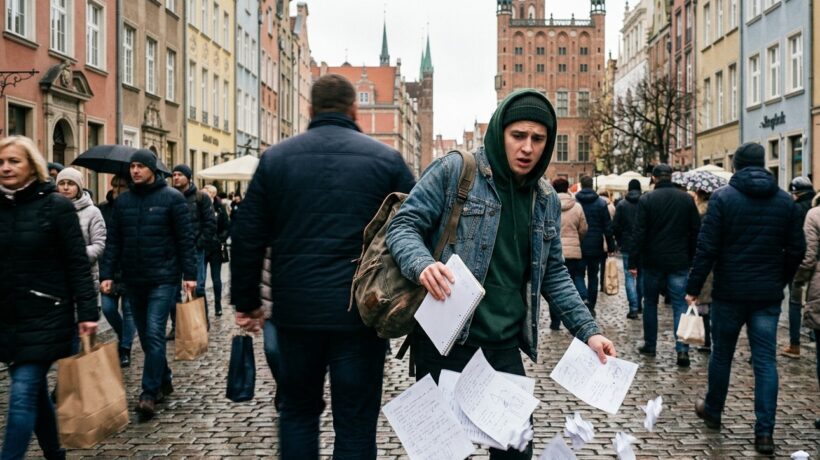
Cons of studying in Gdańsk in 2026/2027: Why do students drop out?
Studying in Gdańsk in 2026/2027 is associated with three main problems: drastically high rental costs (driven up by short-term rentals), a specific, depressive climate in the autumn and winter period, and traffic paralysis resulting from the linear layout of the Tri-City. Although the city tempts with its proximity to beaches and the prestige of universities such as Gdańsk University of Technology or MUG, the average student has to face living prices almost equal to those in Warsaw, while at the same time fighting for space with millions of tourists who make the main academic districts difficult to live in from June to September.
Housing crisis: Gdańsk as a “wage trap”
In 2026 and 2027, the real estate market in Gdańsk reached a critical point. If you are planning to study at the Gdańsk University of Technology (Wrzeszcz) or the University of Gdańsk (Oliwa), you need to be prepared for the fact that your biggest enemy will not be the photo shoot, but the owner of the apartment.
Airbnb-fiction and “Rent until June”
This is the biggest pathology of the Gdańsk market. Owners of apartments in Wrzeszcz, Przymorze or Oliwa are massively applying contracts “only until the end of June“.
- Problem: In July, when you want to stay in the city to earn extra money on internships, the owner puts your bed on Booking.com for tourists for PLN 400 per night.
- Result: Thousands of students go through the “Great Migration” with cardboard boxes every June, looking for anything for two months or returning to their family homes, which makes it impossible to have a stable job and social life.
Prices that hurt
In 2027, renting a single room of a reasonable standard (we are not talking about the communist furniture wall in Żabianka) costs about PLN 1800-2300 plus utilities. Gdańsk, next to Warsaw and Krakow, has become the most expensive city to live in. The relationship between earnings in casual work (gastronomy on Wajdeloty Street or in Forum Gdańsk) and the cost of room is extremely unfavorable here.
The Geography That Divides: The Linear Layout of the Tri-City
September 20, 2026
Gdańsk is not a “centric” city like Poznań or Wrocław. It is a city stretched along one main axis – Grunwaldzka Avenue and Zwycięstwa Avenue.
The Dictatorship of the SKM
If your apartment is not within a 10-minute walk of the Fast Urban Railway (SKM) stop, your life will turn into an eternal wait.
- Problem: Public transport (ZTM Gdańsk) in districts such as Morena, Jasień or Ujeścisko is based on buses, which stand in gigantic traffic jams on Słowackiego Street or Armii Krajowej Avenue during rush hours.
- Real delays: Getting from the cheaper districts of the “South” to the University of Technology on a rainy Tuesday can take 50-70 minutes. At the same time, your friends from Wrzeszcz will have time to eat breakfast and look through their notes.
Night exclusion
Although Wrzeszcz (the area of Wajdeloty Street and Grunwaldzka Avenue) is teeming with life, returning home at night can be a torment. Night buses run rarely, and the prices of transport apps on weekend nights, when tourists besiege the Old Town, can be overwhelming. A ride from the vicinity of the Upland Gate to housing estates such as Lawendowe Wzgórze on Saturday at 2:00 a.m. can cost up to PLN 80-120.
Weather: “Gdańsk Depression” and north wind
This is rarely read about in the recruitment brochures of Gdańsk University of Gdańsk or UG. The weather in Gdansk in 2026 is even more unpredictable due to climate change, but some things remain unchanged.
- Wind: This is not a light breeze. It is a piercing, northerly wind that makes the temperature feel 5-7 degrees lower than the thermometer shows. A walk on Zwycięstwa Avenue between the Gdańsk University of Technology campus and MUG in November is a struggle for survival.
- No sun: From November to March, Gdańsk is sometimes shrouded in steel gray. The humidity of the air (proximity to the sea) makes the cold “get into the bones” and you feel perpetually sleepless.
- The phenomenon of “greyness”: Due to the specific location between the hills and the bay, Gdańsk is often plagued and low clouds, which, in the absence of vitamin D, has a real impact on the mental condition of students (the phenomenon of seasonal depression is statistically more common here than in the south of Polish).
Tourism: You are an intruder in your own city
Gdańsk has ceased to be a city for its inhabitants, and has become a product for tourists. This has measurable negative effects for the student.
Prices in pubs
Forget about cheap food “in the city” in the vicinity of Długi Targ or Mariacka Street. Even in Wrzeszcz, prices in pubs are adapted to the wallets of Scandinavians and Germans. Student “places” are pushed by expensive bistros. The legendary “Bratniak” at the Gdańsk University of Technology or cheap eateries in Oliwa are some of the few bastions of normality, but they also raise prices due to the costs of utilities (GIWK, Energa).
Crowds and noise
The Dominican Fair in August is a nightmare for a student living in the center or in Wrzeszcz. Noise, lack of places in communication, blocked streets. In the summer season, Gdańsk becomes a “museum”, where it is difficult to find the silence needed, for example, to study for retake exams in September.
University-Specific Issues (2026/2027)
Gdańsk University of Technology (Gdańsk University of Technology) – “Concreteosis” and the rat race
In 2026, Gdańsk Tech focuses on international prestige, which often takes place at the expense of an “ordinary” student.
- Problem: A huge emphasis on results while underfunding the teaching staff at a lower level.
- Infrastructure: Despite the beautiful Main Building, many laboratories need to be refreshed, and the university’s IT systems can still fail at key moments of enrolment in subjects.
University of Gdańsk (UG) – Dispersion
Although the main campus in Oliwa is modern, the Faculty of Economics in Sopot or the Faculty of Oceanography in Gdynia force students to constantly travel by SKM.
- Time waste: You spend an average of 1.5 hours a day on trains, which is physically tiring with Gdańsk’s winds and railway delays.
Infrastructural “bottlenecks” and pitfalls of public transport
Although the Gdańsk transport system looks impressive on the maps, in practice 2026/2027 the student is confronted with several critical problems that are silent about advertising folders.
The myth of “fast” access from cheaper districts
The aforementioned linear layout of the city means that the districts located “on the upper terrace” (Jasień, Ujeścisko, Piecki-Migowo) are connected to the center and Wrzeszcz by a few arteries.
- Siedlce interchange: This is where many students coming from the southern districts waste the most time. Transfers from buses to trams (lines 10, 12) can be inappropriate, and the wind on this exposed hill can discourage students from studying as early as 7:30 a.m.
- Bus lanes that are not enough: Even with bus lanes on Słowackiego Street, buses 110 or 126 coming from the vicinity of the airport and Matarnia often get stuck in traffic jams caused by cars entering from the ring road. If you rent a room there tempted by the price of PLN 1200, be prepared for the fact that the back seat of the bus will become your “office”.
PKM vs SKM – Ticket Dualism
Despite years of integration, the ticketing system in Gdańsk is still a labyrinth for new students. PKM (Pomeranian Metropolitan Railway) serves stops such as Gdańsk Niedźwiednik or Gdańsk Strzyża (close to the UG campus).
- Problem: If you only have a ticket for ZTM (trams/buses), you will not get on a train going through the city center. This forces them to buy more expensive metropolitan tickets, which, with rising energy prices in 2027, becomes a noticeable burden on the budget.
Labour market: The paradox of the “glass ceiling” at Olivia Business Centre
Labour market: The paradox of the “glass ceiling” at Olivia Business Centre
Dominance of BPO and SSC
Most of the corporations in Gdańsk’s Oliwa (Alchemia, Olivia Star) are litigation centers. They are looking for people with a fluent foreign language, but they mainly offer repetitive operational work.
- Cons: It is difficult for students of creative or engineering faculties to find ambitious internships. They often end up in “verifying invoices” or customer service, which does not develop their professional competencies, but only allows them to pay for a room.
- Oversaturation of the junior market: Due to the huge number of students at Gdańsk University of Technology and UG, the competition for any “junior” position in 2027 is brutal. There are several hundred candidates for one internship position in companies such as Intel or Amazon (Lufthansa Systems).
The “third place” crisis: Where have student pubs gone?
In Gdańsk, the phenomenon of displacing authentic student culture by tourist-corporate culture is progressing.
Gentrification of Wrzeszcz Dolny
Wajdeloty Street, once a mecca for the alternative, is already fully gentrified in 2026. Small, cheap bars with beer for PLN 8 have been replaced by specialty cafes and restaurants serving dishes at prices unaffordable to the average scholarship holder.
- Result: Students are “pushed” into the kitchens in their apartments or into expensive, commercial zones such as Elektryków Street or 100cznia Street. Although these places have a great climate, their seasonality (they operate mainly in summer) and prices (beer for 22-26 PLN) make them not the foundation of everyday social life.
Access to medical care (MUG paradox)
This is one of the most absurd disadvantages. You live in a city with one of the best medical universities in the country (the Medical University of Gdańsk), and access to a primary care doctor for a student from outside Gdańsk is tragic.
- Overload of student clinics: The clinic at Zwycięstwa Street (often chosen by students) is dramatically overcrowded. The waiting time for an appointment, even in the event of an infection, makes students more likely to use private teleconsultations, which generates further costs.
- Lack of specialists on the National Health Fund: If you need an ophthalmologist or dermatologist, the deadlines in Gdańsk public institutions for 2027 exceed the duration of your bachelor’s studies.
Environmental costs of living on the Baltic Sea
This aspect is not talked about much, and it affects health and the wallet.
Water status and infrastructure of GIWK
Gdańsk water is hard and highly mineralized. Many old pipes in the tenement houses of Wrzeszcz and Oliwa need to be replaced.
- Problem: The costs of water and sewage in Gdańsk are one of the highest in Poland (systematic increases in GIWK). In addition, in the summer, due to tourists, the water pressure in the higher parts of the city (Suchanino, Morena) can drop, which makes everyday functioning difficult.
Cyanobacteria and “concrete” beaches
The promise of “studying on the beach” is verified in July and August (when many students stay for corrections or work).
- Cyanobacteria: Regular bans on swimming in the Bay of Gdańsk are the norm.
- Commercialization of the coastal strip: Przymorze and Brzeźno are so built up with new apartment buildings for rent that getting to the beach is like squeezing through a maze of fences and gates. Authentic contact with nature gives way to commercialism.
Academic specificity: The “old guard” and resistance to change
Despite modern buildings, administrative and mental “concrete” is still strongly held at Gdańsk universities.
- The culture of “the professor is God”: At many faculties of Gdańsk University of Gdańsk Tech and UG, there is still a hierarchical model of relations, in which the student is a petitioner and not a partner. In 2027, when other centers (such as Wrocław or Poznań) focus on a more relational approach, Gdańsk tends to be ossified in this regard.
- Problems with Erasmus: Paradoxically, despite being a “window to the world”, the bureaucracy in settling foreign trips at Gdańsk universities is considered one of the most burdensome in the country.
For whom is Gdansk NOT a good choice?
Gdańsk in 2026/2027 is a city that brutally verifies your financial resources and mental resilience. Opt out of this choice if:
- You are not guaranteed financial support (minimum PLN 4000 per month for the start).
- You do not tolerate the lack of sun, strong wind and high humidity.
- You do not tolerate the lack of sun, strong wind and high humidity.
- You want to live in a modern apartment close to the center for less than 2500 PLN.
- Your main means of transport is supposed to be a bicycle, and you are not in shape to drive up the Gdańsk hills (Morena, Suchanino) every day.
Studying here is a prestige, but it comes at the expense of the daily struggle with logistics and costs, which in 2027 put Gdańsk at the forefront of the most price-unfriendly student cities in this part of Europe.
Frequently asked questions about the disadvantages of studying in Gdansk
Is it really that difficult to find an apartment for the whole year?
Yes, this is the biggest problem of Gdańsk. In 2026, nearly 60% of lease offers in the coastal strip (Brzeźno, Przymorze, Żabianka) are agreements with an end date of 30 June. Owners earn more from tourists in July and August than from students for the entire semester. It is best to start looking for a “year-round” apartment in May or… in December, when the turnover is small. Remember to always demand that the price guarantee be included in the contract – there have been cases of “holiday increases” of 100% to force the student to move out.
How much troublesome is the weather in Gdańsk for someone from the south of Polish?
For a person from Krakow or Wrocław, the lack of “real summer” and specific humidity may be a shock. In Gdańsk, 20 degrees Celsius with a wind from the sea feels like 13 degrees in the mountains. In addition, the so-called “Gdańsk gray” – days without sun – can last for weeks. In 2027, students are massively using phototherapy lamps, which is not a joke, but a real answer to the light deficit. If you don’t like wind and rain falling “horizontally”, Gdańsk will be a difficult place for you.
Is SKM really that bad?
SKM is the fastest transport, but in 2026 the network is undergoing further modernizations. This results in frequent changes in timetables, driving on one track and “ghost trains” that disappear from the boards. During rush hours (8:00 and 16:00), trains are so overcrowded that you may not get inside at the Gdańsk Politechnika stop. The lack of air conditioning in older trains (the so-called EN57 units, which still run as a supplement) is an additional disadvantage during the May heat.
Does casual work in Gdańsk allow you to support yourself without the help of your parents?
In 2027, with the minimum hourly rate and Gdańsk rental costs – this is almost impossible. By working 20 hours a week (part-time), you will earn about PLN 2500-2800 “on hand”. This is enough for a room and modest food, but not for going out, traveling or scientific materials. Most students in Gdansk either work full-time (studying part-time) or benefit from strong financial support from their families. The IT industry gives hope, but the junior market in Gdańsk (near Olivia Business Centre) is currently highly saturated.
Which districts of Gdańsk are the most “dangerous” or unfriendly to students?
Gdansk is generally safe, but some areas are simply uncomfortable. Orunia (especially Dolna) and Nowy Port are still struggling with social problems, although revitalization is progressing. From the student’s point of view, however, the “Southern” districts (Jasień, Łostowice) are the worst – not because of safety, but because of isolation. Living there, you feel like you don’t live in Gdańsk, but in a bedroom near the city, wasting 2 hours a day on commuting.
Is there a problem with smog in Gdańsk if there is a sea?
It is a myth that there is no smog by the sea. In districts with a large number of old tenement houses (Wrzeszcz Dolny, Orunia, Siedlce), the problem of “low emissions” is felt in winter. The specific terrain – the valley between the hills – means that the smoke from the chimneys can “stand” over the city when there is no wind. The proximity of the port and the shipyard adds industrial dust, which can be a problem for allergy sufferers.
Is there “bureaucracy” at universities in Gdańsk?
Gdańsk universities, especially UG and MUG, are famous for their rather rigid bureaucratic structure. Getting anything done in the dean’s office often requires patience. Despite digitization (systems such as USOS), many cases still require a personal visit during the hours that coincide with the lectures. At the Gdańsk University of Technology, the bureaucracy is a bit smaller, but there, on the other hand, the procedures related to exams can be very restrictive.
Studying in Gdańsk in 2026/2027 is a challenge for people with a strong psyche and a stable financial background. The city offers brilliant prospects in the maritime, logistics and IT industries, but in return it demands a high tribute in the form of living costs and struggling with climatic and tourist inconveniences. If you are ready to fight for an apartment every season, the wind always blowing in your eyes and prices straight from the West – Gdańsk will reward you with the incredible energy of the shipyard areas and the diploma of respected universities. However, if you are looking for peace of mind, low cost and stability – consider other academic centers.