


Studying in Gdańsk: halls of residence or a flat? Costs and choices
Contents:
- Studying in the Tricity and choosing where to live
- Halls of residence – is it a good choice for a start?
– Costs of living in halls
– Integration and student life
– Location and proximity to university
– Disadvantages of halls – privacy and noise - Living in the Tricity – taking a step further with renting
– Rental costs and bills
– Independence and comfort of living
– Choice of location and standard
– Disadvantages of renting – costs and formalities - Halls of residence vs a flat – a comparison for students
- How to make a good decision? Key questions
- The Tricity – market specifics for students
- What to choose for university?
The moment you receive confirmation of your acceptance into your dream university in Gdańsk is a time of euphoria, pride, and the beginning of immense excitement. However, lurking just around the corner is one of the first major logistical and life challenges: deciding where to live for the coming years of your academic journey.
Choosing a roof over your head in a new, often unfamiliar city is no trivial matter. It is a strategic decision that will affect not only your budget but also your daily routine, study comfort, social life, and even your sense of security and belonging. Gdańsk, as a major academic hub, primarily offers students two paths: living in a hall of residence, commonly known as ‘halls’, or renting a room or an entire flat on the private market. Each of these options has its undeniable perks, but also potential drawbacks that are worth analysing thoroughly before you make a final decision.
This post aims to guide you through a comprehensive analysis of both solutions. We won’t give you a one-size-fits-all formula, as the ideal choice depends on individual preferences, financial means, and the stage of your studies. Instead, we want to provide you with a solid foundation for an informed choice, presenting the ‘pros’ and ‘cons’ while considering financial and logistical aspects—all within the context of the specific Gdańsk market and student life. We invite you to take a strategic look at the issue of student accommodation in the ‘Pearl of the Baltic.
The world of halls: community, proximity, and economy
For many students, especially those starting their adventure with university, halls of residence seem like a natural and often the most obvious choice. Student houses, managed directly by universities (such as the University of Gdańsk’s student village in Oliwa or the Gdańsk University of Technology complex in Wrzeszcz), are unique microcosms where life is lived intensely, and student energy can be felt at every turn. Let’s consider what speaks in favour of choosing this particular option.
First and foremost, the key argument is the economic factor. Fees for a place in halls are usually significantly lower than the costs of renting even the smallest room in town. This is often a difference of several hundred złoty a month, which is a substantial amount for a student budget. What’s more, the fee for halls typically already includes utility bills (electricity, water, heating, and often internet access), which eliminates the uncertainty associated with fluctuating bills and the need to settle them yourself. By paying a fixed monthly amount, a student gains predictability in their spending, which makes financial planning easier. One must, of course, remember the refundable deposit payable at the start, but its amount is usually much lower than the deposits required on the private market.
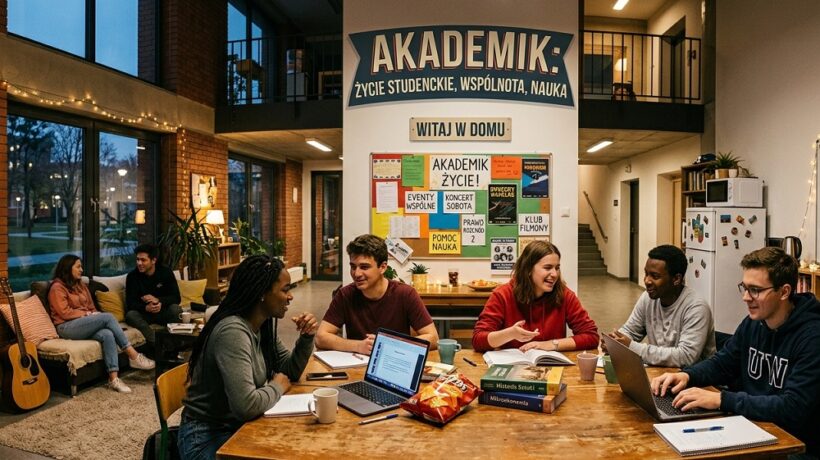
A second, and no less important, asset of halls is the unrivalled opportunity for quick integration and networking. Living under one roof with hundreds of peers, sharing a kitchen, and spending evenings together in rooms or corridors creates a unique atmosphere conducive to making friendships that often last a lifetime. Especially for those coming to Gdańsk from afar without knowing anyone, halls provide an immediate social environment—a sort of ‘landing pad’ that cushions the shock of changing surroundings. Shared problems, such as preparing for exams, cooking dinner with limited resources, or simply the joys and sorrows of student life, build strong bonds and a sense of community.
One cannot overlook the logistical aspect and proximity to the university. Most halls in Gdańsk are located in the direct vicinity of the campuses (like the aforementioned Oliwa for UG or Wrzeszcz for PG) or are very well-connected to them. This means saving both time and money on commuting. Being able to get to classes within a few minutes’ walk is a comfort that is hard to overstate, especially during morning lectures or during intense revision periods before exams. The proximity to libraries, sports facilities, and other university amenities is another practical plus.
The administration of the halls also often handles technical matters. A blown light bulb, a leaking tap, or a problem with the heating—reporting a fault is usually simpler and faster than in a rented flat, where you have to contact the landlord and hope for a quick response. Therefore, halls offer a certain stability and simplified logistics, taking some of the worries of property maintenance off the student’s shoulders.
However, life in a student house is not without its drawbacks, and what is an advantage for some can prove to be a significant challenge for others. The most frequently raised issue is limited privacy and personal space. The standard in most Polish halls is two- or three-person rooms. This means having to share a small space with others, which requires compromise and mutual respect, but can also be a source of conflict regarding tidiness, noise, or lifestyle. Shared bathrooms and kitchens in the corridors, although increasingly being replaced by clusters with their own sanitary facilities for a few rooms, are still common and, for many people, represent a barrier in terms of comfort and hygiene.
September 20, 2026
The intensive social life also brings with it the problem of noise and potential difficulties with concentration. Halls of residence are rarely an oasis of calm. Parties, loud conversations in the corridors, music drifting in from neighbouring rooms—this is all part of the student reality, which can make studying difficult, especially for those who need peace and quiet to focus. Although there are regulations regarding quiet hours, their enforcement can vary.
Residents of halls must also be prepared for certain restrictions and regulations. These may concern visiting hours, the possibility of guests staying overnight, carrying out minor renovations, or even owning certain household appliances in the rooms. Although modern halls are much more liberal than they used to be, there are still rules imposed by the administration, which can be restrictive for those who value total freedom.
Finally, it is worth mentioning that the standard of halls can be very varied. Alongside modern, recently renovated buildings, there are also those in Gdańsk dating back to a bygone era, offering significantly lower levels of comfort. Furthermore, the number of places in student houses is limited, and not every applicant is guaranteed accommodation. Priority is often given to students from outside the region, those in a difficult financial situation, or those with outstanding achievements. The application process can be stressful, and waiting for a decision can take time.
The private market: Independence, comfort, and choice
An alternative to living in halls is entering the Gdańsk property market and renting accommodation on your own. This option takes various forms: from renting a single room in a shared house (known as a ‘stancja’), through sharing a flat with a group of friends, to renting a studio or a larger apartment by yourself. What arguments support this path?
The biggest draw is independence and privacy. By renting a room or a flat, we gain our own space, which we can decorate according to our own taste and where our own rules apply (within the limits of the tenancy agreement and being a good neighbour, of course). We don’t have to share a room with a stranger, and we have the freedom to invite guests and organise our own time. This feeling of ‘being at home’—the ability to close the door and shut out the world—is a primary value for many students, especially those in the later years of their degree.
The private market also offers a much wider choice in terms of location and standard. We aren’t limited to a few buildings in specific parts of the city. We can choose the district that suits us best—whether it’s the bustling Wrzeszcz, green Oliwa, seaside Przymorze, historical Śródmieście, or the quieter but well-connected Siedlce or Zaspa. We have a say in the standard of finish, the furniture, the square footage, and the layout of the flat. We can look for a place with a balcony, a parking space, or one in a modern development—it all depends on our needs and, naturally, our budget.
For those who value peace and quiet, a rented flat—especially a studio or a room shared with a small number of tenants—can provide better study conditions than a bustling hall of residence. Of course, much depends on your flatmates (if you have them) and the neighbours, but generally, it is easier to find an atmosphere conducive to concentration here.
Renting a flat is also a peculiar school of adulthood. The necessity of finding a place yourself, negotiating a contract, paying rent and bills on time, keeping things tidy, and solving minor technical problems teaches responsibility, resourcefulness, and the skills needed to manage your own finances and time. These are valuable experiences that come in handy later in life.
Unfortunately, independence and comfort on the private market come at a price, literally. Costs are by far the biggest downside of this option. Rents in Gdańsk, as in any large university city, are high and constantly rising. On top of that, there are utility bills (electricity, water, gas, heating – often in the form of variable bills, which makes budgeting difficult), internet, and frequently an administrative service charge for the housing cooperative or association. Total monthly expenses can be two or even three times higher than the fee for halls. One must not forget the need to pay a high deposit (usually the equivalent of one or two months’ rent) and potential costs related to estate agency fees if you use their services.
The process of searching for suitable accommodation itself can be time-consuming, stressful, and requires a great deal of vigilance. The Gdańsk rental market, especially just before the academic year begins, is highly competitive. Good offers vanish instantly, and prices soar. Browsing listings (on popular portals like Otodom or OLX, as well as dedicated Facebook groups), arranging viewings, and making quick decisions—all of this requires commitment. One must also be careful not to fall victim to scams or unscrupulous landlords. Reading the tenancy agreement thoroughly is an absolute must.
If you decide to share a flat, the challenge of finding the right flatmates arises. Even best friends can turn out to be difficult companions when living under one roof. Differences in attitudes towards tidiness, noise, social life, or paying bills on time are frequent sources of conflict. A well-matched group is the key to success, but putting one together isn’t always easy.
In a rented flat, you might also feel a certain level of isolation, especially at the beginning. Unlike halls, where new acquaintances are made almost automatically, here you have to put more effort into building social relationships. A flat can become a sanctuary, but for those craving company, it can also amplify a sense of loneliness in a new city.
A Strategic Decision: How to Choose Wisely?
When faced with the dilemma of “halls or a flat?”, there is no universal answer. The optimal choice is a trade-off between your individual needs, priorities, and means. However, it is worth asking yourself a few key questions:
- What is my realistic monthly budget for accommodation and living? The answer to this is often the first and most important filter. Be honest with yourself. Can I afford the independence the private market offers, along with all the additional costs?
- How important are privacy and personal space to me? Am I able to accept sharing a room and communal areas in halls, or do I need my own space for effective study and relaxation?
- How much do I value an intensive social life and quick integration? Am I an outgoing person who makes friends easily regardless of the setting, or do I prefer the environment of halls, which naturally encourages meeting people?
- What year of university am I in? Often, first-year students choose halls to settle into the new environment more easily, while in later years they opt to rent a flat, valuing greater independence and peace.
- How vital is proximity to the university? Am I prepared to spend more time and money on commuting in exchange for living in a preferred location or a higher-standard property?
- How much time and energy am I willing to devote to searching for and managing a flat? Do I have the time to browse listings, attend viewings, and handle the formalities associated with renting and bills?
Gdańsk – everything for the student
Remember that when analysing these options, it is worth keeping the specific character of Gdańsk in mind. We are dealing with a large, popular city, which impacts the rental market—prices are relatively high, and competition is fierce, especially during the summer and early autumn. The most popular districts among students, such as Wrzeszcz, Oliwa, Przymorze, or Zaspa, offer great connections to universities and rich infrastructure, but they are also among the most expensive. To save money, it is worth considering locations slightly further from the centre and main campuses that are still well-connected by public transport (trams, buses, and the SKM rapid urban railway).
The halls of residence at Gdańsk universities are generally well-regarded, but availability is limited and the standard can vary—it is worth asking older students for their opinions or checking online forums.
The decision of whether to choose halls or a flat to start with is one of the first adult, strategic decisions you will make regarding your degree. Both paths have their strengths and weaknesses. Halls are tempting due to the low price, sense of community, and proximity to campus, but they require compromises regarding privacy and peace. A flat offers independence, comfort, and freedom of choice, but it comes with significantly higher costs and greater responsibility.
Think carefully about all the pros and cons, and honestly assess your financial means and needs. Talk to your parents and older peers, but the final decision should be yours—after all, you will be the one living there for the coming months or years. Regardless of what you choose, remember that Gdańsk is a wonderful city that will quickly become your second home. Finding the right place to live is an important step towards feeling settled and fully enjoying student life. And if your first choice turns out to be a miss—don’t worry; the housing market and the application system for halls allow you to change your mind in subsequent years. Good luck with finding your perfect spot in Gdańsk!