


Gdańsk for students – districts, prices, transport and climate (Wrzeszcz, Oliwa, Przymorze)
How to choose a district in Gdansk for study
You are standing on the threshold of a great change, holding a ticket to one of the most fascinating cities in Poland. Gdańsk tempts with the promise of unforgettable student years, sea breeze and academic challenges. But before you can fully be swept away by this wave, you need to find your safe haven, your own piece of floor in this bustling city.
Choosing a district – oh, it’s not a trivial decision! It’s the foundation of your new life. It will decide whether you will greet your mornings with the singing of birds in the park or the bustle of the city street; whether you will rush to the university on foot in five minutes, or plan a tram route; Will you spontaneously pop out to the cinema around the corner in the evening, or will you enjoy the peace of your home.
For you, a student, this choice is like opening the first chapter of independence. For you, an experienced student, it’s a chance to optimize your everyday life, to find a place that resonates with your current rhythm. And for you, Dear Parents, standing a little aside, but with a heart full of care, it is the desire to provide your child not only with a roof over their head, but with a safe, inspiring and… financially sensible. I understand this multitude of questions, this thicket of names and offers that can overwhelm you. That is why I created this chapter – to become your personal, insightful analyst of the Gdańsk space. We will not only take a closer look at the three hottest student addresses – Wrzeszcz, Oliwa and Przymorze – but we will look deeper, under the surface, discovering their true character, secrets and traps.
Forget about superficial descriptions. It will be a sensory journey. We will smell the smell of old Wrzeszcz tenement houses and the sea air on the Littoral. We will hear bustling conversations in pubs on Grunwaldzka Street and the sound of trees in Oliwa Park.
Not only will we analyze dry price and mileage data, but we will consider what it really means for your budget and daily schedule. It will not be a lecture, it will be an intense, honest conversation – me, your experienced guide, and you, ready to discover where your perfect place awaits you in Gdańsk.
Wrzeszcz: The Vibrant Heart of the City That Never Slows Down (Perfect for energetic urban planners)
September 20, 2026
Imagine a nerve center through which the energy of the entire city flows – this is Wrzeszcz. This is not a quiet suburb or a sleepy bedroom. It is a pulsating organism where history meets modernity at every turn. On the one hand, there are majestic, Art Nouveau tenement houses, often with architectural gems hidden in the courtyards, testifying to the former bourgeois splendor of the district. On the other hand, there are solid, post-war blocks of flats, and more and more often also modern seals and elegant apartment buildings integrated into the old fabric. Wrzeszcz is like an experienced, but still full of verve man – he knows his value, has a rich history, but he is not afraid of novelty and follows the spirit of the times. Its rhythm is fast, intense, sometimes chaotic, but always fascinating.
Wrzeszcz: What attracts and what repels?
The phenomenon of Wrzeszcz’s popularity among students (and not only) is based on several pillars. The first and most important is absolutely unbeatable communication. Think of Wrzeszcz as a huge transfer hub. The Gdańsk Wrzeszcz railway station is not only a stop of the SKM (Fast Urban Railway), which will take you to Sopot, Gdynia or Śródmieście in a dozen or so minutes, but also a junction for PKM (Pomeranian Metropolitan Railway), which will take you, m.in, to the airport or deep into Kashubia. And this is just the beginning! The heart of the district, i.e. Grunwaldzka Avenue, is probably the seat of most of the key tram and bus lines in Gdańsk.
Are you heading to Gdańsk University of Technology (Gdańsk University of Technology)? If you live in the southern part of Wrzeszcz, you can literally go to classes in slippers (well, almost!) – it’s a 10-20 minute walk. Are you targeting the University of Gdańsk (UG) in Oliwa? You get on tram No. 6, 12 or 5 under Galeria Bałtycka and after 10-15 minutes you are under the main campus. Lectures at the Medical University of Gdańsk (MUG)? Tram No. 2, 3, 4 or bus will also get there efficiently in about 15-20 minutes. This time saving on commuting is priceless, especially when you have to balance a busy schedule, work and social life.
The second pillar is self-sufficiency. Wrzeszcz is a district where you can satisfy virtually any of your needs without having to leave its borders. Do you need to go shopping? You have two powerful shopping malls – the elegant Galeria Bałtycka with a wide selection of brands and multiplex, and the more compact but also well-stocked Manhattan Shopping Center.
Looking for something to eat? Wrzeszcz is a gastronomic paradise (and hell for the undecided!). From cheap, iconic milk bars (such as “Akademicki”), through countless pizzerias, kebabs, establishments with Asian cuisine, to fashionable, Instagrammable cafes, restaurants with original cuisine and pubs with craft beer (e.g. in the vicinity of Wajdeloty Street, which has become a basin of atmospheric places). Want to go out in the evening? Music clubs, pubs, bars – the offer is wide and varied. In addition, there are cinemas, theaters (such as the Forest Theater in the summer), bookstores, gyms, photocopying outlets, banks, clinics – everything is literally at your fingertips. This makes life here extremely comfortable and dynamic.
However, as in any metropolis, this intensity comes at a price. Firstly, financial. Wrzeszcz is, right after the most touristy Śródmieście and the luxurious coastal strip, one of the most expensive districts of Gdańsk. Living here is an investment in comfort, but you need to be prepared for it. Approximate prices for a single room of a decent standard and a good location (not in the basement of an old tenement house without heating!) oscillate in the range of PLN 1300 – even PLN 1700 or more. Studio flats or small two-room apartments? Here, prices start at about 2500-3000 PLN for rent, to which, of course, there are considerable fees (administrative rent, utilities).
It is also worth remembering that the competition for the best offers is ruthless here – good apartments at reasonable prices (if they happen) disappear within a few hours of the publication of the advertisement. Be prepared for quick decisions and often not being able to negotiate the price.
Second, be prepared for permanent urban noise. Living in the heart of Wrzeszcz, on the main thoroughfares (Grunwaldzka Avenue, Victory Avenue, near the station) means the constant sound of trams, buses, cars, ambulance sirens, as well as the hustle and bustle of passers-by, especially on weekend evenings. If you are a person who is very sensitive to noise and need absolute silence for studying or sleeping, look for accommodation in the depths of side streets (e.g. in Wrzeszcz Górny, near Partyzantów or Dmowskiego streets) or consider another district. Be aware that the green space in Wrzeszcz is limited – although there are charming squares and Kuźniczka Park, you have to go a little further for real contact with nature. Dense buildings also often mean problems with finding a parking space if you plan to come by car.
What to watch out for when looking in Wrzeszcz?
Pay special attention to the technical condition of apartments in old tenement houses – check the installations (electrical, water and sewage) and, above all, heating. Tiled stoves or old gas heating can generate huge bills in winter and be uncomfortable. Ask about the costs and method of heating! Also make sure about sound insulation – it can be different in older buildings.
Verdict for Wrzeszcz: This is a district ideal for students of the Gdańsk University of Technology, due to its unparalleled proximity to the university. An excellent choice for those who love the pulse of the big city, value perfect communication and want to have everything at hand – from shops to nightlife. If you are willing to pay premium for location and convenience, and the hustle and bustle of the city gives you energy instead of taking it away, Wrzeszcz can become your dream address.
Oliwa: Ideal for UG students and nature lovers
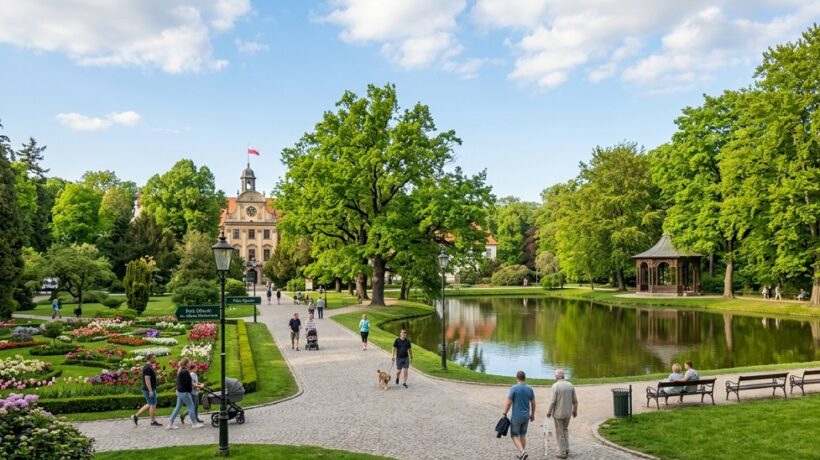
A short tram journey north of Wrzeszcz is enough to find yourself in a completely different reality. Oliwa welcomes you with an atmosphere of peace, elegance and extraordinary harmony between history and nature. Forget about noisy arteries and neon signs of shopping malls. Majestic old trees, historic villas hidden in gardens, charming streets and the dominant body of the Oliwa Archcathedral reign here. The heart of the district, beating with a calm but constant rhythm, is Oliwa Park – a real pearl on the map of the Tri-City, a magical place at any time of the year, ideal for contemplation, walks or learning on a bench under a chestnut tree. Right next to the park is the modern, but integrated into the surroundings campus of the University of Gdańsk, which gives Oliwa a unique, academic character.
Oliwa’s magnetism: What tempts future residents?
The biggest and most obvious magnet is the direct proximity to the main campus of the University of Gdańsk. If you are studying at the University of Gdańsk, living in Oliwa is a logistical masterpiece. Imagine: you wake up a quarter of an hour before a lecture and make it without running. Do you have a “window” between classes? You pop home for dinner or a short nap. In the evening, the library is just around the corner. This everyday convenience and saving time on commuting is an argument that cannot be overestimated for many UG students.
But Oliwa is much more than just a base for the university. It is above all a green oasis. The aforementioned Oliwa Park with the Palm House, Ponds, Alpinarium and Abbots’ Palace is a place where you can spend hours recharging your batteries. What is more, Oliwa is the gateway to the Tri-City Landscape Park. A short walk up Spacerowa Street is enough to find yourself in a dense forest, on one of the numerous hiking or cycling trails, leading to such attractions as the Valley of Joy, the zoo or viewpoints (e.g. Pakołek with the famous observation tower, from where there is a panorama of the Bay of Gdańsk).
For people who value active recreation, contact with nature and escape from the hustle and bustle of the city, Oliwa offers ideal conditions. The atmosphere here is definitely calmer and more intimate than in Wrzeszcz, which is conducive to concentration and relaxation.
In terms of communication, Oliwa also looks good, although it is not as versatile a hub as Wrzeszcz. Key tram lines (e.g. 5, 6, 12) provide efficient access to Wrzeszcz (PG, MUGed – with a change or longer access), the Center and to the sea (Jelitkowo). There are also numerous bus lines here. The Gdańsk Oliwa railway station (serving SKM and some long-distance trains) is located on the border of the district with the Littoral, but for the inhabitants of central and northern Oliwa it is within walking distance, offering a quick connection to Sopot and Gdynia.
What can cool enthusiasm?
The first, important factor is the price. Oliwa, due to its prestige, unique climate, proximity to the University of Gdańsk and green areas, maintains a high level of rental prices. Although it may be slightly lower than in the top locations of Wrzeszcz, you still have to reckon with an expense of PLN 1250 – PLN 1600 (or more) for a single room. Studio flats or two-room apartments in older villas or intimate blocks of flats can cost from PLN 2400-2700 upwards. Particularly sought after (and expensive) are apartments in restored buildings in the so-called Old Oliwa, closer to the park. There are generally fewer offers here than in Wrzeszcz, and the most attractive ones disappear very quickly.
The second issue is the limited entertainment and retail infrastructure of the “big format”. Oliwa focuses on intimacy. You will find charming, small shops, several really atmospheric restaurants and cafes (often with gardens), bakeries with traditions, but there are no large shopping malls, multiplexes or a wide range of nightclubs. For larger shopping (clothes, electronics) or for a more “party” outing, you have to drive to Wrzeszcz, Przymorze (Alfa Centrum) or to the Center of Gdańsk. In the evenings, especially outside the summer season, Oliwa becomes very calm, even sleepy, which will be a blessing for some, and for others it may mean boredom.
What to watch out for when looking in Oliwa?
As in Wrzeszcz, in the case of older buildings (villas, tenement houses), carefully check the technical condition, installations and especially heating (costs!). Also pay attention to potential moisture, especially in apartments on the ground floor or in basements – the proximity of a park and old trees is conducive to higher humidity. Ask about the condition of the roof and façade if you are renting on the top floor.
Verdict for Oliwa: This is an almost obvious choice for students of the University of Gdańsk who want to live “at the gate” of the university. Ideal for people who prefer peace, quiet and closeness to nature over the hustle and bustle of the city. Perfect for lovers of walking, jogging, cycling and historical climate. If you value elegance, safety and academic atmosphere, you are ready to pay a little more for these advantages and you do not need to have a large shopping mall under your nose every day, Oliwa will enchant you with its unique charm.
Przymorze: A seaside compromise made of a large slab
Moving further north-east of Oliwa, we reach Przymorze – a district with a completely different character. It is a kingdom of large-panel architecture of the 70s and 80s, with dominant long apartment blocks, among which the famous, meandering Falowiec, the longest residential building in Poland, reigns.
However, reducing Przymorze to only a “block of flats” would be unfair. It is also a huge amount of greenery between buildings, playgrounds, squares, and above all – the immediate vicinity of the Bay of Gdańsk. The beach is almost on your doorstep, and the powerful, modern Reagan Park provides great recreational facilities. Przymorze is a kind of golden mean – it offers good infrastructure and communication at a potentially more affordable price, and as a bonus, it adds a breeze of the sea.
What makes students look at Przymorze?
Often the key argument is the financial aspect. Despite the proximity of the sea, rental prices in Przymorze, especially in older blocks of flats (and there are most of them here), can be noticeably lower than in fashionable Wrzeszcz or prestigious Oliwa. A single room can be found here in the range of PLN 1100 – 1500, although of course there are more expensive offers in newer buildings or those with a sea view. Studio flats can start from about 2300-2500 PLN. For students operating on a slightly more limited budget, Przymorze is a real and attractive alternative, allowing you to save on rent without losing the quality of life.
The second, indisputable advantage is the sea and the beach. Imagine a morning coffee with a view of the waves (if you’re lucky enough to have windows), an afternoon of relaxing on the sand after a hard day at college, an evening jog or a bike ride along the coast… For many people, this daily proximity to the Baltic Sea is priceless and is the main reason for choosing this district. Reagan Park, stretching between Przymorze and Zaspa, is a huge green area with modern infrastructure – bicycle paths, a skate park, playgrounds, barbecue areas – an ideal place to spend time actively and meet friends.
Przymorze is also a district complete in terms of infrastructure. You don’t have to leave here to do your daily shopping or take care of basic matters. You will find here a lot of supermarkets (larger and smaller), local markets, a wide range of service points, clinics, pharmacies, restaurants, pizzerias. An additional advantage is the proximity of the large Alfa Centrum shopping center (on the border with Oliwa), with a cinema, gym and a wide range of shops. It is a well-organized living space, typical of large housing estates.
What about communication? Przymorze is well connected with the rest of the Tri-City, although perhaps not as centrally located as Wrzeszcz. The main tram lines running along Aleja Rzeczypospolitej and Obrońców Wybrzeża Street, as well as numerous bus lines, provide efficient access to key points. The UG campus in Oliwa can be reached by tram or bus in 10-20 minutes. It will take about 20-30 minutes to get to Wrzeszcz (PG) by tram. You can also reach the city center by tram in about 30-40 minutes. There is no SKM station in the heart of the district (the closest ones are Oliwa and Zaspa), but the tram and bus network largely compensates for this.
Are there any disadvantages to living in the shadow of Falowiec?
The main potential downside for some may be the characteristic, monotonous architecture of large-panel blocks. If you dream of an atmospheric tenement house or villa with a soul, Przymorze is unlikely to delight you (although new, more aesthetic housing estates are also being built here). The historical atmosphere and architectural diversity known from other parts of Gdańsk are missing here. Another issue is the distance from the university – although the access is efficient, you always have to count on those 15-30 minutes for travel by public transport. This is not a “walk to class” option (unless you are studying at the Faculty of Social Sciences of the University of Gdańsk, which is relatively close). During rush hours, especially on the main arteries, traffic jams can be a nuisance. Parking under blocks of flats in a densely built-up part of the Littoral is often a daily struggle for free space. It is also worth remembering about the seasonal intensity of tourist traffic in summer – the proximity of the beach means more people, noise and sometimes more difficult to find peace.
What to watch out for when looking for in Przymorze?
In older blocks of flats (especially in Falowiec), pay attention to the condition of staircases, elevators, and in the apartment itself to the condition of the windows (are they replaced with plastic and tight?), installations and possible problems with ventilation. Ask about the amount of administrative rent, which in large blocks can contain a lot of different components. Also check the real distance to the nearest tram/bus stop – Przymorze is extensive, and it may take some time to get to the public transport from some of it.
Verdict for Przymorze: This is an excellent proposition for students who are looking for the golden mean between the rental price, good infrastructure and an attractive location. If you dream of daily proximity to the sea and the beach, and at the same time want to have a sensible commute to each of the main universities, Przymorze may be a hit. It is an ideal place for people with a slightly more limited budget, who accept the need for daily commuting by public transport and do not mind the architecture typical of large housing estates.
Which district to choose in Gdańsk?
Wrzeszcz – urban, dynamic, well connected, but more expensive and noisy. Oliwa – calm, green, academic, prestigious, but with a smaller entertainment offer and also keeping the price. Przymorze – a seaside compromise, cheaper, with good infrastructure, but dominated by blocks of flats and requiring daily commuting to the university.
I hope that this in-depth analysis has allowed you to get a better feel for the climate and specificity of each of these districts. Remember, however, that the final decision is entirely up to you and should be dictated by your individual needs and capabilities. Before you put a dot on the “i”:
- Make an examination of conscience (and wallet): What is an absolute priority for you, and what are you willing to give up? Is the proximity of the university crucial, or maybe peace and quiet? What is your real monthly budget for rent and fees? An honest answer to these questions will narrow the field of search.
- A virtual tour is not enough – Go off-road! Seriously, don’t make a decision based only on descriptions and photos. Take a day or two to walk around the neighborhoods you are interested in. Stroll through the main streets and side alleys. Check how far it is to the store, to the stop. Feel the atmosphere at different times of the day. This is an invaluable verification.
- Simulate commuting: Go to Jakdojade.pl or use Google Maps and check real-time travel times from a potential address to the university in the morning (e.g., 7:30-8:30 a.m.). Add time to get to the stop and wait if necessary. Is this result acceptable to you on a daily basis?
- Broaden your horizons: Remember that Gdansk is a mosaic of many other interesting districts. Maybe it’s worth taking a look at Zaspa (great communication, a lot of greenery, close to the sea, prices similar to Przymorze), Suchanino (quiet, close to MUG, but weaker communication with the rest of the city), Chełm (well connected by tram to the center, often cheaper) or even Śródmieście (amazing climate, but expensive and noisy).
- Trust your intuition: Sometimes you just feel that a place is “yours.” If you have positive feelings after visiting a given district, you feel good there – this is an important signal.
Choosing a place to call “home” for your studies is an exciting moment. This is where you will come back after classes, study for exams, meet friends, experience your first adult joys and sorrows. Approach this task with caution, but also with enthusiasm. I hope this extensive guide will be your reliable compass on this important journey. And once you’ve found your seat… Well, that’s when the real adventure begins! Good luck in your search and have a great time in Gdansk!