


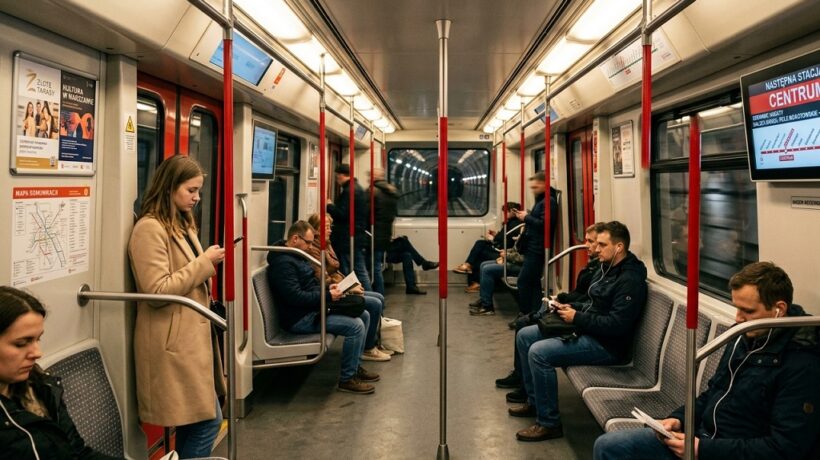
Student room prices in Warsaw 2026/2027: Renting near metro stations
Planning a budget for renting a room in Warsaw in the academic year 2026/2027 requires taking into account the new price dynamics, which have stabilized after the inflationary wave and changes in energy costs. The capital remains the most expensive rental market in Poland, where the proximity of transport infrastructure – in particular two metro lines – is the main factor driving up the rent rate. When choosing a location, you need to precisely distinguish between the cost of rent and additional fees, because in 2026 the structure of utilities and administrative rents has become more complicated due to the new energy efficiency standards of buildings.
Current room rental rates in Warsaw (season 2026/2027)
In the academic year 2026/2027, the average price for a single room in Warsaw oscillates between PLN 1800 and 2600 per month (total cost including utilities). This range results directly from the location and standard of finishing of the premises.
- Budget rooms (1400 – 1700 PLN): You will find them mainly in districts far from the center and the metro, such as Białołęka, Rembertów or Wawer. Often these are rooms in older single-family houses or apartments in blocks of flats from the 1970s, where the standard has not been refreshed for the last decade.
- Mid-range segment (1800 – 2200 PLN): This is the most popular category, including rooms in districts such as Mokotów, Ochota or Praga-Południe. At this price, you get a room in a multi-room apartment of a good standard, with access to full household appliances.
- Premium segment (PLN 2300 – 3200 and more): It applies to rooms in modern apartment buildings in Wola, Śródmieście or nearby Mokotów. These are often rooms with private bathrooms or in apartments with a very high standard of finishing (the so-called “coliving”).
Cost of a room by the metro – analysis of the M1 and M2 lines
September 20, 2026
In 2026, the proximity of a metro station is a luxury for which you have to pay the so-called “premium metro”. On average, a room located within a 5-10 minute walk from the metro station is PLN 300-500 more expensive than an analogous room in the same district, but requiring travel by bus.
Line M1 (Ursynów – Bielany)
The line connecting the north and south of Warsaw is crucial for students of the Warsaw School of Economics, the Warsaw University of Technology and the University of Warsaw.
- Ursynów (Stokłosy, Imielin, Natolin): Prices for a room near the metro here are on average 1900 – 2300 PLN. The closer you are to the Kabacki Forest, the lower the rates can be as long as the distance from the metro station increases above 15 minutes on foot.
- Mokotów (Pole Mokotowskie, Racławicka, Wilanowska): This is the most expensive section of the M1 outside the city centre. For a room at the Pole Mokotowskie station, you will pay from PLN 2200 upwards, due to the immediate vicinity of the university and the center.
- Bielany (Młociny, Wawrzyszew, Stare Bielany): Here the prices are a bit more affordable, ranging between 1800 – 2100 PLN for a decent standard.
Line M2 (Bemowo – Bródno)
The second metro line in 2026 is already fully integrated with the office and academic infrastructure in Wola and Praga.
- Wola (Daszyńskiego Roundabout, Płock, Księcia Janusza): Prices here are among the highest in the capital. A room in a new building near the metro costs about 2400 – 2800 PLN.
- Praga-Północ and Targówek (Wileński Railway Station, Kondratowicza Station, Bródno): The revitalization of these districts and the extension of the metro caused a sharp increase in prices. Currently, a room by the metro in Bródno costs 1900 – 2200 PLN, which was an unaffordable rate in this location a few years ago.
What does the amount of rent in 2026 depend on?
The amount of your room bill is not a random sum. In the 2026/2027 season, the final price depends on five key technological and market factors.
1. Energy class of the building
This is a novelty that has a huge impact on rent in 2026. Owners of apartments in modern buildings (class A or B) pay much lower heating bills. Paradoxically, a room in a new block of flats may have lower utility fees than a room in a tenement house in Ochota, where leaky windows and high ceilings generate huge costs for gas or electric heating.
2. “All-inclusive” standard vs Media by consumption
In Warsaw, the model of a fixed lump sum for utilities (electricity, water, heating, garbage) dominates. In 2026, this lump sum is usually PLN 350 – 550 per month. However, you need to be careful with contracts that provide for surcharges when the limits are exceeded. With current energy prices, intensive use of portable air conditioning in summer or electric heaters in winter may result in a surcharge of several hundred zlotys at the end of the semester.
3. Number of roommates and bathrooms
In 2026/2027, the price of a room depends on the so-called density.
- 2-3 room apartments are the most expensive (greater privacy).
- 5-7 room apartments (often created by dividing large apartments in blocks of flats) offer lower base rates, but generate higher costs of utility consumption in common areas.
- A room with its own bathroom is a surcharge of PLN 400 – 600 to the standard market price.
4. Equipment and high-speed internet
In 2026, the standard in Warsaw rooms is fiber optics with a speed of at least 600 Mbps or 1 Gb/s. Rooms equipped with ergonomic office chairs, height-adjustable desks or modern LED lighting for remote work are priced higher. Owners are also increasingly offering access to streaming platforms at the price of rent.
5. Professional lease management
Rooms offered by management companies (institutional rental operators) are usually 10-15% more expensive than those offered by private owners. In return, however, you receive round-the-clock technical service, a clear occasional lease agreement and a guarantee that the terms and conditions will remain unchanged during the term of the agreement.
Prices by district – Ranking 2026/2027
Breakdown of total costs (rent + utilities) for a single room:
- Śródmieście: PLN 2500 – 3500 (highest demand, limited supply).
- Wola (nearby): 2300 – 3000 PLN (business district, excellent metro).
- Mokotów (Upper): PLN 2200 – 2800 (key for students of the Warsaw School of Economics and WUT).
- Ochota: 2000 – 2600 PLN (close to the center, great trams).
- Żoliborz: PLN 2100 – 2700 (prestige and metro M1).
- Praga-Północ: 1900 – 2400 PLN (rapid increase in prices by metro).
- Ursynów: 1900 – 2400 PLN (bedroom with excellent metro).
- Bielany: 1800 – 2200 PLN (good balance of price to metro).
- Bemowo: PLN 1700 – 2100 (the new M2 metro has improved accessibility).
- Białołęka / Ursus / Włochy: 1500 – 1900 PLN (cheapest options, no metro).
Hidden rental costs – what to pay attention to?
In the 2026/2027 academic year, you need to be careful about budget items that are not visible at first glance in the advertisement.
- Deposit: A refundable deposit of one full rent (rent + utilities) is standard. In apartments of a higher standard by the metro, the owners require twice this amount.
- Fee for cleaning common areas: Many apartments managed by agencies add PLN 50 – 100 per month for professional cleaning of kitchens and bathrooms once a week.
- Storing your bike/scooter: Due to the dense buildings near the metro, access to the wheelchair or bicycle room is sometimes paid or limited.
- Administrative costs: Some landlords pass on garbage collection fees (in 2026 linked to water consumption) and the renovation fund to tenants.
How to reduce the cost of renting in Warsaw?
Despite the high prices, there are ways to find a cheaper room without giving up commuting to the center.
- Select a transfer station: Rooms at the Gdańsk Railway Station or Vilnius Railway Station are sometimes cheaper than those in the very center, and it takes only a few minutes to get there by metro.
- Search for apartments in townhouses with city heating: Tenement houses have their charm, but only those connected to the MPEC network guarantee stable costs in winter. Avoid electric heating.
- Double rooms: In 2026, the trend of “rooms for couples” or friends is back. A place in a double room by the metro costs about 1200 – 1500 PLN, which is a huge saving compared to the “one”.
- Long-term rental: Contracts for 12-24 months allow you to negotiate a base rate of 5-10%. Landlords in Warsaw value tenant stability more than a high but uncertain margin.
Specific tips when signing a contract for the 2026/2027 season
To keep your finances safe, apply the following rules:
- Verify your occasional lease agreement: In 2026, this is the standard. Check whether the owner requires a notarial indication of another premises and whether he covers the cost of a visit to the notary.
- Check the indexation dates: Make sure that the contract does not contain a provision about the possibility of increasing the rent during the academic year by the inflation rate.
- Digital inventory: Take photos and videos of all equipment before moving into the room. In 2027, when settling deposits, owners are strict about the wear and tear of furniture.
- Check 5G network coverage: If you work or study remotely, Wi-Fi isn’t everything. Some old buildings in Śródmieście have a problem with mobile coverage, which may force you to buy additional amplifiers.
Detailed analysis of rates at metro interchanges
When choosing a room in Warsaw for the 2026/2027 season, you need to understand that the price changes drastically not only between districts, but even between individual stations of the same metro line. Key interchanges generate the highest demand, which directly translates into rents.
- Świętokrzyska Metro Station (intersection of M1 and M2): This is the most expensive point on the rental map. A room within a radius of 300 meters from this station is an expense of 2800 – 3400 PLN. Here you pay for zero travel time to the main campuses of the University of Warsaw and access to the full entertainment infrastructure.
- Świętokrzyska Metro Station (intersection of M1 and M2): This is the most expensive point on the rental map. A room within a radius of 300 meters from this station is an expense of 2800 – 3400 PLN. Here you pay for zero travel time to the main campuses of the University of Warsaw and access to the full entertainment infrastructure.
- Metro station Dworzec Gdański (M1): It serves as a strategic point for commuters from the northern parts of the agglomeration. The prices of rooms here oscillate around 2200 – 2500 PLN, while offering a great connection with tram lines going towards Ochota.
- Metro Station Politechnika (M1): A natural center for students of the Warsaw University of Technology. Despite the older buildings (tenement houses), prices remain at a high level of PLN 2300 – 2700 per room, which results from the limited supply of apartments in this area.
Structure of additional fees: Administrative rent and utilities
In the academic year 2026/2027, the most common mistake when estimating costs is to suggest only the amount of the “severance fee” visible in the header of the advertisement. In Warsaw, the payment structure is usually three-component, and you need to verify it carefully before signing the contract.
- Rent (Severance): This is pure profit for the owner. In 2026, for a room by the metro, it is usually between PLN 1400 and 2200.
- Administrative rent: It is a fee paid to a community or cooperative. It includes maintenance of common areas, security, waste disposal and advances for heating and water. In Warsaw, this amount has increased for the entire apartment and is from PLN 350 to PLN 600 per room.
- Utilities (meter): Electricity and gas (if any). Billed usually monthly or bi-monthly. In 2026, you have to reckon with a cost of about 100 – 150 z per month per person, unless the building uses energy-efficient hybrid solutions.
Combining these components, a room advertised as “1500 PLN” may actually cost you 2200 PLN. Always ask about “total monthly cost (all-in)”.
Energy Performance Certificates – how to read them in 2026?
From 2026, every rental advertisement in Warsaw must contain information about the energy class of the premises. It is a powerful tool that will allow you to save money on heating.
- Class A and B (Modern apartment buildings): These buildings have excellent insulation and often recuperation systems. Although the rent may be PLN 200 higher here, your heating bills in winter will be minimal. In 2026/2027, it is the most cost-effective choice for long-term rental.
- Class E and F (Uninsulated tenement houses and blocks of flats from the 60s): Rooms in such buildings are cheaper in the “break-out”, but generate huge underpayments after the heating season. If you are choosing a room in a tenement house in Stara Praga or Ochota, check whether the building has undergone thermal modernization. Otherwise, the cost of electric heating may increase your expenses by PLN 500 – 800 per month in winter.
“Hidden” locations – 15 minutes to the subway, PLN 500 in your pocket
If your budget does not allow you to live directly next to a metro station, in 2026 Warsaw offers several locations that are logistically almost identical, and financially much more advantageous.
- Służew nad Dolinkou (M1): Rooms in blocks of flats 2-3 bus stops away from the Metro Służew or Wilanowska stations are cheaper by about PLN 400 than those at the station itself.
- Stare Bielany and Wawrzyszew (M1): These areas offer a lot of greenery and rooms at prices of 1700 – 1900 PLN, while maintaining access to the center by metro in less than 20 minutes.
- Targówek Mieszkaniowy (m2): Apart from the immediate vicinity of the metro station, in the depths of the estates, you will find high-standard rooms at prices of PLN 1600 – 1800. In 2026, a network of bicycle paths and city scooters allows you to cover the distance to the metro in 4 minutes, which makes these offers very attractive.
Digitization of lease and tenant verification costs
In 2026, digital tenant verification has become a standard in Warsaw. Some agencies and management companies use scoring systems.
- Cost of verification: Sometimes you have to pay a one-time fee (approx. PLN 50 – 100) to check your financial credibility in debtor databases.
- Tenant insurance: Owners of apartments near the metro are increasingly requiring the tenant to take out a third-party liability policy. This is a cost of PLN 60 – 90 per year, which protects you from the costs of accidental damage to property (e.g. flooding of the parquet floor, damage to an expensive induction hob).
The most frequently asked questions about rental prices in Warsaw
Will room prices in Warsaw continue to rise in 2026?
Forecasts indicate that prices will stabilize with a slight upward trend (approx. 3-5% per year) resulting from the rising costs of maintaining buildings. Sharp price spikes like we have seen in previous years are no longer likely due to market saturation.
How much is the cheapest room on the M1 metro?
The cheapest single rooms at M1 can be found in Kabaty or Młociny. The total cost with utilities is about 1800 – 1950 PLN.
Are utilities included in the price quoted in the advertisements?
Rarely. Most ads on portals only state “rent”. Always add to this administrative fees and utilities, which in 2026 rarely go below PLN 400.
How much is the deposit for a room in Warsaw?
The standard is the equivalent of monthly fees. If the room costs PLN 2200 (all included), the deposit will be exactly the same.
Do students have discounts on renting rooms?
Private owners do not offer discounts “on the card”. However, students up to the age of 26 benefit from the lack of income tax (zero PIT), which allows them to have more cash for rent than older people with the same gross earnings.
Is it worth renting a room in Bródno after the opening of the metro?
Yes, Bródno has become one of the best-connected districts. Prices there are about 20% lower than in Wola, and it takes only 15-20 minutes to get to the center by metro M2.
What affects the price difference between a room in a block of flats and a tenement house?
Mainly the cost of living. Tenement houses in Śródmieście have higher prestige, but rooms in modern blocks of flats are warmer, have elevators and better technical infrastructure (fibre optics, ventilation).
Rental prices for rooms in Warsaw in the 2026/2027 season require the tenant to be very aware of technical and location costs. The proximity of the metro remains the strongest price argument, but the growing importance of the energy class of the building allows for the optimization of bills in modern construction. If you’re looking for a room in Warsaw, don’t limit yourself to Śródmieście – districts like Bielany or Bródno offer excellent access to the metro at much more reasonable rates.