


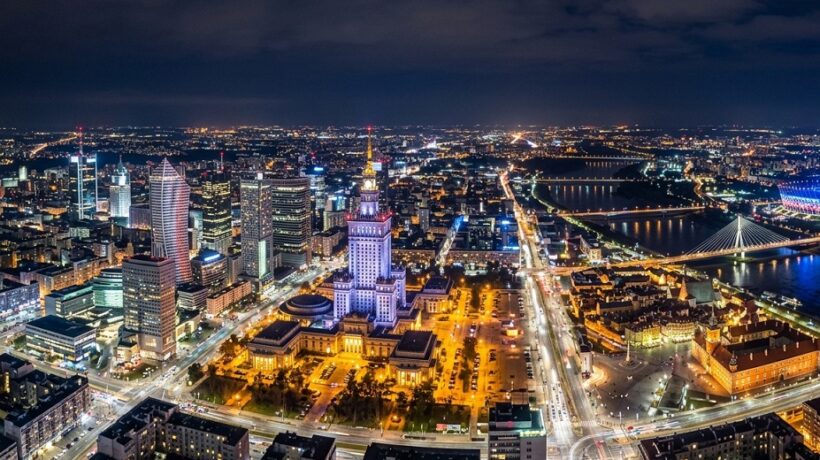
What does student life in Warsaw really look like? An ultimate guide
Getting off at the Central Station with a suitcase, you enter an ecosystem that takes no prisoners. Warsaw for a student is not only a prestigious diploma from the University of Warsaw, Warsaw University of Technology or the Warsaw School of Economics, but above all a brutal collision with the pace of life that you will not experience in any other Polish city. This is where you will feel the fastest what the term “overstimulation” means, and it is here that your mental resilience will be put to the hardest test. The following analysis breaks down the realities of everyday life in the capital – from the euphoria of nightlife on the Boulevards to the poignant loneliness in a rented room in distant Białołęka.
Learning at Warsaw’s pace
Studies in Warsaw differ from those in smaller academic centers primarily in the level of pressure. It is not only due to the demands of lecturers, but to the ubiquitous cult of productivity. In Warsaw, you don’t “just” study – you build your portfolio from the first semester.
Session and rat race at BUW
The main landmark for UW students is the University Library (BUW), which becomes a “second home” for thousands of people during the session. Science in Warsaw is a struggle for resources: for a free chair in the reading room, for access to limited databases and for the attention of outstanding professors, who often divide their time between university and advising on the government or corporate boards.
- Exam stress: At universities such as the Warsaw University of Technology (WUT) or the Medical University of Warsaw (WUM), the level of difficulty of screening subjects (e.g. mathematical analysis, anatomy) is legendary. Stress doesn’t end with passing an exam; in Warsaw, you are stressed about whether your average will allow you to get a rector’s scholarship, which, in the face of local prices, is often the only way to close your household budget.
- Combining work and study: This is a unique element of Warsaw science. Most of your peers have been working in corporations since their second or third year (often in the so-called Mordor on Domaniewska Street or in the vicinity of Rondo Daszyńskiego). If you’re just studying, you’ll quickly start to feel the pressure of falling behind the job market.
Loneliness in the Crowd: The Dark Side of Prestige
Studying in the capital can be an isolating process. Large lecture groups and anonymity in a big city mean that you can spend the whole day at the university without exchanging a single private sentence with anyone. It’s a specific kind of “academic solitude”, where everyone is around you, but everyone is focused on their own goal and the next entry in their CV.
September 20, 2026
Parties & Nightlife
Social life in Warsaw is a sine wave between free entertainment and places where one drink costs as much as your dinner for three days. The capital offers endless possibilities, but it also imposes a specific style of being.
The epoch of student integration
The most important point on the social map of Warsaw are the Vistula Boulevards. In the warmer months, this is where student life moves. It is one of the few spaces where material status does not matter – you drink beer from Żabka on the stairs next to people who have just left the most expensive office buildings.
- Nowy Świat Pavilions: This is the place where you will make friends the fastest. The density of bars per square meter is conducive to inter-university integration. This is where the barrier between a student of the Warsaw School of Economics and the Academy of Fine Arts “breaks”.
- Student clubs: Although their number is decreasing, places such as Remont, Stodoła or Hybrydy still organize classic student Thursdays. It is here that nightlife is the most “human” and least focused on Warsaw’s glitter.
The cost of being “up to date”
In Warsaw, it is easy to fall into the trap of FOMO (Fear of Missing Out). Every evening something important happens: vernissages at the Museum on the Vistula, free concerts at the Palace of Culture, premieres in studio cinemas (Muranów, Luna). Social stress results from the inability to be everywhere. If your group of friends is going to a trendy café in Zbawiciela Square (“Zbawix”) and you have to save for rent, the feeling of exclusion can be very strong.
Loneliness and psychological barriers of the big city
This is the topic least discussed in recruitment brochures, and the most acute. Warsaw is a city of people visiting (jars), which paradoxically intensifies the feeling of loneliness.
Anatomy of Warsaw’s loneliness
Most students in Warsaw live in rented rooms. If you don’t find a well-coordinated team in your apartment, your social life may be limited to a smartphone screen.
- Feeling of Strangeness: Warsaw is loud, fast and often impersonal. The lack of “your” places at the beginning of your studies makes you feel like only a temporary guest here.
- Superficial Accounts: The pace of life forces students to have “purposeful” relationships. Acquaintances often end with the last project of the semester. Building deep bonds here requires much more effort than in smaller centers, where everyone knows the same three pubs to the cross.
Depression and anxiety about the future
The stress associated with staying in the most expensive city in Poland is a real burden on the psyche. Observing the successes of peers in social media (who are often financially supported by parents from Warsaw) can lead to anxiety and a sense of inadequacy. Mental health problems among Warsaw students are statistically more frequent, which can be seen in the occupancy of academic psychological clinics (e.g. at the University of Warsaw, people wait months for an appointment).
Wherever you go, that’s how you will live
Warsaw is not one academic monolith. The choice of university determines what kind of “bubble” you will spend the next few years in and what kind of stress you will face.
UW vs. WUT vs. SGH – Different definitions of pressure
- University of Warsaw (UW): Life here is a constant movement between the historic campus in Krakowskie Przedmieście and modern Ochota. The stress here is “intellectual” – the fight for ECTS points, signing up for tokens (the famous fight for language courses and PE at midnight) and the feeling of being part of a huge, impersonal machine.
- Warsaw University of Technology (WUT): Here, life revolves around the University of Technology Square. Stress is technical and binary – you either understand the project or you don’t. The community is more consolidated, and solving tasks together in DS Riviera or nearby cafes is the main way to combat loneliness.
- Warsaw School of Economics (SGH): This is a specific microclimate in Mokotów. Here, student life is networking. If you don’t belong to any student organization, the feeling of isolation will be enormous. SGH events have a reputation for being the most exclusive, which causes stress for many students related to the need to “look” and “be someone”.
Student diet and mental health
In Warsaw, food isn’t just about calories – it’s a social ritual that can ruin your budget or become a starting point in a new city.
Milk bars as an economic asylum
When financial stress hits you, milk bars such as Prasowy, Familijny or Bambino are your lifesaver. These are places where you can eat a full dinner for 20 PLN. There you will meet a cross-section of the whole of Warsaw – from the homeless to professors of the University of Warsaw. These are places that, paradoxically, give a sense of stability in a rushing city.
Café culture and “student coworking”
Warsaw is the capital of specialty cafes. For a student, cafes in Zbawix, Saska Kępa or Powiśle are places to escape from the loneliness of the four walls of a rented room.
- Problem: Spending 20 PLN on coffee every day is 600 PLN per month.
- Choose “laptop friendly” places (e.g. Green Caffè Nero, but during off-peak hours), where you have the right to sit with your laptop for 4 hours when you buy one coffee. This is where most of the bachelor’s theses are created and where it is easiest to establish casual eye contact with another “struggling” student.
Sports and recreation
Stress in Warsaw accumulates in the body. If you don’t find an outlet for the cortisol generated by the session and the crowd in the subway, you will quickly feel burnout.
AZS and academic sport
Signing up for the AZS (Academic Sports Association) section is the cheapest way to do sports in the capital. It’s also an excellent method to find a group of friends outside your major. Joint training at the facilities at Banacha Street or Pole Mokotowskie builds bonds that no event can replace.
Outdoor gyms and a path by the Vistula River
The right bank of the Vistula River (Prague side) offers a wild running and cycling path, which is an ideal place to cut off from the hustle and bustle of the city. It’s free therapy for someone who is overwhelmed by the concrete jungle of Śródmieście.
Casual work as a cure for loneliness
Most students work in Warsaw. Although combining full-time work with full-time studies is a huge stressor, work often becomes the main source of social life.
Gastro and Events – where will you earn the most?
- Working in bars/restaurants* This is the heaviest piece of bread, but it gives an instant “foster family”. The teams in Warsaw’s gastro are very close-knit. If you feel lonely in Warsaw, working behind the bar at the Night Market or in the vicinity of Poznańska Street will cure you of it in one weekend.
- Sponsorship and hosting: The job is easy, but often mentally draining due to the need to constantly interact with people. Good for extroverts who need quick cash for rent.
Seasonal Warsaw
Life in Warsaw changes drastically with the weather, which directly affects your state of mind.
Winter: Smog and the “Warsaw Depression”
November and December in the capital is the time when the city becomes gray and the air is heavy with smog.
- Science: This is the time when BUW is bursting at the seams.
- Loneliness: A short day causes most people to lock themselves at home after classes. It is then worth signing up for additional courses or science clubs to have a reason to get out of bed.
Summer: The City That Never Sleeps
June in Warsaw is a time of euphoria. Juwenalia (especially those at WUT and SGGW) are the biggest student holidays. This is when the most memories are built. If you survive the winter, summer in Warsaw will more than reward you for it on the Mokotów Fields or during free open-air concerts.
Relationships & Dating: Tinder in the Capital
A student’s love life in Warsaw often moves to the app.
- Reality: High competition and “excess of options” make relations in Warsaw sometimes superficial and short-lived. This increases stress in people looking for stability.
- Advice: Look for live acquaintances – in interest groups, volunteering or during joint projects at the university. They are more durable than those from the “right-shift”.
7 things you need to
- Take a “tour” of milk bars – find the one where you like it the most. This is your base for financially worse days.
- Buy a semester ticket right away – a ticket for PLN 200-300 is a budget tragedy for a student, which cuts you off from social life for a month.
- Install the “Going” or “Vibe” app – there you will find free and cheap tickets to events in Warsaw that others don’t know about.
- Find a district library – if BUW is too loud or too crowded, libraries in Mokotów or Żoliborz offer silence and free Wi-Fi in a much calmer atmosphere.
- Don’t be afraid of a psychologist at university – life in Warsaw is a marathon. If you feel like you can’t do it, go to your university’s Office for People with Disabilities or the Psychological Assistance Center. It’s not a shame, it’s a Warsaw standard.
- Use Veturilo – the city bike system in Warsaw is great. You will often get somewhere faster than by tram, and physical movement will help you relieve stress before the colloquium.
- Sign up for the “Visible Hand Warsaw” FB groups – if you are in a rainy hour (lack of food, broken laptop), the people of Warsaw really help.
A source of everyday stress
Time is the most valuable currency in Warsaw, and wasting it is the main stressful factor.
Traffic trap
Warsaw is huge. If you study at the Main Campus of the University of Warsaw (Krakowskie Przedmieście) and live in Tarchomin or Ursynów, you lose 1.5 to 3 hours a day on commuting.
- The Metro as salvation and a curse* The Metro (M1 and M2) is the only way to be predictable. Students living outside the metro line live in constant stress related to tram delays and traffic jams on bridges.
- Class logistics: You often have to move between different university buildings scattered throughout the city (e.g. from Ochota to Śródmieście). Planning the day becomes a logistical operation in which a mistake by 5 minutes results in being late for an important colloquium.
Finance: The Invisible Barrier to Entry
It is impossible to talk about life in Warsaw without the economic aspect, which directly affects the level of stress and the quality of social life.
- Rent: This is your biggest cost. A room in the “PRL+” standard in districts such as Mokotów or Ochota costs as much as a studio apartment in a smaller provincial city.
- Consumer pressure: Warsaw tempts at every turn. Going out for coffee after classes costs 20-25 PLN. If you want to participate in social life, you need to have a budget that allows it, or accept a constant feeling of deprivation.
How to survive and squeeze the best out of Warsaw?
Here is a practical list of activities to help you manage stress, study and loneliness in the capital:
- Take care of the “third place”: Find a location outside your home and university where you feel good (it can be a specific library, a small café in Muranów or Pole Mokotowskie Park). Having a permanent point in the city space helps tame the fear of anonymity.
- Take advantage of free culture: Warsaw offers a lot of free entrances (e.g. Thursdays in most museums, free days in the Royal Castle). This is the best way to fight FOMO without spending any money.
- Apply for a place in a dormitory (even if you can afford a room): Nothing protects you from loneliness in Warsaw as much as living in a student dormitory (e.g. Kic or Riviera). It’s a natural support network that eliminates 80% of insulation problems.
- Set a rigorous study plan at BUW: Don’t go “sit” there. Set specific hours, and after them, absolutely cut yourself off from studying to avoid burnout.
- Invest in the Warsaw Card/Metropolitan Ticket: Saving on communication is a few hundred zlotys a year, which you can spend on social outings that reduce stress.
- Look for a job “close” to college or home: Avoid wasting time commuting to work in another part of the city. In Warsaw, work in gastronomy or retail is everywhere – choose your location wisely.
Frequently asked questions about the realities of student life in Warsaw
Is it really so hard to find real friendships in Warsaw?
It is more difficult than in smaller cities due to the pace of life and the geographical dispersion of friends. The key is to get involved in science clubs or student organisations (e.g. NZS, AIESEC) where people have a common goal, not just a common bench in a lecture.
How much do I really have to live on in order not to feel socially excluded?
After paying for the room, the minimum amount for food, communication and “life” (cinema, going out for a beer once a week) in 2026/2027 is about PLN 1800-2200. An amount below this threshold forces you to be very isolated and generates constant stress.
Is it possible to study a day in a prestigious field and work?
Yes, but be prepared for chronic fatigue. Most students choose to work on weekends or evenings. Flexible internships in corporations are also popular, which allow you to “go to class” in the middle of the day.
Where is the best place to seek help when stress overwhelms me?
Every large university (UW, WUT, SGH) has psychological support offices. In addition, there are many foundations in Warsaw offering free help for young adults. Don’t wait for stress to turn into depression – the queues are long, sign up early.
Is life in Warsaw without a car burdensome?
On the contrary. A car in Warsaw is a hassle for a student (no parking lots, traffic jams). The tram and metro network are so efficient that the car is an unnecessary expense and a source of additional stress.