


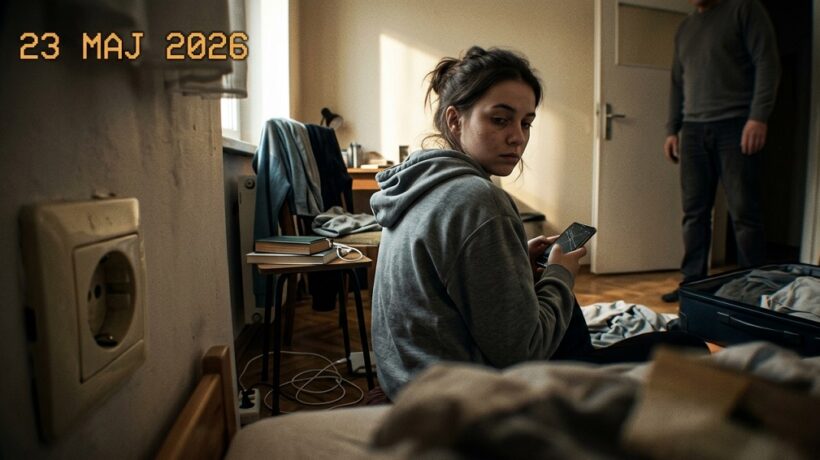
Hidden cameras in rented apartments in Warsaw: A student guide to privacy
Finding a hidden camera in a rented room on Koszykowa Street or Waryńskiego Street is not an urban legend, but a real problem of the Warsaw rental market in 2026. In the era of miniaturization of optics and cheap electronics from China, “caring” owners of apartments in Mokotów or Ochota are increasingly installing surveillance systems, explaining it with “care for property” or “safety of students”. If you have just moved into a premises near the WUT Main Building or the Ochota Campus and you have the impression that the owner knows too much about you, you need to conduct a technical privacy audit. Remember: installing cameras in the tenant’s private space without his explicit consent is a crime under Article 267 of the Criminal Code (unlawful obtaining of information) and a violation of domestic peace. In Warsaw 2026/2027, the fight for bail and immediate termination of the contract in such a case requires hard digital and physical evidence, which you will not get without knowing the procedures.
Monitoring vs. Privacy in the reality of Warsaw
In recent years, the Warsaw rental market for students has undergone a transformation towards the so-called “ready-made investments”. Apartments in blocks of flats at Pole Mokotowskie Metro or Banacha Street are divided into 5, 6 and even 8 micro-rooms. Landlords, often living outside Warsaw, install cameras in common areas (corridors, kitchens), which is legally permissible provided that the tenant is informed in the contract. However, the line is drastically crossed when the lenses land in bedrooms or bathrooms.
An analysis of threads on the groups “UW Students – Main Group” and “Warsaw Students – Rental” shows that in 2024 and 2025, there were several cases of cameras being found hidden in smoke detectors, dummy USB chargers and wall clocks. The most common reason for surveillance is the desire to control whether the student is not subletting the room to third parties or whether there are no guests staying in it after 10:00 p.m., which is the bane of Warsaw’s “rental regulations”.
Most students of the University of Warsaw, Warsaw University of Technology or Warsaw School of Economics are afraid of confrontation with the owner, fearing losing a roof over their heads in the middle of a winter session or forfeiture of the deposit (which in Mokotów is currently often PLN 2500-3500). This is a mistake. The right to privacy in the rented premises takes precedence over the right to property. If the landlord spies on you, you not only lose your comfort, but you become a victim of crime, which gives you the right to leave the premises immediately without notice.
September 20, 2026
How to check if there are no hidden cameras in a room
Before you start unpacking your suitcases when you return from the September campaign, take an hour to technically check the room. Use the methods used by professional security auditors.
1. Physical inspection of “suspicious objects”
Vision bugs are rarely installed in walls – it requires forging and powering. Look for items that have constant access to electricity:
- Chargers and power supplies: Inspect each charger plugged into the outlet. If it has a small black hole with a diameter of 1-2 mm, it may be an objective.
- Clock radios and clocks: These are the most popular dummies. Check the display for unnaturally dark spots.
- Smoke and motion detectors: If there is a smoke detector hanging in your room on Nowowiejska Street, even though there is no smoke detector in the rest of the apartment – this is a red flag. Take it off and check if there is an SD card or Wi-Fi module inside.
2. “Flashlight and Reflection” Test
Turn off the lights, close the blinds (especially those dense, Warsaw “blackouts”). Take a powerful flashlight (not from your phone, preferably one with a narrow beam of light) and slowly sweep every inch of the room. The camera lens, even the size of a pinhead, has an anti-reflective coating that reflects light into a characteristic bluish or purple color. Focus on ventilation grilles and pots.
3. Wi-Fi Network Scan (Fing App)
Most of the cameras in Warsaw student apartments are IP devices that send live images to the owner’s phone via home Wi-Fi.
- Connect to the network in your apartment.
- Use the free Fing app or Network Analyzer.
- Check the list of devices. Look for names like: IPCamera, CloudCam, Hangzhou, Hikvision, Dahua or simply unknown manufacturers from China.
- If you see a device listed that you can’t identify as a roommate’s laptop or router, make a note of its MAC and IP address.
Infrared (IR) detection
Night mode cameras emit IR LEDs, which are invisible to the human eye, but visible to most phone cameras (especially the front-facing ones, for selfies, which less often have IR filters). Turn on your phone’s camera, turn off the light, and sweep the room. If you see pulsating white or purple dots on the screen – you are looking straight at the emitter of the hidden camera.
How do I detect a camera that hides its SSID?
Many owners of apartments in modern complexes are technically proficient people who can hide the camera from simple Fing scanners. If the basic Wi-Fi analysis showed nothing, you need to move on to monitoring the outbound (upload). A hidden IP camera, in order to transmit the image to the owner’s smartphone, must constantly send data packets.
If you have access to your router’s admin panel (often the default passwords are on a sticker under your device), check the traffic statistics for each connected MAC address. If a device described as “unknown” generates a consistent data transfer rate of between 500 kbps and 2 Mbps, you are almost 100% sure that it is HD video streaming. In Warsaw, where fiber optics (e.g. from Orange or Netia) are standard, owners do not worry about the load on the connection, which makes it easier to detect them through a simple analysis of system statistics.
Smartphone Thermal Imaging: Tracking the Heat Signature in Walls
Electronics hidden inside everyday objects – even if the lens is the size of a needle hole – generate heat. The camera’s processor and Wi-Fi module operate at a temperature of 30°C to 45°C. In the cold walls of old tenement houses in Ochota or Mokotów, the temperature difference between the wall and the hidden electronics is drastic and visible to the naked eye through a thermal imaging camera.
You don’t have to buy professional equipment for thousands of dollars. WUT students often rent or buy smartphone attachments (e.g. FLIR ONE or Seek Thermal). When sweeping the room with such a device, look for unnatural “bright spots” in places that should not emit heat: inside ventilation grilles, behind paintings, inside the smoke detector housing, or in the top corners of cabinets. Thermal imaging allows you to detect the camera even if the owner has turned it off programmatically, but the device still remains in live standby mode.
Microphone detection by radio frequency (RF) spectrum and white noise analysis
Hidden microphones (GSM bedbugs) are a scourge in apartments with a high standard of finish in Warsaw 2026. These devices do not need a lens, so they are almost impossible to find by sight. They work by sending audio over a cellular network (SIM card) or dedicated radio bands (e.g. 433 MHz).
To detect them, use a professional frequency scanner (available in specialist stores at Jagiellońska Street or Grzybowska Street).
- Clean Background: Turn off your phone (airplane mode), unplug your laptop and Wi-Fi router.
- Band Scanning: Move the detector close to baseboards and bed frames. If you detect a spike in the GSM bands (900/1800 MHz) in an empty room, it means that the active transmitter is working in hiding.
- Join method: Play loud music or the so-called white noise from your phone. An active GSM bug, trying to compress and send this audio, will increase the power consumption and transmission intensity, which will be immediately picked up by the RF detector. This is the most effective way to find microphones hidden inside electrical outlets.
Using the Lens Retroreflection Phenomenon
Every camera, no matter how small, has a glass or plastic lens. Lenses have a specific property – they reflect light exactly towards the source from which it comes. This method is independent of whether the camera is turned on or disconnected from the network.
Use a professional optical detector (e.g. SpyFinder) that emits a pulsating red LED light through a polarizing filter. When you look through the viewfinder of the device, you will see that the lens of the hidden camera flashes with a bright, spot light, standing out from the surroundings. In Warsaw dormitories (e.g. DS Riviera or DS Sabinki), where rooms are sometimes overloaded with objects, this is the only method to quickly search a cluttered space without disassembling the furniture.
Bluetooth Low Energy (BLE) – Modern footprint of “Smart” installations
In 2026/2027, many micro cameras for quick installation (the so-called DIY Spy Cams) use the Bluetooth Low Energy standard for initial configuration or constant communication with the owner’s Smart Home hub.
- Download the nRF Connect for Mobile app or the BLE Scanner.
- Look for devices with factory names (e.g., Cam-XXXX, XM-L4, SmartDevice).
- RSSI indicator: The app will show you the signal strength (in decibels). As you get closer to a hidden microphone or camera, the RSSI value will increase (closer to zero, e.g., -40 dB instead of -90 dB). This will allow you to precisely locate the device hidden, for example, inside the air conditioner housing in an apartment in Służewiec.
Where to look for technical and legal assistance in Warsaw?
If your suspicions are confirmed, do not act on your own. Warsaw offers infrastructure that will help you secure evidence so that it is not challenged by the owner’s attorney.
- Digital Security: Go to a detective office or an IT forensic company in the vicinity of Rondo Daszyńskiego. Specialists will take a memory dump from the camera’s SD card, which will allow you to prove that the recordings contain your image.
- Notary: Invite a notary (e.g. the office on Solidarności Avenue) to draw up a protocol for the opening of an object (e.g. a clock with a hidden camera). Such a document has the highest evidentiary value in the district court for Warsaw-Wola or Ochota.
- Dean’s Office and Legal Aid: As a student, you are entitled to free legal aid at the university. At WUT or UW, there are offices of the Student Ombudsman that will help you formulate a letter for immediate termination of the contract without losing the deposit.
Overview of common locations and detection methods
| Location / Item | Threat type | The most effective detection method | Detector cost (optional) |
| Electrical outlets | Cameras built into USB ports | Physical Inspection (Needle/Card) | 0 PLN |
| Bathroom mirror | Venetian mirror with camera behind the pane | Fingertip test (no break) | 0 PLN |
| Router Wi-Fi | Hidden module in the case | Port Scan (Fing) | 0 PLN |
| Power adapters (e.g. for laptop) | Micro cameras with RF transmission | Radio Frequency (RF) Detector | 150 – 400 PLN |
| Ventilation grilles | Wide-angle pinhole lenses | Flashlight test (lens reflection) | 0 PLN |
| Dummy smoke detectors | 360-degree cameras | Optical Detector (Anti-Spy) | 80 – 200 PLN |
Why do most students rely on surveillance? (Error Analysis)
The most common reason why students in Warsaw fall victim to spying for long months is excessive trust in the “nice” owner. The owners of apartments on Krakowskie Przedmieście Street often build the aura of an older, caring couple, which puts vigilance to sleep.
Another mistake is ignoring “strange” provisions in the contract. If the landlord has entered a clause on the right to “remote inspection” or stipulated that there is a “smart home management system” in the premises, and you have not been given access to the control panel – you are almost 100% sure that the system is used for surveillance. WUT or UW students also often do not change the password to the Wi-Fi router (if the contract allows it). The owner, knowing the administrator’s password, can check at any time when you log in to the network and what devices (e.g. your partner’s phone) are active in your room.
If you have not photographed all the strange devices in the room on the day of the introduction, it will be more difficult for you to prove to the prosecutor’s office at Wilcza Street that it was not you who installed them.
What do students in Warsaw really ask about?
I found a camera in my room – what should I do first?
The most important rule: do not touch the device or disconnect it from the power supply. You must keep fingerprints (fingerprints of the owner) and any data on the memory card. Call the police (number 112). In Warsaw, it is best to report it immediately to the police station competent for the district (e.g. for Mokotów it is Malczewskiego Street). Take photos and record a video with your smartphone, showing the location of the device in relation to your bed or desk. After securing the evidence by the police, submit a written statement to the landlord about the immediate termination of the lease agreement due to the landlord’s fault (Article 682 of the Civil Code – a defect that threatens health/life, in this case a violation of personal rights). Request a full deposit refund within 24 hours. Remember that you have the right to compensation in civil court for a violation of privacy.
Can the landlord legally have a camera in the hallway in the apartment for rooms?
Yes, but under two conditions: they must inform you about this fact in the content of the lease agreement and the CCTV must not record sound (which is treated as eavesdropping and is illegal). The camera in the corridor in the “student ready” at the Wilanowska Metro is supposed to be used for safety and protection of property (e.g. against theft of bicycles or scooters), but it cannot monitor who enters your private room. If the lens is pointed so that you can see the inside of your bedroom when the door is open, this is the basis for requesting to change the angle of view of the camera or remove it. If the owner refuses, you can report the violation to the Personal Data Protection Office (UODO ) at 2 Stawki Street.
Can the camera in the smoke detector record when I’m not at home?
Most modern cameras detect motion. Recording your empty living space is also illegal, because the owner gets an insight into your lifestyle (e.g. what time you leave for classes at the Faculty of Law at the University of Warsaw and what time you return). Often, owners in Warsaw explain themselves: “the camera records only when the alarm goes off”. This is a technical lie. For the system to work, the camera must be in standby mode and analyze the image 24/7. If you find such a device, don’t be fooled by explanations about fire safety. Real smoke detectors (e.g. Kidde or FireAngel) do not have built-in Wi-Fi cameras.
How to check if there is a hidden eavesdropping (microphone) in the room?
Detecting a microphone is more difficult than cameras, because it does not need a lens. Microphones hidden in skirting boards or under the desk top in Ochota can work on a dictaphone (recording on a card) or via a GSM network (SIM card).
- RF Detector: Use a cheap radio wave detector. If the indicator “jumps” at the strips, it may indicate GSM transmission.
- Interference in the speakers: Old computer speakers or a simple radio can “hum” when there is an active GSM device sending data nearby.
- Physical check: Look at the bottom of the desk, the back of the closet, and the bottom of the chair. Look for small black boxes taped with double-sided tape.
What if the owner claims that the camera is a “Smart Home” for saving energy?
In 2026, Smart Home systems are popular at the Daszyńskiego Roundabout. Presence sensors (PIR) are used to turn off the lights or heating when no one is around. However, a PIR sensor is not a camera.
- Technical difference: The presence sensor has a Fresnel lens (matte, white, “checkered” plastic cover). The camera has clear glass.
- Account access: If the owner claims it’s a Smart Home, request an invitation to the app (e.g., Tuya, Smart Life, Home Assistant) as a “user.” If you have a full view of the devices and see that there are only temperature and motion sensors without an image – you are safe. If he refuses access – treat it as hidden surveillance.
Do the police in Warsaw really deal with cameras in students?
Yes, because of the social harmfulness of the act. The District Prosecutor’s Office for Warsaw-Mokotów and Śródmieście conducts dozens of proceedings under Article 267 of the Criminal Code every year. It is crucial that you do not “scare” the owner before the patrol arrives. If it realizes that you are searching, it can remotely erase data from the cloud or turn off the device. In the Warsaw reality of renting, finding a camera is an “atomic” argument when negotiating the return of a deposit that the owner does not want to give back, accusing you of, for example, scratches on the panels. Such a camera prohibits all claims of the owner in the eyes of the court.
Where to seek legal assistance if I cannot afford a lawyer?
As a student of the University of Warsaw, Warsaw University of Technology or Warsaw School of Economics, you have access to free legal clinics at law faculties (e.g. the Student Legal Clinic of the University of Warsaw on Lipowa Street). You can also go to the Consumer Ombudsman’s Office on Canaletta Street. There are also foundations in Warsaw (e.g. the Panoptykon Foundation) that deal with the right to privacy. If you find a camera, a letter stamped by the Student Legal Clinic usually ends the discussion about the deposit and contractual penalties for “moving out faster.”
How to check a Venetian mirror in the bathroom?
Some luxury student apartments in Ochota have large mirrors built into the walls.
- Finger Test: Touch your fingertip to the mirror. In a normal mirror, there will be a gap (the thickness of the glass) between your finger and the reflection. In a Venetian mirror (where the camera may be behind glass), the finger and the reflection touch each other directly.
- Light Test: Hold your phone directly to the pane with the flashlight on and cover the sides with your hands. If there is space behind the mirror, you will see what is on the other side.
Can in-room monitoring affect my university status?
Indirectly, yes – due to stress and the inability to focus on studying for exams in a session. If you have been a victim of surveillance and have collapsed items as a result, you can apply for a dean’s (dean’s leave) due to a random/health situation (trauma). A certificate from the police on an ongoing investigation is hard evidence for the dean of the need to extend the deadlines at USOS or obtain permission to repeat the semester without additional fees.
Can the owner record an image, but no sound, in my room?
Still not. A picture from a student’s private room (the place where you sleep, change, study) is protected by the right to privacy and inviolability of the apartment (home peace). By renting you a room, the owner loses the right to freely dispose of this space in terms of vision. Recording you, even “only visually”, is a gross breach of contract and grounds for law enforcement intervention. In Warsaw, in 2026, the courts are very strict on this issue, treating it as a form of psychological violence against the tenant.
How to distinguish an alarm detector from a camera in systems
Alarm detectors (PIR) have a matte, white plastic housing that diffuses light (Fresnel lens). A camera needs a clear optical path, so it always has a small piece of clear glass or plastic. If in your apartment at Bankowy Square the alarm detector has a dark hole inside that “looks” directly at your bed, and the alarm system is inactive – it is almost certainly a case with a hidden lens.
Can the owner hide the microphone in the network (LAN) cables?
Yes, there are special PoE (Power over Ethernet) adapters that have built-in eavesdropping modules. If you have a LAN socket at your desk in your room in Mokotów that you don’t use, check if there is a small cube (the so-called “dongle”) plugged into the port. The owners take advantage of the fact that WUT or UW IT students trust the network infrastructure and rarely check physical cable connections.
Is the camera detector from Allegro for PLN 50 effective?
Cheap devices usually only work as simple IR diode detectors. In Warsaw 2026, most modern cameras have filters that activate infrared only in complete darkness. Such a detector can bypass professional vision bugs. If a student’s budget is limited, it’s better to invest in a good flashlight and a “lens reflection” method than to trust cheap equipment that gives you a false sense of security before the session.
What if the owner claims that the camera in the room is a “developer standard”?
This is a lie. Developers in Warsaw (e.g. in Kępa Mieszczańska or Odolany) never install cameras inside the bedroom. Surveillance can be part of a video intercom system at the front door, but any lens directed inside a private room without your consent is a violation of domestic peace. Demand disassembly or seal the device with opaque tape (if the contract allows it as a privacy protection).
What are the consequences for the owner for spying on a student in Warsaw?
In addition to criminal charges under Article 267 of the Criminal Code, the owner faces a civil case for infringement of personal rights. Compensation in Warsaw in the years 2024-2025 for this type of acts oscillated between PLN 10,000 and 50,000. Finding a camera is a “trap card”, which makes any attempt by the owner to keep your deposit (e.g. for a “destroyed” parquet at Nowowiejska Street) unfounded – the owner will prefer to give the money back, as long as you do not report the case to law enforcement authorities.
In 2026, privacy in Warsaw is a luxury commodity that you have to take care of yourself. Do not ignore your instincts – if you feel that you are being watched in a room at Banacha Street or Krakowskie Przedmieście Street, conduct an audit using thermal imaging and RF band scanning. Document every find in the presence of witnesses and don’t be intimidated by the “lease rules”.
Your Safety Checklist
- Check the network traffic on the router (Upload).
- Sweep walls with a thermal imaging camera (Search for heat).
- Use a BLE (Search for Configuration Devices) scanner.
- Test each mirror (Finger and Light Test).
- Secure evidence at a notary or at the police at Wilcza Street.