


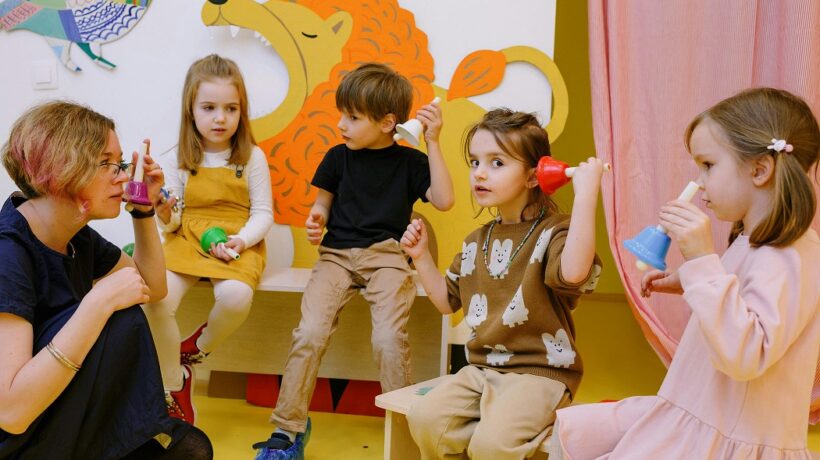
Spelling exercises and activities for children
Learning spelling is one of the fundamental and at the same time the most demanding stages of every child’s education. Remembering rules, exceptions, and the correct spelling of words can be frustrating for students, teachers and parents alike. Traditional methods such as repetition, dictation or filling in gaps, although still valuable, often do not meet the diverse needs and learning styles of modern children. But what if we could turn tedious exercises into a fascinating adventure and tailor the learning process to each student individually? This is no longer a vision of the future, but the present, which is shaped by artificial intelligence in education.
In today’s article, which is an excerpt from my original guide “Artificial Intelligence for Schools and Teachers”, I will show how modern technologies, and AI in particular, can completely change the approach to teaching spelling. Instead of focusing on complicated technical aspects, I will present practical strategies and inspiring examples that teachers and principals can implement in their work to make learning spelling effective, engaging and, most importantly, enjoyable for children.
Traditional methods vs. modern approach: Why is spelling still a challenge?
- Spelling exercises and activities for children
- Traditional methods vs. modern approach: Why is spelling still a challenge?
- Artificial Intelligence in Education: A New Dimension in Spelling Exercises
- Personalization of learning – the key to the success of every student
- Gamification and interactive stories – learning through play
- Smart Teacher Assistant: How Does AI Save Time for Teachers?
- How does artificial intelligence in schools support the teaching process? Practical applications
- Creating unique teaching materials in minutes
- Support for students with special educational needs
- AI Guide for Education: Your Roadmap to an Innovative School
- A deeper look: How does AI build the competencies of the future beyond spelling alone?
- Immediate and constructive feedback: No more paralyzing fear of making a mistake
- Immediate and constructive feedback: No more paralyzing fear of making a mistake
- The Teacher as a Mentor and Data Analyst: A New, More Important Role of the Educator in the Age of AI
- Challenges and responsibility: How to implement AI wisely in schools?
- Teaching critical thinking – the most important competence of the 21st century
- Digital Equity & Accessibility
- Joining forces: How can AI support school-home collaboration?
September 20, 2026
Before we dive into the possibilities offered by artificial intelligence, it is worth understanding why learning spelling can be so difficult. Mastering spelling is a complex process, involving many cognitive areas:
- Visual Memory: The ability to “photograph” and remember the appearance of words.
- Phonemic Hearing: The ability to distinguish individual sounds (sounds) in speech and assign them appropriate letters.
- Knowledge of the rules: Understanding and applying spelling rules (e.g. spelling “rz” after consonants, spelling “nie” with different parts of speech).
- Analytical thinking: The ability to associate words, find their origin or connections with other words (e.g. “sea” > “sea”).
Traditional spelling exercises often focus on one or two of these aspects, most often mechanical repetition. Classic dictation tests knowledge, but rarely teaches in a personalized way. A teacher, with twenty-five students under his care, is not able to analyze the individual mistakes of each of them on an ongoing basis and adjust the materials in real time. This is where technology comes to the rescue, and AI for teachers becomes a powerful ally.
Artificial Intelligence in Education: A New Dimension in Spelling Exercises
Artificial intelligence (AI) is not autonomous robots replacing teachers, but intelligent software that can analyze data, create content, and adapt to the user’s needs. In the context of learning spelling, its applications are downright revolutionary. They allow you to go from a “one size fits all” model to a fully personalized learning path.
Personalization of learning – the key to the success of every student
Let’s imagine a student, Ania, who notoriously confuses the spelling of “h” and “ch”. A standard set of exercises may contain only a few examples of this difficulty. An AI-based system works differently. After a few interactive tasks, the algorithm notices Ani’s error pattern. Instead of serving her successive exercises with “ó” and “u”, the system dynamically generates tasks focused solely on her problem:
- Smart fill-ins: Anne receives a text in which she has to type “h” or “ch”, and the system immediately gives her feedback, explaining the rule (“remember, *druh* we write with h!”).
- Personalized dictations: The AI creates a short dictation consisting only of the words that Anna has a problem with, gradually increasing the difficulty.
- Adaptation pathways: If Anne correctly solves five problems in a row, the system will move her to the next spelling difficulty. If he makes a mistake, he will suggest simpler exercises or a visual reminder of the rule.
Such personalization means that the student does not waste time repeating the material he has already mastered, and focuses on his individual challenges. This is a fundamental change that artificial intelligence in schools is enable.
Gamification and interactive stories – learning through play
Children learn most effectively through play. AI can transform boring exercises into an engaging game. Instead of typing letters into the empty fields, the student can embark on a mission to save the kingdom, where each correctly written answer builds a bridge over the abyss, opens a magical door, or defeats a dragon.
In our guide “Artificial Intelligence for Schools and Teachers” , we describe in detail how an educator can create such interactive lessons on their own, without programming skills. With the help of simple AI tools, the teacher can:
- Generate a story plot: “Write a short story for an 8-year-old about a missing cat, in which the key to the plot are words with a ż interchangeable with a g.”
- Create unique graphics and characters: The AI can draw the aforementioned cat, a map of the kingdom or the character of a wizard who asks spelling puzzles.
- Compose background music: AI tools can create a soundtrack that builds the mood of adventure, which further engages the child’s senses.
Thanks to this, spelling exercises cease to be an obligation, and become an exciting challenge that children are waiting for.
Smart Teacher Assistant: How Does AI Save Time for Teachers?
One of the biggest challenges in the work of a teacher is a chronic lack of time. Preparing materials, checking works, analyzing results – all this consumes valuable hours. Artificial intelligence can automate many of these processes, becoming the personal assistant of every educator.
- Automatic Exercise Generation: The teacher can give the AI a command: “Create 10 sentences to complete for spelling not with adjectives for third grade. Add a response key.” In a few seconds, he receives the finished material.
- Task differentiation: Instead of creating three different versions of the dictation (for gifted, average, and difficult students), the teacher can ask the AI to prepare three variants of the same text with varying degrees of difficulty.
- Intelligent Result Analysis: After the digital test, the AI can prepare a report for the teacher, indicating not only which students performed the worst, but also which specific spelling rules caused the whole class the most problems. Thanks to this, the teacher knows what to focus on during the next lesson.
This is a real support that allows the teacher to devote more time to what is most important – direct contact with students and building relationships.
How does artificial intelligence in schools support the teaching process? Practical applications
The use of AI in learning spelling is just the tip of the iceberg. The potential of this technology is much wider and covers almost every aspect of the functioning of a modern educational institution.
Creating unique teaching materials in minutes
Teachers no longer have to be limited to ready-made scripts and worksheets from publishing houses. Thanks to AI, they can create fully original materials tailored to the needs of their class:
- Lesson and performance scenarios: AI can write a lesson script about the history of writing or a short play about the adventures of the letter “Ó”.
- Songs and audiobooks: AI tools can compose a simple educational song on spelling rules and record it with a voiceover, creating a mini-audiobook to listen to at home.
- Posters and infographics: The AI will generate an aesthetic poster with the most important rules for spelling words with “rz”, which can be printed and hung in the classroom.
Such creativity and flexibility allow for lessons that are genuinely engaging and memorable.
Support for students with special educational needs
Artificial intelligence in education opens up new opportunities in working with students with dyslexia, dysorthography or other learning difficulties. AI tools can:
- Read text-to-speech: A dyslexic student can listen to a command or the content of an assignment.
- Convert speech to text (speech-to-text): A child who has difficulty writing can dictate his answer.
- Customize the font and layout of the text: The system can automatically present text in a dyslexic-friendly way (larger spacing, special font).
It is an invaluable support that equalizes educational opportunities and allows each student to reach their full potential.
AI Guide for Education: Your Roadmap to an Innovative School
All of the examples presented here may sound impressive, but many teachers and principals ask themselves, “How do I get started? Is it complicated? Do I need advanced technical skills for this?”
The answer is no. This is why the comprehensive guide “Artificial Intelligence for Schools and Teachers“ was created. It is a practical roadmap that guides educators step by step through the world of AI in education. In the guide you will find:
- Specific, tested tools: Instead of theory, we offer an overview of easy-to-use and often free apps that you can use right away at work.
- Ready-made scenarios and ideas for lessons: We show you how to create interactive quizzes, gamification, personalized materials or even school podcasts.
- Tips for Principals: We discuss how AI can help with school management, educational data analysis, and communication with parents.
- Answers to the most common questions and concerns: We address the issues of ethics, data security and the role of the teacher in a world dominated by technology.
Our goal is not to replace the teacher with technology, but to equip them with tools that will make their work easier, more effective and more creative. Artificial intelligence is the most powerful assistant education has ever had.
Learning spelling doesn’t have to be a nightmare. Thanks to smart tools, it can become a personalized, engaging and extremely effective journey through the world of the Polish language. Artificial intelligence in schools is not a distant future, but the present that is knocking on the doors of our classrooms. From personalizing exercises, to creating interactive games, to automating tedious administrative tasks, its potential is huge.
This article is just a small part of the possibilities that we discuss in detail and in a practical way in our guide. If you are a teacher, principal or pedagogue who wants not only to keep up with change, but to actively shape it, then you are in the right place.
A deeper look: How does AI build the competencies of the future beyond spelling alone?
We’ve already discussed how AI in education can revolutionize the very teaching of spelling rules through personalization and gamification. However, its true strength lies much deeper. Smart tools not only teach you what to write correctly, but fundamentally change how students learn. They influence their motivation, attitudes and develop skills that will be key in the labour market of the future.
Immediate and constructive feedback: No more paralyzing fear of making a mistake
One of the biggest brakes in the learning process is the fear of making a mistake and a negative assessment. A red pen in a notebook, while a standard form of feedback, often carries an emotional charge that can be discouraging rather than motivating. AI is completely changing this dynamic.
- Privacy and security: The student, working with an intelligent system, is in a safe, private environment. He can make mistakes without fear of being judged by his peers or even by the teacher. This builds the courage to experiment and try.
- Instant and substantive feedback: Instead of waiting a day or a week for a proven dictation, the student receives real-time feedback. What’s more, it’s not just a dry assessment of “bad”. An AI-based system can say, “Close! In the word ‘book’ there is a ‘ż’ because it is mentioned with the ‘g’ in the word ‘book’. Try to remember this rule!” Such a message is supportive and teaches, not just evaluates.
- Cultivating a “growth mindset”: This change in approach is key to building the so-called “growth mindset” – the belief that skills can be developed through effort and practice. The student begins to see mistakes not as failures, but as valuable clues on the way to mastery. This is one of the most important lessons he can take away from school.
We’ve already discussed how AI in education can revolutionize the very teaching of spelling rules through personalization and gamification. However, its true strength lies much deeper. Smart tools not only teach you what to write correctly, but fundamentally change how students learn. They influence their motivation, attitudes and develop skills that will be key in the labour market of the future.
Immediate and constructive feedback: No more paralyzing fear of making a mistake
One of the biggest brakes in the learning process is the fear of making a mistake and a negative assessment. A red pen in a notebook, while a standard form of feedback, often carries an emotional charge that can be discouraging rather than motivating. AI is completely changing this dynamic.
- Privacy and security: The student, working with an intelligent system, is in a safe, private environment. He can make mistakes without fear of being judged by his peers or even by the teacher. This builds the courage to experiment and try.
- Instant and substantive feedback: Instead of waiting a day or a week for a proven dictation, the student receives real-time feedback. What’s more, it’s not just a dry assessment of “bad”. An AI-based system can say, “Close! In the word ‘book’ there is a ‘ż’ because it is mentioned with the ‘g’ in the word ‘book’. Try to remember this rule!” Such a message is supportive and teaches, not just evaluates.
- Cultivating a “growth mindset”: This change in approach is key to building the so-called “growth mindset” – the belief that skills can be developed through effort and practice. The student begins to see mistakes not as failures, but as valuable clues on the way to mastery. This is one of the most important lessons he can take away from school.
The Teacher as a Mentor and Data Analyst: A New, More Important Role of the Educator in the Age of AI
Despite fears that technology will replace teachers, AI for teachers actually strengthens their role, taking it to a higher, more strategic level. When a machine is dealing with the tedious, repetitive aspect of teaching – like generating and checking hundreds of exercises – the educator can focus on what makes a human irreplaceable.
The teacher becomes:
- Curator of content and experiences: It selects the right AI tools and designs learning paths for the entire class and individual students.
- Educational Analyst: It analyzes AI-generated reports to identify not only individual student issues but also overall classroom trends. Perhaps the whole group has a problem with the spelling of the endings “-ji” and “-ii”? AI will point out this problem, and the teacher will be able to devote an additional, creative lesson to this issue.
- Mentor and coach: With more time, she can devote it to one-on-one conversations, emotional support, developing students’ passions, and having inspiring discussions that go beyond the curriculum.
In our guide “Artificial Intelligence for Schools and Teachers” , we dedicate an entire chapter to redefining the role of the teacher, showing how to reclaim the time and energy to focus on building authentic relationships with students.
Challenges and responsibility: How to implement AI wisely in schools?
The implementation of any new technology is associated not only with opportunities, but also with challenges. Responsible use of AI in schools requires awareness of potential pitfalls and active shaping of good practices.
Teaching critical thinking – the most important competence of the 21st century
AI tools, especially generative ones (like language models), are not infallible. They can generate content that contains substantive or logical errors. Therefore, it is the duty of modern education not only to teach how to use these tools, but above all to think critically about their results.
- Verification of information: Students need to learn that an AI-generated response is a starting point, not the ultimate truth. A teacher can design a task to “check” and “correct” AI-created text, such as a spelling story. It is a fantastic exercise for perceptiveness and consolidating the rules.
- Understanding the limitations of technology: It is worth talking to students about how these systems work. Explaining in a simple way that AI does not “understand” the text like a human, but operates on statistical patterns, builds a healthy distance and prevents uncritical trust.
Digital Equity & Accessibility
Another challenge is to ensure that the benefits of AI are available to all students, regardless of their financial status or place of residence. When planning the implementation of new technologies, the school management must take care of:
- Appropriate infrastructure: Access to computers and stable internet at school is absolutely essential.
- Home Support: A school may look for browser-based solutions that don’t require the installation of expensive software and also run on older hardware that students may have at home.
- Training for staff: Investing in equipment without investing in teachers’ competences is doomed to failure. Regular, hands-on workshops are key.
Detailed strategies for dealing with these challenges are one of the pillars of our AI guide for education. We show you how to plan implementations step by step so that technology actually levels the playing field and does not deepen the digital divide.
Joining forces: How can AI support school-home collaboration?
Modern education is a partnership between teachers and parents. AI can become a powerful tool to strengthen this collaboration in the context of learning spelling and beyond.
- Personalized reports for parents: Instead of a general dictation grade, the AI system can generate a short, understandable report for the parent: “This week, Anne did a great job with the spelling of ‘ch’, but she still struggles with words containing ‘ż’ that are non-interchangeable. It is worth practicing at home such words as: giraffe, frog, loan”. Such precise information allows parents to effectively help their children.
- Recommendations for educational games and activities: AI can automatically suggest links to safe online games or ideas for home games that capture a specific batch of material that the child has a problem with.
- Facilitating communication: Smart assistants can help translate messages for foreign-speaking parents or automate reminders for meetings or important appointments, freeing up teacher and secretarial time.
In this way, AI builds a bridge between the classroom and the home, creating a cohesive learning ecosystem where everyone – teacher, student, and parent – works together for the best results.
The path from traditional dictations to interactive, personalized learning paths supported by artificial intelligence is not only possible, but even necessary if we want to prepare our children for life in a dynamically changing world. AI is not a miracle remedy for all the ills of education, but an extremely powerful tool that can work wonders in the hands of a conscious and creative educator – not only in learning spelling.
To fully and responsibly exploit this potential, knowledge and practical support are needed. I invite you to continue your journey and explore all these topics in the comprehensive guide “Artificial Intelligence for Schools and Teachers”. Let’s change Polish education for the better together!