


Studying in Gdańsk: The start of the journey
Welcome to the Pearl of the Baltic! A short guide to Gdańsk for students.
Choosing where to study is one of the most important decisions a young person will make. It’s not just about choosing a university and a course, but also a city that will become your home away from home for the next few years. If you’ve chosen Gdańsk – congratulations! You have arrived in a unique place, a city with over a thousand years of history, bustling with life, full of inspiration and opportunities. Gdańsk, often called the Pearl of the Baltic, is not just picturesque streets and historic monuments. It is also a dynamic academic, cultural and economic hub, offering students much more than just lecture halls and libraries.
This article is your first guide to Gdańsk. It aims to help you settle into your new surroundings, showcase the city’s potential and make your start on your academic journey easier. Whether you’re just planning your arrival or have already taken your first steps at Gdańsk’s universities, we hope you’ll find valuable tips here and get a taste of what lies ahead. For parents, let this serve as confirmation that Gdańsk is a safe, inspiring place that offers excellent conditions for their children’s development.
Gdańsk in a nutshell: A city of history and modernity
To understand Gdańsk, you must first get to know its spirit. This is a city shaped by centuries of maritime trade as a key member of the Hanseatic League, scarred by the tragic events of the Second World War – which began right here – and the birthplace of ‘Solidarity’, the movement that changed the course of Polish and European history. As you stroll through the Old Town, you will feel this historical weight, but also a sense of pride in the city’s reconstruction and its present-day form.
At the same time, Gdańsk is a city that looks to the future. The dynamic development of the port, modern business centres, thriving universities and investments in infrastructure make it an attractive place not only for tourists, but above all for young, ambitious people. This unique blend of history and modernity creates a distinctive atmosphere that is sure to captivate you.
Gdańsk is also the heart of the Tri-City – the conurbation it forms together with Sopot and Gdynia. Each of these cities has its own distinct character, yet they complement each other perfectly, forming one of the most interesting and diverse regions in Poland. The ease of travelling between them means that, whilst studying in Gdańsk, you have the attractions of all three cities right at your fingertips.
Getting started: How to find your way around? Transport and transport links
Getting around Gdańsk and the Tri-City is relatively easy, thanks to a well-developed public transport network managed mainly by ZTM (the Municipal Transport Authority) and SKM (the Rapid City Railway).
- Buses and Trams (ZTM): These are the main means of transport within Gdańsk itself. The network is extensive and covers most districts, including those where the university campuses and halls of residence are located. The key is to get a Gdańsk City Card (or use mobile apps), onto which you can load season tickets (e.g. termly tickets for students), which is the most cost-effective option. Remember your student ID – it entitles you to significant discounts!
September 20, 2026
- The Fast City Railway (SKM): This is the backbone of the Tri-City’s transport network. SKM trains run frequently (every few to several minutes during peak hours) on the Gdańsk Śródmieście – Sopot – Gdynia Główna (and beyond) route, stopping at many stations along the way. It is the quickest way to get from Gdańsk to Sopot for the beach or to Gdynia for a concert. SKM tickets must be purchased separately (standard ZTM tickets are not valid here, unless you have a metropolitan ticket). A student ID card also entitles you to a discount here.
- Cycling: Gdańsk is becoming increasingly cycle-friendly. More and more cycle paths are being built, and the popular Mevo bike-share scheme (although it is currently undergoing changes, so it’s worth checking the latest updates) makes it easy to get around quickly over shorter distances. Many people also choose to get their own bike – it’s a great way to explore and keep fit.
- Cars and Apps: Owning a car in the centre of Gdańsk can be a hassle due to the limited number of parking spaces and paid parking zones. Apps such as Uber and Bolt are popular, offering an alternative to taxis.
- Useful Apps: Download the Jakdojade app. It’s an invaluable tool for planning journeys on public transport across Poland, including the Tri-City. It will show you the best connections, timetables and journey times.
Academic life: Universities, campuses and student life
Gdańsk is home to several major universities, which means it has a large student population and a wide range of academic programmes:
- University of Gdańsk (UG): The largest university in Pomerania, offering a wide range of courses in the humanities, social sciences, sciences and natural sciences. The main campus is located in Oliwa – a modern, green and well-connected area.
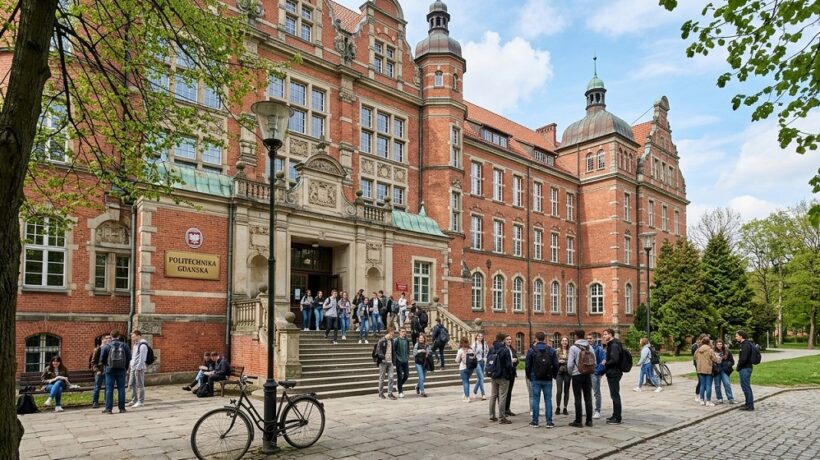
- Gdańsk University of Technology (PG): One of the best technical universities in Poland, with an impressive campus in the Wrzeszcz district. It is a place for future engineers, architects and scientists. The historic buildings are truly impressive.
- Gdańsk Medical University (GUMed): A prestigious medical university that trains doctors, pharmacists, medical laboratory scientists and public health specialists. Its main campus is located in the Aniołki district, close to the city centre.
- Academy of Fine Arts (ASP): Located in the heart of historic Gdańsk, it trains visual artists, designers and art conservators.
- Academy of Physical Education and Sport (AWFiS): Located in Oliwa, close to the University of Gdańsk campuses, for those passionate about sport and health.
Student life is not just about studying, however. Every university offers a wide range of academic societies, student organisations, artistic groups and sports clubs. This is an excellent opportunity to develop your passions, acquire new skills and meet people with similar interests. It is worth keeping an eye on the websites of the university and student unions to stay up to date with events, workshops and social gatherings.
University libraries (the University of Gdańsk Main Library, the Gdańsk University of Technology Library) are not only places for study, but often also cultural hubs featuring reading rooms, computer rooms and spaces for group work.
Accommodation in Gdańsk: Halls of residence or private lodgings?
Finding the right place to live is one of the first challenges. You have two main options:
- Halls of residence: Student accommodation provided by universities is usually the cheapest option. Standards vary – from newer buildings to those dating back to a bygone era – but they generally offer basic facilities and a great opportunity to socialise. Places in halls of residence are limited, and priority is often given to students from outside the region and those on lower incomes. It is worth applying as early as possible. The University of Gdańsk campus in Oliwa and the Gdańsk University of Technology campus in Wrzeszcz have their own halls of residence.
- Flat and room rentals: This is a popular option, offering greater independence and often a higher standard of living. Rental prices in Gdańsk are quite high, particularly in the city centre and well-connected districts such as Wrzeszcz, Oliwa, Przymorze and Zaspa. Many students choose to share a larger flat, which reduces costs. Popular classifieds websites (e.g. Otodom, OLX) and Facebook groups (e.g. “Mieszkania Gdańsk – wynajem”, “Stancje Trójmiasto”) are the main sources of listings. Be vigilant and check the contracts carefully! But more on that later.
Cost of living: Gdańsk isn’t one of the cheapest cities in Poland, but it’s possible to manage on a student budget here. As well as accommodation costs, you’ll need to factor in spending on food (cooking for yourself is always cheaper than eating out, but it’s worth knowing about cheap student canteens and milk bars – iconic spots serving affordable, home-style food!), transport, study materials and entertainment. Having a student ID opens the door to many discounts – not only on public transport, but also at cinemas, theatres, museums, and even some restaurants and shops.
Gdańsk outside university: What to do in your free time?
Studying isn’t just about learning! Gdańsk offers endless opportunities for leisure activities.
A stroll through history:
- Old Town: A must-see. A stroll along the Long Market from the Golden Gate to the Green Gate, admiring the Neptune Fountain, Artus Court and the Main Town Hall. It’s well worth climbing the tower of the Town Hall or St Mary’s Basilica (the largest brick church in the world!) to take in the panoramic view.
- The Long Embankment and the Crane: An atmospheric stroll along the Motława River, with views of the famous medieval port crane – the Crane. From here, you can take a boat to Westerplatte.
- Mariacka Street: Considered one of the most beautiful streets in Gdańsk, lined with amber shops and charming townhouses.
- Westerplatte: A symbolic site where the Second World War began. It’s well worth a visit to get a feel for the history.
- The European Solidarity Centre (ECS): A modern museum and cultural centre dedicated to the history of ‘Solidarity’ and the opposition movements. A fascinating and important lesson in recent history. An absolute must-see.
- The Museum of the Second World War: An impressive and moving exhibition dedicated to the global conflict, with a particular focus on the Polish experience.
Culture and Entertainment:
- Theatres: Teatr Wybrzeże, Gdańsk Shakespeare Theatre (amazing architecture and repertoire!), Teatr Miniatura (for younger audiences, but not exclusively).
- Cinemas: From multiplexes in shopping centres to arthouse cinemas such as Kameralne Cafe and KinoPort in Łaźnia.
- Music: Klub B90 (concerts by top artists), Stary Maneż (a variety of events), smaller clubs with live music (e.g. in the area around Elektryków Street in the former shipyard district – the Imperial Shipyard is now a trendy meeting place). The Baltic Philharmonic on Ołowianka Island.
- Museums: In addition to the ECS and the MIIWŚ, it is worth visiting the branches of the National Museum (Old Art, Ethnography at the Abbots’ Granary, Modern Art at the Abbots’ Palace), and the National Maritime Museum (the Crane, the Granaries on Ołowianka Island, and the museum ship ‘Sołdek’).
- Festivals: Gdańsk hosts a wide range of festivals – from St Dominic’s Fair in the summer, through music festivals (such as SeaYou), to film and theatre events.
Relaxation and Nature:
- Beaches: Gdańsk boasts wide, sandy beaches. The most popular are Stogi, Brzeźno (with its pier) and Jelitkowo (on the border with Sopot). They’re perfect for a stroll, a jog, a bike ride or simply lazing about on a sunny day.
- Oliwa Park: A beautiful, historic park featuring a Palm House, a Botanical Garden, water cascades and the famous organ in Oliwa Cathedral (it’s well worth attending an organ concert!). The perfect place to escape the hustle and bustle of the city.
- Tri-City Landscape Park: A vast forest complex surrounding the Tri-City from the west. A great place for hiking, cycling or running. The moraine hills offer beautiful vantage points (e.g. Pachołek in Oliwa).
- Sobieszewska Island: A wilder part of Gdańsk, featuring nature reserves (Ptasi Raj, Mewia Łacha), wide beaches and a more peaceful atmosphere. Perfect for a bike ride.
Student Hotspots:
- The areas around the universities – Wrzeszcz (Technical University) and Oliwa (University) – have their own favourite pubs, cafés and bars where students like to meet up. It’s well worth exploring these local gems.
- Elektryków Street / Imperial Shipyard: Trendy, post-industrial spaces featuring clubs, bars, food trucks and places to hang out. Particularly popular in the summer.
- Milk Bars: The classics mentioned earlier – cheap and tasty food (e.g. Bar Turystyczny, Bar Neptun). Perfect for a student’s budget.
- Dolne Miasto, Biskupia Górka: Revitalised neighbourhoods that are growing in popularity, with interesting cultural and artistic initiatives.
Sopot and Gdynia are just a stone’s throw away
Remember that when you’re studying in Gdańsk, you have easy access to the attractions of Sopot and Gdynia.
- Sopot: A seaside resort known for the longest wooden pier in Europe, the famous ‘Monciak’ promenade, sandy beaches and a vibrant nightlife. Perfect for a summer getaway or a night out.
- Gdynia: A port city and a symbol of modernism from the 1920s and 1930s. Places worth visiting include Kościuszko Square with its museum ships (ORP “Błyskawica” and “Dar Pomorza”), the Gdynia Aquarium, the Museum of Emigration and the modernist architecture of the city centre. Gdynia also hosts major festivals (Open’er, the Polish Feature Film Festival).
Advice for students (and parents):
- Your student ID is your treasure: always keep it with you. It entitles you to discounts on transport, at cultural venues and in many other places.
- Make the most of what the university has to offer: academic societies, sport and volunteering – they’re a great way to develop and socialise.
- Be open-minded: Get to know new people, not just those from your year or course. Gdańsk attracts students from all over Poland and the world (the Erasmus programme!).
- Stay safe: Gdańsk is generally a safe city, but as in any place, take basic precautions – keep an eye on your belongings in crowded places and avoid walking home alone at night through unfamiliar areas.
- Learn some basic Polish phrases (for international students): Although many young Poles speak English, knowing a few basic phrases will make your daily life easier and will be much appreciated.
- Find a balance: University is an important time, but don’t forget to relax, pursue your interests and explore the city. Gdańsk offers the perfect setting for this.
- For Parents: Trust your children, but be there to support them. Gdańsk is a city full of opportunities, but also challenges. Regular contact and open communication are essential. The city offers good medical care (student clinics, hospitals) and has excellent transport links with the rest of Poland.
You’ve reached the end of our introductory guide to Gdańsk, a city we proudly call the Pearl of the Baltic. We hope these opening pages have sparked your curiosity and given you a taste of just what an extraordinary place Gdańsk is – not only as a tourist destination, but above all as a vibrant, inspiring home for your student years. This city is a fascinating blend of past and future: from the cobbled streets of the Old Town, witnesses to a thousand years of history, Hanseatic power, wartime tragedies and the birth of ‘Solidarity’, to modern university campuses and dynamically developing business and cultural centres, which pulsate with the energy of youth and innovation.
In this article, we have merely sketched out a map – showing how to get around the Tri-City metropolis thanks to efficient public transport and the SKM, where to find a place to stay whilst balancing the hustle and bustle of student halls with the independence of private accommodation, and what life on a student budget is really like in this multifaceted city. We have touched upon the heart of academic Gdańsk, presenting the leading universities – the University of Gdańsk, Gdańsk University of Technology, the Medical University of Gdańsk and others – not only as places of learning at the highest level, but also as hubs of student activity, the development of passions and the forging of lifelong friendships.
We also highlighted the wealth of opportunities that lie beyond the lecture halls. We mentioned historical landmarks such as the Neptune Fountain and the Crane, as well as places of remembrance and reflection like Westerplatte, the European Solidarity Centre and the Museum of the Second World War. We invited you to take a stroll along the charming Mariacka Street, to relax in the city’s green lungs – Oliwa Park – or on the seaside beaches. We highlighted Gdańsk’s cultural map – from the Shakespeare Theatre to the alternative spaces of the Imperial Shipyard – and suggested where to find a tasty and affordable meal in the iconic milk bars. We haven’t forgotten about the synergy of the Tri-City either, encouraging you to discover the charms of the seaside resort of Sopot and modernist Gdynia, which are just a stone’s throw away.
But this is just the beginning! This post is merely a taste of the full experience that is student life in Gdańsk. The real adventure lies in the details, in the everyday choices, in discovering places not mentioned in standard guidebooks, and in forging your own path in this fascinating city.
Why is it worth reading the next instalments?
- We’ll delve into the practical aspects: In the following chapters, you’ll find detailed guides on finding accommodation (how to negotiate contracts, what to look out for in different neighbourhoods, and the pros and cons of halls of residence), managing a student budget (specific tips on where to save money, how to make the most of discounts, and where to look for part-time work), and navigating the complexities of university administration effectively.
- We’ll explore Gdańsk through a student’s eyes: we’ll show you the best spots for cheap food, reveal where the real nightlife happens (not just the most obvious clubs!), and give you tips on how to spend your free time actively without breaking the bank (free events, cycle routes, hidden gems) .
- We’ll help you make the most of your university experience: we’ll share tips on how to study effectively, advice on choosing research societies and student organisations that will genuinely help you develop your interests and enhance your CV, as well as guidance on how to build a network of contacts and take advantage of international exchange programmes such as Erasmus.
- We’ll look after your wellbeing: we’ll discuss issues relating to mental and physical health, advise you on where to seek medical help and psychological support, and show you how to strike a balance between your studies and your personal life in this new, demanding environment.
- (For Parents): Here you will find more information about safety, the healthcare system and the support available for your children, so that you can feel reassured knowing that they are studying in a friendly and well-organised city.
In short, if you want not just to survive but to truly thrive during your studies in Gdańsk, if you wish to get to know this city inside out, understand its rhythm, uncover its secrets and make the most of your years spent on the Baltic coast – this book is your essential guide.
Let us guide you further through the fascinating world of student life in Gdańsk. Your extraordinary journey is just gathering pace, and the knowledge and experiences gained here can become assets for life. Don’t miss the chance to find out more!