


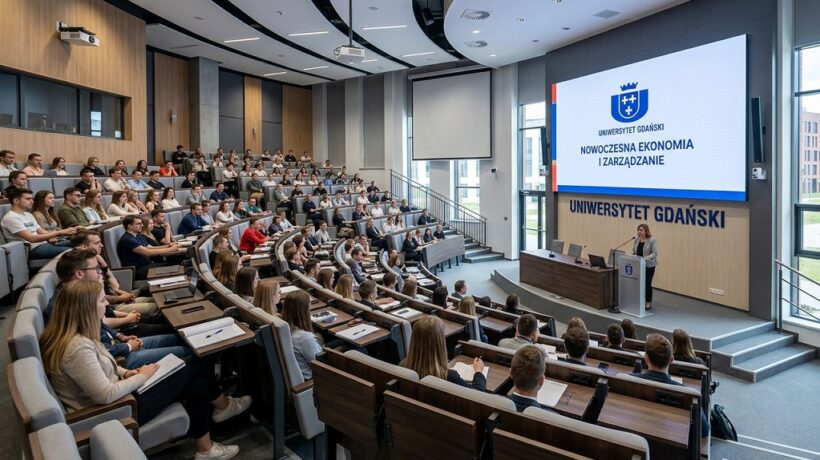
The most popular fields of study in Tricity for the 2027 academic year
Choosing an educational path is one of the most important decisions you will make in the coming years. If your eyes are directed towards northern Polish, congratulations – the Tri-City (Gdańsk, Gdynia, Sopot) is currently one of the strongest academic and economic centers in this part of Europe.
The year 2027 brings new challenges on the labor market, and local universities are responding to them immediately. Is it worth betting on classic IT or perhaps niche renewable energy? What does the real cost of living in Gdańsk look like and where to look for your first serious job? This article is a complete compendium of knowledge that will help you plan your future in the Tri-City agglomeration.
Why is studying in the Tri-City a strategic choice in 2027?
The Tri-City has ceased to be associated only with tourism. Today, it is a powerful technological, logistical and biotechnological hub. By choosing to study in Gdańsk, Gdynia or Sopot, you enter an ecosystem where the line between science and business is extremely thin.
The proximity of the largest Baltic ports, premium office buildings in Oliwa (such as Olivia Centre or Alchemia) and thriving science and technology parks means that as a student you have access to internships and internships in global corporations almost from the first semester.
September 20, 2026
Key universities of the Tri-City
- Gdańsk University of Technology (Gdańsk University of Technology): A research university, a leader in technical innovation, regularly topping national rankings.
- University of Gdańsk (UG): The largest university in the region, offering a wide range of majors from humanities to advanced biotechnology and oceanography.
- Medical University of Gdańsk (MUG): One of the best medical universities in Poland, known for its high level of education and modern clinical base.
- Gdynia Maritime University (UMG) and Naval Academy (AMW): Elite universities educating specialists in maritime economy and defense.
- Non-public and arts universities: M.in. Academy of Fine Arts (ASP), Academy of Music or dynamically developing business universities (e.g. WSB Merito, SWPS University).
Ranking 2027: The most popular fields of study in the Tri-City
By analysing market trends and the number of candidates for one place, we have selected the destinations that are most popular in 2027. This is where the competition is the greatest, but also the profits after graduation are the most promising.
1. Offshore wind energy
It’s an absolute hit of the decade. The Tri-City has become the center of Poland’s energy transition. Thanks to the construction of wind farms in the Baltic Sea, offshore specialists are in demand “on the stump”.
- Where to study: Gdańsk University of Technology, Gdynia Maritime University.
- Prospects: Work on the design, construction and maintenance of wind turbines, management of energy projects.
2. Computer Science and Artificial Intelligence (AI)
Despite the saturation of the market with juniors, specialists in Machine Learning, Data Science and Cybersecurity are still in demand. Tri-City IT companies (Intel, Amazon, Dynatrace) are constantly looking for talents.
- Where to study: Faculty of ETI at the Gdańsk University of Technology, Faculty of Mathematics, Physics and Computer Science of the University of Gdańsk.
- Key skills: Python, big data analytics, cloud architecture.
3. Psychology and Psychoforensics
The trend of taking care of mental health and the dynamic development of HR (People & Culture) departments in corporations makes psychology break records of popularity.
- Where to study: University of Gdańsk, SWPS University in Sopot.
- Specializations: Business Psychology, Neuropsychology, Clinical Psychology.
4. Logistics and International Transport
Gdańsk and Gdynia are windows to the world. The expansion of ports (Northern Port) generates thousands of jobs for logisticians, freight forwarders and supply chain managers.
- Where to study: University of Gdańsk (Faculty of Economics), Maritime University.
- Advantage: Possibility of obtaining international certificates during your studies.
5. Molecular Medicine and Biotechnology
MUG and Intercollegiate Faculties (UG-MUG) offer a level of teaching that attracts students from all over the world. Biotechnology in 2027 is no longer just science, it is a powerful sector of drug production and diagnostics.
- Where to study: Medical University of Gdańsk, Intercollegiate Faculty of Biotechnology of the University of Gdańsk and MUG.
The realities of student life: Gdańsk, Gdynia or Sopot?
Choosing a university is also choosing a place to live. Each of the cities that make up the agglomeration has a different character, which directly affects your everyday life.
Gdańsk – The heart of the metropolis
This is where the academic center beats. The largest number of dormitories and faculties is concentrated in the Wrzeszcz and Oliwa districts.
- Advantages: Proximity to major universities (Gdańsk Tech, University of Gdańsk, MUG), excellent communication, rich nightlife (Elektryków Street, 100cznia).
- Cons: High rental prices for apartments near campus.
Gdynia – Modernity and the sea
Gdynia offers a bit more peace and modernist atmosphere. It is an ideal choice for students of maritime universities.
- Advantages: Proximity to beaches (Orłowo), great cycling infrastructure, dynamic business center (Łużycka).
- Disadvantages: Slightly smaller offer of typical student clubs than in Gdańsk.
Sopot – Exclusive entertainment center
Sopot is the smallest, but most prestigious piece of the puzzle. Although it is associated with holidays, it houses m.in the Faculty of Economics of the University of Gdańsk, the Faculty of Management of the University of Gdańsk and SWPS.
- Advantages: Prestige, legendary nightlife (Monciak), proximity to the sea from every point of the city.
- Disadvantages: Highest rental prices and high costs of catering services.
Cost of living for a student in Tri-City (Forecast 2027)
Studying by the sea requires a solid budget. Although prices depend on your lifestyle, it is worth preparing for the following expenses:
- Room rental: In 2027, prices for a single room in a well-connected district (Wrzeszcz, Przymorze) range from PLN 1500 to 2000 (with fees).
- Dormitory: The cheapest option, the cost is 600-900 PLN, but the number of places is limited.
- Semester ticket: Public transport (ZTM Gdańsk, ZKM Gdynia) and the Fast Urban Railway (SKM), which is key for the region, are an expense of PLN 120-160 per month with a student discount.
- Food and entertainment: A budget of at least PLN 1200-1500 if you plan to cook at home and occasionally go out “on the town”.
Tip: Search for an apartment along the SKM line. It is the communication backbone of the Tri-City. Even if you live in a cheaper district (e.g. Gdańsk Orunia or Gdynia Chylonia), you will get to the university in 20-30 minutes.
How to effectively enter the Tri-City labor market?
Studies are the time to build your CV. In the Tri-City, you have a unique chance to cooperate with global players.
- Internships and internships: Don’t wait until you defend your master’s degree. Companies such as Intel, Bayer, State Street and LPP run year-round internship programs.
- Career Offices: University career offices (especially at Gdańsk University of Technology and University of Gdańsk) operate very efficiently, organizing job fairs where you can talk directly to recruiters.
- Networking: Participate in technology meetups and conferences (e.g. InfoShare). The Tri-City has a very strong community of professionals who are willing to share their knowledge.
Practical tips for future students
To survive and succeed while studying in the Tri-City, it is worth implementing the following strategy:
- Apply for a card and a city card right away: In the Tri-City, there is a metropolitan ticket (MZKZG), which allows you to use buses, trams, trolleybuses and SKM trains on a single ticket. This saves time and money.
- Visit campuses before recruitment: Check out what the access looks like. Gdański Wrzeszcz is well connected, but some new departments (e.g. in Oliwa) require an additional walk from the SKM station.
- Invest in foreign languages: Working in Gdynia or Gdańsk is often associated with serving foreign markets (especially Scandinavian ones). English is standard, but knowing Norwegian or German will raise your rate by 20-30% at the start.
- Monitor scholarship programs: The cities of Gdansk and Gdynia offer their own scholarships for the most talented students, regardless of those awarded by universities.
FAQ – Frequently Asked Questions
1. Which university in the Tri-City is the best for programmers?
The undisputed leader is the Gdańsk University of Technology, especially the Faculty of Electronics, Telecommunications and Computer Science (ETI). An alternative with a more theoretical flair is Computer Science at the University of Gdańsk.
2. Is it difficult to find an apartment for a student in Gdańsk?
The market is competitive, especially in August and September. It is best to look for offers as early as July. The key districts are Wrzeszcz, Oliwa, Przymorze and Zaspa due to the proximity of the university and the SKM line.
3. What are the job prospects after Maritime Studies in Gdynia?
Graduates of the Maritime University and the Naval Academy find employment in the offshore sector, port logistics, merchant fleet and maritime administration. Salaries in this industry are among the highest in the region
4. Is Sopot a good place to study?
Sopot is excellent for students of economics and psychology. It offers a unique atmosphere, although you have to take into account the higher costs of everyday life than in Gdańsk or Gdynia.
5. Which fields of study in the Tri-City guarantee the highest earnings?
In 2027, the highest rates are recorded by graduates of Computer Science (Cloud/AI), Offshore Wind Energy, Medicine and Supply Chain Management (Logistics).
6. How does communication between the cities of the Tri-City work?
The main means of transport is SKM (Fast Urban Railway), which runs from Gdańsk Śródmieście to Wejherowo. Trains run every few minutes during rush hour, making the Tri-City one of the best-connected areas in Poland.
Summary: Your future begins by the sea
Studying in the Tri-City in 2027 is not just about learning, it’s a lifestyle. By choosing Gdańsk, Gdynia or Sopot, you are betting on development in a region that is not afraid of innovation and offers some of the best career prospects in the country. Whether you see yourself in a biotechnology laboratory, on top of a skyscraper in Oliwa, or on board a research vessel – the Tri-City will give you the tools to achieve this.
Don’t delay with the decision! Check the recruitment dates at selected universities, book time to visit campuses and start your adventure on the Baltic Sea.