


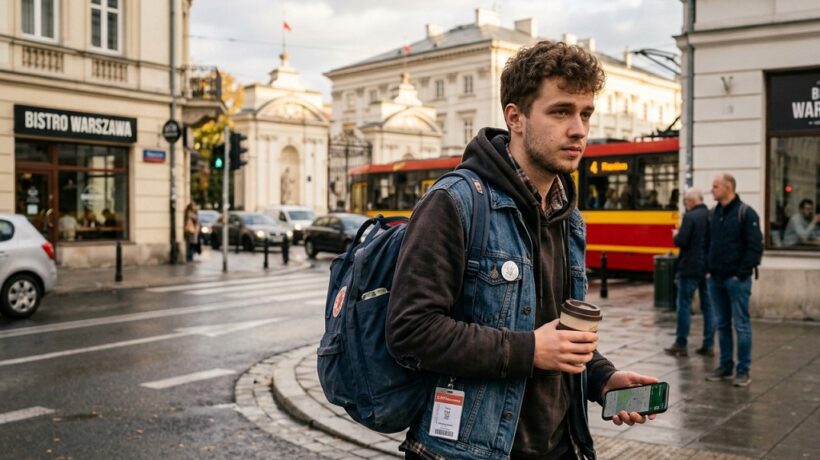
Studying in Warsaw 2026/2027: The Ultimate Survival Guide
Warsaw is not only the capital of Poland, but above all the largest academic centre in this part of Europe. Choosing this city as a place to study is a decision that opens the door to a career in international corporations, as well as access to a unique culture and a dynamic way of life that cannot be found in any other Polish city. However, studying in Warsaw in the 2026/2027 academic year requires excellent logistical and financial preparation.
This article is a comprehensive guide for those planning to spend the next few years in the capital. Here, you will find out what the cost of living is really like, where to look for accommodation without breaking the bank, and how to survive at the most demanding universities.
Warsaw’s academic landscape: Where should you study in 2026?
Warsaw is home to over 70 higher education institutions, which can make choosing the right one feel overwhelming. The key to success is understanding the specific characteristics of each institution and their standing in the job market.
The best public universities
- University of Warsaw (UW) – a leader in the rankings, offering the widest range of courses in the humanities, social sciences and natural sciences. The Main Campus on Krakowskie Przedmieście is at the heart of the city, but many faculties (such as Biology and Chemistry) are located in Ochota.
- Warsaw University of Technology (WUT) – the absolute top choice for future engineers and architects. The courses here are considered among the most challenging, but a WUT degree is a ‘golden ticket’ in the technology and construction sectors.
- Warsaw School of Economics (SGH) – a legend in the Polish business world. SGH is renowned for its flexible course selection system and extensive networking opportunities. If you’re thinking about a career in finance, consulting or starting your own business, this is the place for you.
- Warsaw Medical University (WUM) – state-of-the-art facilities and the highest standard of medical training. The Banach Campus is one of the most modern research centres in the country.
- The Warsaw University of Life Sciences (SGGW) – a vast, green campus in Ursynów that offers much more than just agriculture – from computer science to nutrition.
Prestigious private universities
The private sector in Warsaw is of a very high standard. Koźmiński University (the best business school in Central Europe) and SWPS University (a leader in psychology and social sciences) are globally recognised brands, often chosen for their modern approach to student education and close collaboration with the business world.
Renting a flat in Warsaw: Strategies and neighbourhoods
The property market in Warsaw in 2026 remains challenging. The cost of renting a room in Warsaw currently ranges from PLN 1,500 to PLN 2,500, depending on the standard and location. Where is the best place for a student to live?
September 20, 2026
A breakdown of the districts from a student’s perspective:
- Mokotów: The most sought-after district. Close to the Warsaw School of Economics and the Warsaw University of Technology, with excellent metro links. Prices are high here, but the amenities (shops, parks, pubs) are unrivalled.
- Ochota: Perfect for students at the Medical University of Warsaw and the science faculties of the University of Warsaw. A neighbourhood with a great vibe, full of student halls of residence and close to the city centre.
- Ursynów: The ‘bedroom community’ of the Warsaw University of Life Sciences. Thanks to the first metro line, it takes 20 minutes to get to the city centre. Prices here are slightly more affordable than in Mokotów.
- Praga-South (Saska Kępa and Grochów): Increasingly popular due to slightly lower rents and excellent tram links to the city centre and the University of Warsaw campus.
- Wola: A modern business district. Expensive, but close to major companies and the vibrant nightlife on Chłodna Street and at Browary Warszawskie.
Halls of residence – are they worth it?
Student halls of residence (such as the famous ‘Riviera’ at the Warsaw University of Technology or ‘Sarabanda’ at the Warsaw University of Life Sciences) remain the cheapest option. A place in a shared room in 2026 will cost around PLN 600–900. It’s a great option to start with and meet people, but you have to be prepared for limited privacy and fierce competition during the application process.
Cost of living for students in Warsaw 2026/2027 – A realistic budget
Warsaw can swallow up any amount of money, but with careful planning, you can live here comfortably. How much do you actually need per month?
| Expense Category | Cost (PLN) | Notes |
|---|---|---|
| 🏠 Rent | 1,600 – 2,400 | Room + service charges and utilities |
| 🍕 Food & Groceries | 900 – 1,300 | Assuming home cooking |
| 🚋 Transport | 55 | Metropolitan Ticket (student discount) |
| 🎭 Entertainment & Culture | 300 – 600 | Nights out, cinema, coffee, subscriptions |
| 📚 Education & Miscellaneous | 150 – 300 | Photocopying, books, household essentials |
| ——— | ——— | ——— |
| 💰 TOTAL | 3,005 – 4,655 | Total monthly budget |
Pro Tip: Use your student ID wherever possible. In Warsaw, student discounts (50%) apply not only to transport, but also to most theatres, museums and arthouse cinemas.
Public transport: How to get around the capital efficiently?
Warsaw has the best transport system in Poland. The key to getting around efficiently is the Warsaw City Card (WKM).
- Underground: The two lines (M1 and M2) form the backbone of the city. If your university or flat is near an Underground station, you’ll save hours every week.
- Trams and buses: They run very frequently. It’s worth downloading the Jakdojade app, which works almost flawlessly in Warsaw.
- Veturilo (City Bike): The best way to get around during the warmer months. The first 20 minutes are often free, which is enough time for a quick ride from the underground to the faculty.
- Tickets: As a student, you should only buy 30-day or 90-day tickets. These offer the best value for money. Remember to apply for a Warsaw Resident Card if you’re registering as a resident in the capital or paying taxes here – it entitles you to additional discounts.
The job market for students: Internships, work placements and networking
Warsaw is a job market that never sleeps. Students here have an advantage over their peers in other cities due to the high concentration of global brands.
- Internships at large corporations: The so-called ‘Big Four’ firms (EY, Deloitte, KPMG, PwC), tech giants (Google, Microsoft) and investment banks recruit students from as early as their second year of study.
- Jobs in the service and catering sectors: Flexible working hours in cafés on Nowy Świat or in food courts (e.g. Elektrownia Powiśle, Hala Koszyki) allow you to earn enough to cover your day-to-day expenses. Hourly rates for students (often on a contract of mandate with a gross=net rate for those under 26) are the highest in the country here.
- Networking: Warsaw is a city of conferences and meetups. Taking part in events at venues such as the Google for Startups Campus in Praga or the numerous business incubators allows you to build a network of contacts that will pay dividends sooner than a degree alone.
Leisure and student life: Where is the heart of the city?
University life isn’t just about studying. Warsaw offers a unique mix of entertainment.
- The Vistula Boulevards: During the summer, this is the absolute hub of social life. Thousands of students gather by the Vistula to relax after their exams.
- Nowy Świat Pavilions: A hidden courtyard full of small pubs with a typical student atmosphere.
- Culture on a shoestring: Last-minute tickets for the Grand Theatre or the National Philharmonic can be bought for a fraction of the price just before the performance. Museums (such as the National Museum or the Museum of Warsaw) often have one day a week when admission is free.
- Clubs: From the alternative Jasna 1, through techno at Smolna, to student favourites such as Klub Hybrydy and Stodoła.
Survival Guide – Top 5 Tips for New Students
To ensure a smooth transition into the Warsaw ecosystem, please follow these guidelines:
- Apply for your ELS (Electronic Student ID) as soon as you enrol. Without it, you’ll miss out on discounts and access to libraries.
- Start looking for a flat in July or August. In September, prices rise by 20% and the best deals disappear within minutes.
- Get yourself a good travel card and load it onto your phone. You’ll avoid the queues at the Passenger Service Points.
- Visit the University Library in Warsaw (BUW). Even if you’re not a student at the University of Warsaw, the rooftop garden and study areas are places you simply must visit.
- Don’t be put off by ‘non-upmarket’ neighbourhoods. Białołęka and Bemowo have excellent transport links, and the cost of living there is much lower than in the city centre.
FAQ – Frequently Asked Questions
1. Is 3,000 PLN a month enough to live on in Warsaw?
This is the absolute minimum budget for 2026, based on renting a cheap room in a more out-of-the-way neighbourhood or a place in a hall of residence, and cooking for yourself. For a comfortable life without having to make major sacrifices, it is worth having around PLN 4,000–4,500 at your disposal.
2. Which university in Warsaw is the best?
There is no single answer. In terms of overall prestige, the University of Warsaw comes out on top; for technical subjects, it’s the Warsaw University of Technology; and for business studies, SGH or Koźmiński. Your choice should depend on your career aspirations.
3. How can I find a cheap room in Warsaw?
The best deals can be found on Facebook groups (e.g. ‘Flats and rooms to rent in Warsaw’) and on the OLX and Otodom websites. Avoid estate agents who charge a commission.
4. Is it worth taking out a student loan in Warsaw?
In 2026, a student loan with a preferential interest rate remains one of the cheapest ways to finance your education. If you come from a less well-off family, this could be the key to making ends meet in the capital.
5. Which neighbourhoods have the best transport links to the city centre?
Undoubtedly, those situated along the metro line: Mokotów, Ursynów, Żoliborz, Bielany, Wola and Praga-Północ.
Studying in Warsaw during the 2026/2027 academic year is an undertaking that requires courage and good organisation. The capital offers endless opportunities for development, but it is also a ruthless city for those who are financially unprepared. The key to success is balance: choosing the right university, managing your budget sensibly and enjoying the charms of a city that never sleeps.
Remember that every success in this city starts with a good plan. Start by choosing your course and exploring the rental market now, and your student life in Warsaw will be the adventure of a lifetime, not a struggle for survival.
Modern forms of accommodation: Private halls of residence and co-living
In 2026, the rental market in Warsaw has evolved. Traditional rooms in prefabricated concrete blocks are facing competition from private student halls of residence (PDS) and coliving spaces.
- Private halls of residence (e.g. Student Depot, BaseCamp): This is an ‘all-inclusive’ option. For a single price (often higher, around PLN 2,800–3,500), you get a furnished room with an en-suite bathroom, high-speed internet, access to a gym, co-working spaces and even security. It’s the perfect solution for those who value safety and want to avoid hidden utility costs.
- Coliving: Coraz popularniejszy na bliskiej Woli i w Śródmieściu. Polega na wynajmowaniu mikrokawalerek z bardzo rozbudowaną częścią wspólną (kuchnie, kina domowe, tarasy). To idealne miejsce dla studentów-freelancerów, którzy szukają networkingu i wysokiego standardu.
Student health: the National Health Service, psychological support and medical care
Warsaw has an extensive healthcare infrastructure, but the key is knowing how to use it for free or at low cost.
- Student Health Clinics: Most large universities (such as the University of Warsaw or the Warsaw University of Technology) have dedicated clinics (e.g. CenterMed), where students are given priority treatment once they have registered with the National Health Fund.
- Psychological support: By 2026, looking after one’s mental health will be the norm. The University of Warsaw has a Psychological Support Centre, whilst other universities offer free sessions with therapists. It is worth looking into these options right at the start so that you know where to turn for support during the academic term.
- SIC/ITIC card: As well as discounts, this card often provides additional accident insurance, which is required for many work placements and internships.
‘Foodhacks’: Where can you eat well on a budget in Warsaw?
Food costs are the biggest expense after rent. How can you keep them down in the capital?
- Milk bars (A Classic of the Genre): Places such as Bar Mleczny Prasowy (on Marszałkowska Street) or Bar Gdański are legendary spots where you can still enjoy a full two-course meal for less than 25–30 zł.
- Zero Waste apps: In Warsaw, the Too Good To Go and Foodsi apps are breaking popularity records. They allow users to buy full-value food parcels from popular bakeries, restaurants and cafés (e.g. Green Caffè Nero, Starbucks) for a third of the price, which effectively reduces monthly food expenditure.
- Student canteens: Every faculty has its own ‘catering facilities’. The canteens at the Faculty of Physics at the University of Warsaw and in the SGH buildings usually top the student rankings – the food there is fresh, home-cooked and subsidised by the universities.
Digital Warsaw: Must-have apps for your phone
Life in Warsaw is simply harder without the right digital tools. Your student ‘essential kit’ includes:
- Jakdojade / Google Maps: For navigating a dense tram and bus network.
- MoBilet / SkyCash: For buying tickets in a flash if you’ve forgotten your travel card, and for paying for parking (if you decide to take your own car).
- Lisek / Wolt Market: For express grocery shopping (delivery in 15 minutes), which is a lifesaver when you’re studying all night.
- USOSweb / mObywatel: Your digital student ID (mLegitymacja) is just as valid as the physical plastic card.
Culture and events: Juwenalia and ‘Open Days’
Warsaw is a city of regular events that define the academic year.
- Warsaw Student Festival: This isn’t just a single concert, but a whole series of events lasting almost a month (May). Each university has its own ‘days’, but the biggest concerts usually take place at Bemowo Airport or at Pola Mokotowskie.
- Night of Museums: An event in May where you can explore the capital’s most hidden corners for free.
- Job Fairs (e.g. Absolvent Talent Days): These are held regularly at EXPO XXI or the Palace of Culture and Science. This is where you can secure the best-paid internships, whilst picking up some ‘student swag’ in the form of gadgets and free coffee.
Checklist: Your first 48 hours in Warsaw
If you’ve just arrived to start your studies, here’s what you need to do first:
- Activate your ELS (Electronic Student ID) at the Dean’s Office.
- Get your Warsaw City Card at your nearest ZTM Passenger Service Point.
- Log in to USOS and check the timetable (it often changes at the last minute!).
- Find your nearest Biedronka or Lidl in your neighbourhood – this is where you’ll do your everyday shopping.
- Check your access to the university Wi-Fi (Eduroam) – it works at most universities in Europe, including throughout Warsaw.
Questions from students in Warsaw
Do students in Warsaw have to be registered?
Formally, there is a requirement to register your address, but in practice many students do not comply with it. However, it is worth considering registering for a temporary residence, as this allows you to obtain a Warsaw Resident Card, which significantly reduces the cost of season tickets (for example, a 90-day ticket is several dozen zlotys cheaper).
Which are the safest neighbourhoods in Warsaw for students?
Warsaw is considered one of the safest capital cities in Europe. Statistically speaking, Wilanów, Ursynów and Żoliborz are the safest districts. Praga-Północ, though once notorious, has undergone a process of gentrification in recent years and has become a trendy, safe arts hub.
Is the Veturilo city bike scheme available all year round?
No, the Veturilo system usually operates from early March to late November. During the winter months, it’s best to rely on the underground and trams, which are reliable in Warsaw even when it snows.
Where’s the best place to study for exams outside the home?
As well as the aforementioned University Library, students love the National Library (with its modern reading rooms following renovation) and the Warsaw Public Library on Koszykowa Street. Many cafés on Plac Zbawiciela or around the University of Warsaw campus are ‘laptop-friendly’, although finding a seat there during exam periods is next to impossible.
Warsaw 2026/2027 is a city that rewards the resourceful and organised. By making use of digital tools, knowing where to find affordable food, and choosing your accommodation wisely, you can not only ‘get by’ but also make the most of Poland’s largest education market. Your time here is not just about attending lectures – it is, above all, about learning to manage yourself within a dynamic, European urban environment.