


Working with Students with Special Educational Needs and Disabilities (SEND)
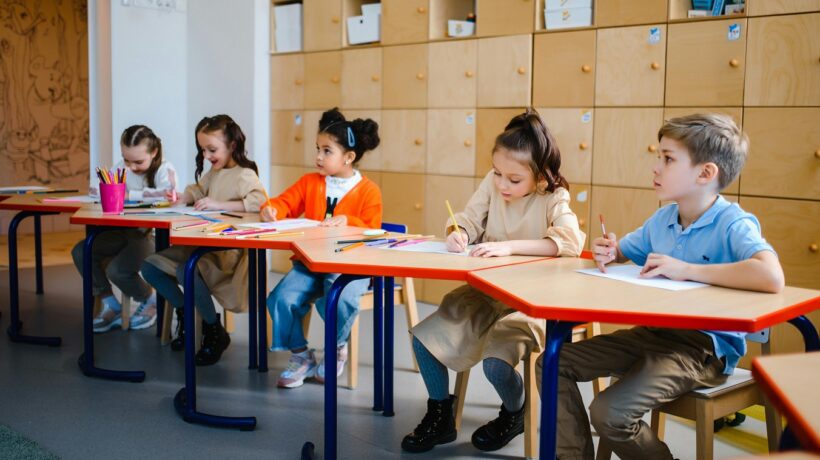
Inclusive education is one of the most beautiful and at the same time the most difficult tasks of a modern school. In one class of thirty people, students with dyslexia, dyscalculia, ADHD, autism spectrum, as well as exceptionally talented students meet. The ideal is to create an environment for each of them in which they can develop their unique potential. But the reality can be brutal: a teacher overwhelmed by his or her responsibilities often lacks the time or resources to provide truly individualized support to everyone who needs it.
What if we told you that the technological revolution that is happening before our eyes could be the greatest ally of inclusive education? What if there is a tool that can adapt materials to individual needs, patiently explain difficult issues and take the burden of tedious, repetitive tasks off the teacher? In this article, which is a practical development of our guide “Artificial Intelligence for Schools and Teachers”, we will show you how AI can become your personal special education teacher who works 24/7 supporting you and your students.
Understanding the barriers to working with a student with SEN
- Working with Students with Special Educational Needs and Disabilities (SEND)
- Understanding the barriers to working with a student with SEN
- AI for Teachers as a Personal Pedagogical Therapist: From Diagnosis to Support
- 1. The magic of differentiation in seconds: No more manual adjustment of materials
- 2. Tireless Translator and Tutor: AI as a Personal Assistant to the Student
- 3. Protective Shield for Executive Functions: AI as an Organization Coach
- 4. Developing Social Competences in a Safe Space
- From "Fire Fighting" to Grassroots Work
- Technology for inclusivity
- AI as an Assistant in Creating Documentation (IPET, WOPFU)
- Generating therapeutic goals and actions
- Communication with parents at a new level: AI in building a school-home bridge
- How AI Helps Develop the Unique Talents of SEN Students
- Safety and responsibility when working with AI and the student with SEN
September 20, 2026
Before we move on to solutions, we need to understand where the core of the problem lies. Effective work with a student with special educational needs requires not only empathy, but also a huge amount of work in three key areas:
1. Adaptation of materials: Creating simplified texts, worksheets with larger fonts, tasks with visual prompts, and at the same time challenges for gifted students – this is a gigantic, everyday job.
2. Individualize the learning process: A student with ADHD may need short, dynamic assignments, while a student on the autism spectrum may need clear, predictable structure and visual instructions.
3. Emotional and organizational support: Help with work planning, coping with frustration, developing social skills.
Meeting these needs for a few students in a large class is almost impossible without intelligent support. And this is where artificial intelligence in education opens doors that have been closed until now.
AI for Teachers as a Personal Pedagogical Therapist: From Diagnosis to Support
Think of AI for teachers not as a soulless algorithm, but as an extremely competent assistant that specializes in differentiation and personalization. It will not replace your intuition and relationship with the student, but it will give you the tools to make your work much more effective. In our AI for Education guide , we discuss specific platforms, and here we will show you strategies that will transform your approach.
1. The magic of differentiation in seconds: No more manual adjustment of materials
This is the most noticeable and revolutionary change. You can regain the time you have spent on manual processing of texts and tasks and spend it on direct contact with the student.
Example – Polish language lesson, text on Greek mythology, class 5
You have one source text, and in the class Janek with dyslexia, Kasia with ADHD and the exceptionally talented Piotr.
Your prompt for AI:
*”Here is a text about the myth of Daedalus and Icarus [wklejasz tekst]. Customize it for different students:
- For Janek (dyslexia): Simplify complex sentences. Break the text into shorter paragraphs with headings. Use a larger line spacing. Explain more difficult words (e.g., maze, shoe) in parentheses.
- For Kasia (ADHD): Based on this text, create 5 short, dynamic quiz tasks (closed-ended questions and true/false) that can be solved in 5 minutes. Add one creative task: ‘Draw a comic book about the flight of Icarus’.
- For Piotrek (gifted student): Create 3 analytical questions for this text that require critical thinking, e.g. ‘Compare the motivations of Daedalus and Icarus. Whose attitude is closer to you and why?’, ‘What universal message does this myth carry for modern man?’.” *
Result: In less than 3 minutes, you have three sets of perfectly matched materials. Each student is given a task that is achievable for them, but also a challenge. Janek’s frustration decreases, Kasia is engaged, and Piotrek is not bored. This is the essence of inclusive education, which can be implemented on a mass scale thanks to AI.
2. Tireless Translator and Tutor: AI as a Personal Assistant to the Student
Many learning difficulties arise from language barriers or problems with understanding complex concepts. Artificial intelligence in schools can become a personal, extremely patient tutor for each student.
Translator into “human” language: The student does not understand the definition from the textbook? He can ask the AI at home:
- “Explain to me what photosynthesis is, as if you were explaining it to my little brother.”
“What is the difference between a noun and a verb? Use examples from the Star Wars universe.”
AI can adjust language and use analogies from the student’s world of interests, which is extremely effective. - Homework Assistant: A student with dyscalculia has a problem with a text task? The AI will not give him a ready-made solution (this can be reserved in the command), but it will help him go through the process.
“I have such a task [wkleja zadanie]. Don’t give me the answers, but help me understand them. Ask me step-by-step questions that will guide me to the solution. Start by asking, ‘What is given in the assignment?'”
On-demand audiobook generator: A student with reading difficulties can paste any text (e.g. a fragment of a reading piece) and ask the AI to read it aloud. It can even adjust the tempo and type of voice-over. This simple tool opens up access to knowledge that was previously difficult.
3. Protective Shield for Executive Functions: AI as an Organization Coach
Problems with planning, organizing, starting tasks and controlling impulses are the domain of difficulties with executive functions (common, for example, in ADHD). AI is an ideal, impersonal, and non-judgmental tool to support these areas.
Breaking down large tasks: Instead of telling your student to “write an essay,” show them how they can ask AI for help:
I am supposed to write a dissertation on the topic ‘Is it worth reading books?’. Help me create an action plan. Divide this task into 5 smaller steps with a suggestion of how much time to spend on each of them.
AI will create a plan: 1. Brainstorming (15 min), 2. Creating a Plan (10 min), 3. Writing the introduction… etc. This removes the paralyzing fear of the “big task” from the student.
Visual plans and instructions: For students on the autism spectrum who need a clear structure, AI can generate a visual plan for the day or lesson in a matter of moments.
Create a simple, visual math lesson plan. Use icons: 1. Replay (brain icon), 2. New Theme (Light Bulb Icon), 3. Work in pairs (icon of two people), 4. Self-paced task (pencil icon).
4. Developing Social Competences in a Safe Space
Difficulties in social interactions are another challenge. AI can create a secure “sandbox” for training these skills.
Your prompt for AI:
Take on the role of a classmate who is sad because he got a poor grade. The student’s task is to have a conversation with you in which he will show empathy and try to comfort him. Respond in a natural way for a teenager.
The student can practice different conversation scenarios without stress and fear of rejection, building their confidence in interactions.
From “Fire Fighting” to Grassroots Work
Does all this mean that AI does the work for a special education teacher or a support teacher? No. This means that the AI does tedious and repetitive work, freeing up the human expert to focus on what makes it irreplaceable:
- On building a deep, trusting relationship with the student.
- On observing the nuances of behavior and responding to emotional needs.
- On strategic planning of the therapeutic and didactic process.
- On cooperation with parents and other specialists.
AI becomes a powerful tool in your hands, allowing you to work smarter, more efficiently, and with less workload.
Technology for inclusivity
Working with a student with special educational needs is a marathon, not a sprint. Artificial intelligence is like advanced sports equipment that makes this marathon easier to run. It gives us the possibility of almost infinite personalization and differentiation, supports students in overcoming barriers and relieves teachers of tasks that have so far consumed most of their energy. It’s a technology that has the potential to make the ideal of inclusive education more achievable than ever before.
AI as an Assistant in Creating Documentation (IPET, WOPFU)
Ask any support teacher or educator what consumes the most of their time outside of class. The answer will almost certainly be: “documentation”. The Multi-Page Assessment of the Student’s Level of Functioning (WOPFU) or the Individual Educational and Therapeutic Program (IPET) are extremely important documents, but their creation is often tedious, repetitive and extremely time-consuming work. Artificial intelligence in education will not replace the diagnosis and evaluation of specialists, but it can be a powerful tool for information synthesis and text editing, saving you dozens of hours.
Transforming Observations into Professional Descriptions
You often have a lot of observations, notes, and loose thoughts about the student’s functioning. The challenge is to dress it up in the formal, objective language required in the documentation.
Problem: You want to describe the student’s strengths in IPET, but you lack the time for precise wording. You have notes: “Hansel is a great drawer, has a lot of knowledge about dinosaurs, is nice to others, is willing to help, but quiet.”
Approach with AI: Ask AI for help in the editorial office.
Your prompt for AI:
You are a special educator. Help me transform my working notes on Janek’s student’s strengths into a professional, formal description for an IPET document. My notes: ‘Jaś draws great, has a lot of knowledge about dinosaurs, is nice to others, is willing to help, but quiet.’ Use language based on strengths and positive reinforcement.
Result:
“The strengths of Jan Kowalski’s student include developed artistic abilities, especially in the area of drawing, which testify to high eye-hand coordination. The student demonstrates above-average knowledge in the field of his/her interests (paleontology), which proves the ability to deepen knowledge independently. In the social sphere, Jan has a pro-social attitude, is empathetic and willingly offers help to his peers. His calm disposition is conducive to building positive, kindness-based relationships in the group.”
This is still your diagnosis, but described in a professional and complete way in just a few dozen seconds.
Generating therapeutic goals and actions
Once you have described the difficulties, you need to plan your goals and actions. AI can be your inexhaustible source of inspiration.
For a student diagnosed with dyscalculia in grade 4, suggest 5 specific therapeutic goals for IPET and for each goal 3 sample exercises and activities that I can take in math lessons and revalidation classes. Focus on games and methods that engage multiple senses.
This way, instead of creating a plan from scratch, you get a rich list of suggestions from which you can choose and customize the best ones for your student.
Communication with parents at a new level: AI in building a school-home bridge
Regular, constructive and empathetic communication with the parents of a student with SEN is absolutely crucial for his success. It is also extremely difficult and time-consuming. AI for teachers can become your communication assistant, helping you prepare clear, objective, and supportive information.
Problem: You want to inform your parents about the progress, but also about the difficulties that arise, and you are afraid that your email will be received as criticism.
Approach with AI: Use the “sandwich method” and ask the AI for help in formulating your message.
Your prompt for AI:
*”Help me write an email to the parents of a student who is having difficulty concentrating in class. I want to use the sandwich method (positive – work area – positive ending). Here is the information:
- Positive: Frank is very creative and has great ideas while brainstorming.
- Challenge: Often has trouble focusing on an independent, longer written assignment.
- Positive Conclusion: I would like to discuss strategies that we can implement together at school and at home to help him.
Write a draft email that sounds professional, empathetic, and collaborative.” *
Result: The AI will create a version that is balanced, non-judgmental, and inviting to dialogue, taking the burden off of you to find the right words in a stressful situation. You can also commission AI to translate messages for parents for whom Polish is not the first language, which is a powerful tool in building an inclusive school.
How AI Helps Develop the Unique Talents of SEN Students
Inclusive education too often focuses on closing deficits, forgetting that each student with SEN also has a unique set of talents, passions and “superpowers”. Artificial intelligence in schools is an extraordinary tool that allows these passions to be developed and integrated into the teaching process.
For example: A student on the autism spectrum who has a deep, almost encyclopedic knowledge of Japanese trains. The traditional school sees this as a “fixation” that gets in the way. A modern teacher supported by AI sees a huge potential in this.
How to use this “superpower”?
- Math lesson: Ask the AI: “Create 3 text-based tasks for Grade 6 about speed, road, and time. Set them in the context of Japanese Shinkansen trains. Use real route and speed data.” The student becomes an expert in the classroom, and difficult mathematical concepts become understandable to him through the prism of passion.
- Geography/art lesson: Ask the AI to generate images: “Create a stylized map of Japan with the main line of the Shinkansen train marked on it. Add illustrations of distinctive trains.” The student can be an “art director” who suggests what the trains should look like.
- Career Development: Ask the AI: “You are a career counselor. My student is passionate about trains. Propose 5 different career paths (from engineer to simulation game designer) that are related to this passion. For each path, list the key skills that are worth developing.”
Advantage: We are changing the narrative. Instead of fighting “obsessive interest”, we make it a powerful educational tool and build a sense of competence and pride in the student.
Safety and responsibility when working with AI and the student with SEN
An authoritative article cannot avoid difficult questions. Using AI when working with such a vulnerable group as students with SEN requires special caution.
- Data Anonymization and Privacy: Never enter any personal information, sensitive information from judgments, names, or detailed descriptions that could identify a student into public, free AI tools. Use general phrases: “student with dyslexia in grade 5”, not “Jan Kowalski from 5b”. Data security is an absolute priority.
- AI as support, not diagnosis: Remember that AI is not a diagnostician. It can be a powerful assistant in the implementation of PPP recommendations, but it will never replace the knowledge and evaluation of specialists: psychologists, pedagogues, therapists.
- Avoiding the “digital prosthesis”: The goal is to support self-reliance, not to become dependent on technology. AI is supposed to be a scaffolding that helps build competencies that can be dismantled over time, not a crutch without which the student cannot move. The teacher’s role in wisely balancing this support is crucial.
A conscious and ethical approach to technology builds parental trust and ensures that AI in education is a force for the good of the child. This aspect is widely discussed in our AI guide for education.