


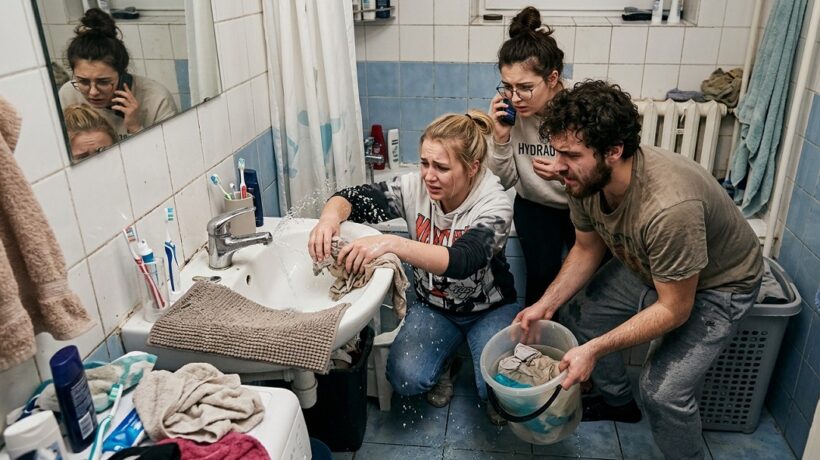
Renting in Gdańsk – who is responsible for repairs?
Dear Tri-City Residents, present and future, and you, supporting their parents! Remember that renting an apartment is not only about a new address and exciting independence. It is also entering into a specific legal and interpersonal relationship with the owner. In this relationship, as in any other, clear rules and good communication are key, especially when problems arise. And problems, in the form of smaller or larger failures, will certainly appear. Household appliances have their lifespan, installations require maintenance over time, and random events can surprise. The purpose of this chapter is not to scare you with potential disasters, but to equip you with the knowledge and strategy that will allow you to go through such situations with cold blood, calmness, and the feeling that you know what to do. We will break this topic down to the first factors so that you feel confident, regardless of whether the problem is a dripping tap or a furnace failure in the middle of winter. Let’s remove the “end of the world” label from failures and treat them as part of the process that can be ordered.
Obligations of the tenant and the landlord – division of responsibilities
Before we move on to action, we need to understand the fundamental division of responsibilities that results from Polish law, mainly from the Act on the Protection of Tenants’ Rights and the Civil Code. Think of this relationship as a team game, where everyone has their own position and assigned tasks. A proper understanding of these roles is absolutely crucial.
Tenant position (it’s you!): Defender of everyday use and minor defects. Your basic duty is to take care of the premises entrusted to you and to keep it in proper technical and sanitary condition. What does this mean in the context of repairs?
September 20, 2026
Ongoing maintenance and minor repairs
You are responsible for all those little things that result from normal, everyday life in the apartment. Think of it as taking care of your own things – you replace a burnt out light bulb, regularly clean the filters in the washing machine or the kitchen hood, lubricate the creaking hinges in the door, unclog the drain in the sink using products available in the store. The act lists, for example, repair and maintenance of floors, windows, doors, wall painting, repair of sanitary equipment (e.g. replacement of a cracked toilet seat, gasket under the cistern, shower head), electrical equipment and protection (replacement of socket, switch – if you have the appropriate skills or call an electrician at your own expense), coal and storage stoves (cleaning, minor repairs), and even drain pipes up to the collection risers. The key here is the word “minor” and the relationship with current use. These are things that wear out or require intervention during a normal apartment.
- Keeping clean and tidy: While not a fix in the strict sense, neglecting hygiene can lead to technical problems (e.g. clogged drains, mold growth) for which you may be liable.
- Repair of faulty damage: Here the matter is clear. If you destroy or damage something through your own fault – through negligence, improper use, negligence (e.g. scratching the panels when moving furniture without protection, breaking a mirror, damaging a door as a result of an argument, flooding the bathroom by overflowing the bathtub) or the actions of your guests – you are fully responsible for the repair and its costs. The deposit paid at the beginning of the lease is precisely to protect the owner from such situations.
Landlord Position (Owner)
The main task of the owner is to ensure that the premises are suitable for habitation and agreed use throughout the duration of the lease agreement. It is responsible for the “spine” and “circulatory system” of the apartment. Its responsibilities include:
- Maintaining the efficiency of key installations: The owner must make sure that the utilities supply systems (cold and hot water – to the shut-off valves at the premises, gas, electricity, central heating with radiators, sewage – collection risers) work properly. Failures of these systems in the common areas of the building or in the installations inside the premises themselves (e.g. a broken pipe in the wall, failure of the main gas valve, a non-functioning central heating riser) are his responsibility.
- Structural repairs and replacements: Any problems related to the building itself – a leaking roof, cracking load-bearing walls, the need to replace old, leaky windows or external doors, façade repairs – are the responsibility of the owner.
- Repairs and replacements of elements permanently related to the premises: plaster, floors (if they require e.g. scraping due to age, and not damage caused by the tenant), heating stoves (central heating, gas stoves, etc.).
- Repair or replacement of equipment supplied with the apartment: This is a very important point for students who often rent furnished and equipped apartments. If the owner has provided you with a washing machine, refrigerator, stove, dishwasher and these appliances do not break down due to your fault, but due to normal wear and tear, age of the appliance or a manufacturing defect, then the obligation to repair or replace them (if the repair is impossible or economically unjustified) lies with the owner. He must provide you with equipment that allows you to use the premises normally in accordance with the agreement. Important disclaimer: if the equipment was in working order at the time of handover (which should be confirmed by the handover protocol), and it broke down as a result of your obvious improper use (e.g. overloading the washing machine, putting metal objects in the microwave, using the dishwasher without salt and rinse aid leading to its damage) – the financial responsibility falls on you.
The grey market – When does the border blur?
Life is not always black and white. Sometimes borderline situations arise. The aforementioned leaking tap: replacing the gasket (a few zlotys) is the tenant’s obligation. But what if it leaks because the entire mechanism is corroded and can only be replaced? Or a clogged drain – the use of the “Mole” is on your side, but if the problem is deeper, vertical, requires specialized equipment – it’s a matter for the owner. How to navigate in this fog?
- Principle of importance for use: Ask yourself: does this defect prevent or significantly hinder the normal use of the apartment or its basic functions (water, electricity, heating, security)? If so, it is probably on the owner’s side.
- Cost and scope of repair: Does the repair require specialist knowledge, tools and is it expensive? This also suggests the owner’s responsibility. Minor repairs are those that can be done relatively easily and at a low cost.
- Check the contract: While the law takes precedence, your lease may include more specific arrangements for the division of responsibilities (e.g., the landlord takes care of the maintenance of the gas furnace). It’s always worth taking a look there.
- When in doubt – Communicate! It is better to ask the owner about his position on responsibility for a given repair than to act rashly or delay unnecessarily.
What to do in case of failures?
As soon as you notice that something is wrong, run the following protocol. Speed and proper communication are at a premium here (and peace of mind).
Assess the threat and secure the site (If necessary)
- Is the situation dangerous? (e.g. sparking installation, strong smell of gas, pouring water) -> Take immediate protective measures (turn off the fuses, turn off the main water/gas valve – make sure where they are beforehand!), evacuate, call the appropriate services (energy emergency 991, gas 992, fire brigade 998/112). Safety is an absolute priority!
- If the failure is not dangerous, but may cause further damage (e.g. water leakage), try to limit it (put a bowl on the ground, wipe the water).
Reporting to the owner immediately – your obligation
- You have a legal obligation to immediately inform the owner of any failure or defect requiring their intervention. Failure to do so may even result in your liability for the damage increased!
- Why so fast? So that the owner can take corrective action as soon as possible, minimizing discomfort and potential costs. Ignoring the problem never solves it, and often makes the situation worse.
Choose the form of reporting – Effectively and with proof
- Telephone (First contact, especially for urgent matters): Allows for quick information and initial arrangements. Calmly inform what happened, where and when. Ask about planned activities.
- Written Confirmation (ESSENTIAL!): Even if you have spoken on the phone, ALWAYS send a written confirmation. This is your key proof that you have reported the problem and fulfilled your obligation. Preferred forms:
Email: Readable, easy to archive, allows you to attach photos/videos. In the subject line, type concisely: “Failure report – [Adres] – [Krótki opis, np. Problem z lodówką]”.
SMS/Messenger: Quick, but make sure you have proof of delivery/reading and save a copy of the message. Less formal.
Registered letter with return acknowledgment of receipt: The most formal option, irrefutable proof. Use in case of serious breakdowns, repeated problems or when contact with the owner is difficult.
What should be included in the application?
- Clearly indicate who and what the report is about (your details, address).
- Describe the problem as accurately as possible: What exactly is happening? (e.g. “The refrigerator [marka/model] has not cooled in the refrigerator part since yesterday afternoon, the freezer is working properly, the generator is working non-stop”). Where exactly is the fault located? Since when does the problem occur?
- Include visual evidence: Take clear photos or a short video illustrating the problem. It’s priceless for the owner (and for you as proof)!
- Provide your contact details and suggest your availability to allow for a visual inspection or repair (e.g. “Please contact me to arrange a visit with a professional. I am available in the apartment on weekdays after 5:00 p.m.).
- Tone – calm and professional: Even in a stressful situation, stay calm and cultured. Write matter-of-factly, without emotions, resentments or accusations. Your goal is to solve the problem, and working with the owner makes it much easier. Show that you are a responsible tenant.