


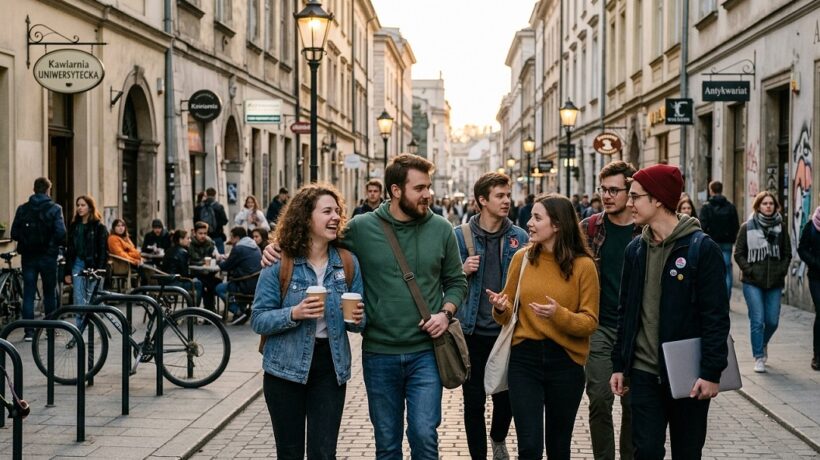
Is Gdańsk safe for students? Real facts, dangerous areas, and safety tips
Choosing a place to study is one of the most important decisions in a young person’s life. Gdańsk, together with Gdynia and Sopot, has been at the top of the rankings of quality of life in Poland for years. However, for someone who is just planning to move to the Baltic Sea, the key question is: is Gdańsk safe for a student?
Conflicting opinions are often heard – on the one hand, the vision of a modern, European metropolis, on the other, old legends about “dark” neighborhoods that have survived in the collective consciousness since the 1990s. The truth, as is usually the case, lies in the middle and is much more nuanced. In this article, we will conduct an in-depth analysis of safety in Gdańsk, look at the specifics of individual districts and suggest how to move around the Tri-City so that studies are a time of development, not stress.
Safety in Gdańsk compared to Polish – what do the data say?
Before we move on to subjective feelings, it is worth looking at the hard data. Gdańsk is regularly ranked among the top cities with the highest level of security among residents. According to numerous reports (m.in prepared by real estate services or the Central Statistical Office), the Tri-City is perceived as much safer than the Silesian agglomeration or some areas of Warsaw.
However, it is crucial for the student that safety is not a permanent state for the entire area. The city is polycentric, and student life in Gdansk is centered around the university’s main communication axes and campuses, such as the University of Gdansk (UG), Gdansk University of Technology (Gdańsk), and the Medical University of Gdansk (MUG). It is in these areas that the city monitoring system and lighting are best developed.
September 20, 2026
Safety map: Districts of Gdansk with different reputations
The choice of a place of residence is a key issue for a student. Not only your comfort depends on it, but also your daily sense of peace. Let’s take a look at Gdańsk’s districts through the prism of security.
Wrzeszcz and Oliwa – The academic heart of the city
- Wrzeszcz is a district where you will spend a lot of time, regardless of whether you live here. It is here that the Gdańsk University of Technology and numerous dormitories are located.
- Safety: High, due to the high volume of pedestrian traffic and the presence of security services.
- What to watch out for: In the evenings, the area around lower Wrzeszcz (the area of Wajdeloty Street) can be noisy, which can generate minor incidents, but the revitalization of this part of the city has drastically improved the statistics.
Przymorze and Żabianka – “Block of flats” with good energy
This is where students most often rent rooms. The proximity of the University of Gdańsk and the sea makes them vibrant districts.
- Safety: Very good. The housing estates are well-lit, and the proximity to Reagan Park is conducive to recreation.
- Fact: Thanks to the large number of students and families with children, these neighborhoods are socially monitored – there is always someone on the street.
Orunia, Letnica, Nowy Port – Are these myths still alive?
These districts have had a bad reputation for years. What is it like today?
- New Port and Letnica: They are undergoing a powerful transformation. The construction of the stadium and new housing estates changed the character of Letnica. Nowy Port still has its own specific atmosphere, but it is no longer a “forbidden district“.
- Orunia: It is divided into Orunia Górna (safe, modern housing estates) and Dolna. Orunia Dolna is still perceived as less safe after dark, although the crime rate there has dropped drastically. As a student, you will probably rarely be there, unless you are tempted by extremely low rental prices.
Downtown and Main Town
It is a tourist showcase. Paradoxically, the biggest threat here is not violence, but pickpocketing during the peak tourist season.
Nightlife in the Tri-City: Gdańsk, Sopot or Gdynia?
Studies are not only about learning, they are also about parties. The Tri-City offers a unique entertainment ecosystem, but each of its parts has different specifics in terms of safety.
Elektryków Street and the shipyard area (Gdańsk)
It is currently the most fashionable place in Gdańsk. Industrial atmosphere, numerous clubs and food trucks.
- Safety: The area is private, well protected and monitored. This is one of the safest places on the night map of the city, although crowds of people require basic vigilance.
Sopot and the famous “Monciak”
Sopot is the party center of the Tri-City. Monte Cassino’s Heroes’ Street never sleeps on weekends.
- Challenges: This is where it’s easiest to accidentally get into tensions between groups of partygoers. A high concentration of alcohol makes police interventions a daily occurrence here.
- Tip: Try to avoid the side, dark alleys of Sopot in the morning and always come back with a group of friends.
Public transport – your safe connection
One of the strongest points of the Tri-City is transport. For a student, the Fast Urban Railway (SKM) is crucial.
- SKM during the day: The safest and fastest way to get around between Gdansk, Sopot and Gdynia.
- SKM at night: Trains run less frequently, and it can be different on platforms and in carriages. It is worth choosing wagons close to the driver (first wagon).
- Trams and Buses: Gdansk has a modern fleet with CCTV. Night bus lines (marked with the letter N) are well organized, and drivers usually react to any manifestations of aggression.
Financial security and rental fraud
For a student, security is not only physical protection, but also protection of the wallet. The rental market in Gdańsk is very dynamic, which unfortunately attracts fraudsters.
- Watch out for “super deals”: If you see a modern studio apartment in the center of Gdańsk for 1200 PLN, it is almost certainly a scam.
- Verify the advertiser: Never pay a deposit before viewing the apartment and signing the contract. Scammers often use the “remote owner” method, who allegedly lives abroad.
- Cost of living: Gdansk is not one of the cheapest cities. When planning your budget, take into account realistic prices to avoid financial problems in the middle of the semester, which is a form of lack of stability and living security.
University infrastructure and student support
Gdańsk universities place great emphasis on safety on campuses.
- Monitoring and Security: The campuses of the University of Gdańsk in Oliwa or Gdańsk University of Technology in Wrzeszcz are monitored 24/7.
- Psychological support: Safety is also mental health. Most universities in Gdańsk offer free psychological support for students, which is invaluable in the process of adaptation in a new city.
- City applications: It is worth installing the “Gdańsk Contact Centre” application, where you can report, for example, non-functioning street lighting or other threats in the infrastructure.
How to increase your safety in Gdansk?
Here is a list of proven strategies that will allow you to enjoy the charms of the Tri-City without unnecessary risk:
- Use illuminated routes: Gdansk is a city with a large number of green areas and parks. Although it seems tempting to take a shortcut through the park after 11:00 p.m., choose the main arteries (e.g. Grunwaldzka Avenue).
- Write down emergency numbers: In addition to 112, have the number of the Municipal Guard in Gdańsk (986) and the number of the ZTM dispatcher on your phone.
- Beware of “promotions” in clubs: Especially in the vicinity of the Main Town and Sopot, avoid touts inviting you to “strip-clubs”. This is the most common trap for tourists and students, ending with the cleaning of the bank account.
- Watch your drink: The standard rule of party safety applies everywhere, including fashionable Gdańsk venues.
- Invest in a good bicycle fastener: Gdansk is a bicycle city, but two-wheeler theft is unfortunately one of the most common petty crimes here. A solid U-lock fastener is essential.
Frequently asked questions about safety in Gdansk
1. Is it safe to return by night SKM?
Yes, they are generally safe, but they require common sense. It is best to get on the first carriage, close to the train service. Avoid empty wagons at the ends of the train.
2. Which district of Gdańsk is considered the safest for a student?
Oliwa, Przymorze and Zaspa are considered to be the safest and most student-friendly. These are well-connected districts, with a large number of students and modern infrastructure.
3. Are there places in Gdansk that should be avoided after dark?
Despite the ongoing revitalization, students are less likely to venture into the depths of Orunia Dolna or some parts of Nowy Port after dark. These are not “forbidden” places, but the level of comfort of walking there at night may be lower than in Wrzeszcz or Oliwa.
4. How to avoid fraud when renting a room in the Tri-City?
Never pay before viewing the premises and signing the contract. Use verified Facebook groups (e.g. “Students Gdańsk – apartments/rooms“) and always ask for a document of ownership of the apartment or a power of attorney.
5. Is Sopot safer than Gdańsk?
Sopot has a different specificity. It is very safe during the day, but at night, due to hundreds of partygoers, the risk of minor incidents, quarrels or pickpocketing increases. In Gdańsk, nightlife is more scattered.
6. Where to report a hazard if it is not an emergency?
You can use the National Map of Safety Threats (available online), where you can mark places where, for example, alcohol is regularly consumed in prohibited places or where there is a lack of lighting.
Is it worth studying in Gdańsk?
Answering the question posed in the title: Yes, Gdańsk is a safe city for students. It is a modern agglomeration that effectively deals with the demons of the past. Like any large city, it requires a certain amount of caution and “urban smarts” from you, but it does not offer greater risks than other European metropolises.
Gdansk offers something that no other academic city in Poland can give you – a unique combination of metropolitan life with proximity to nature and the sea. By choosing a safe district, such as Przymorze or Oliwa, and following the basic precautions, you can fully enjoy your student status in one of the most beautiful cities on the Baltic Sea.
Start your adventure in the Tri-City wisely! If you’re looking for accommodation, start with proven student portals and groups, and when you arrive, take the first evening to stroll around your new neighborhood to get to know the rhythm of it. Gdansk is waiting for you!
This is just the beginning of your journey through the Tri-City. In order for you to feel at home here and gain full control over your safety, we need to go deeper into the specifics of the region, which you will not find in tourist guides. Safety is not only the absence of physical threat, it is also the stability of your finances, job security and the comfort of moving around in a specific, Tri-City urban layout.
Gdynia and Sopot – what does safety look like with your neighbours?
Living in Gdańsk is almost always associated with frequent visits to Gdynia and Sopot. Although they form one urban organism, each of these municipalities has its own specifics that you need to know about.
Gdynia: The happiest and safest city in Poland?
Gdynia has been winning in quality of life rankings for years. For a student (especially the Maritime University or a branch of the University of Gdańsk) it is a very predictable city.
- Safe districts: Downtown Gdynia, Orłowo and Redłowo are almost exemplary areas in terms of peace.
- What to watch out for: The surroundings of Chylonia and Cisowa are sometimes compared to Gdańsk’s Orunia. Although serious incidents rarely occur there, after dark it is worth maintaining standard vigilance in the vicinity of the local SKM stations.
Sopot: “Monciak’s” trap and safety in the resort
Sopot is a dual place for a student. On the one hand – prestige and proximity to the sea, on the other – a huge turnover of tourists.
- Safety during the day: Sopot is monitored in almost every corner. The probability that something bad will happen to you in the light of day is close to zero.
- Night hazards: Sopot has the highest police intervention rate per square meter in the entire Tri-City, which is due to the accumulation of clubs. The biggest real threat is the theft of phones and wallets in crowded premises and fights caused by people under the influence of alcohol.
Safety on campuses – UG, PG, MUG under the magnifying glass
Universities are your “safe bases”. However, each of them has a different approach to protecting the area.
Gdańsk University of Technology (Wrzeszcz)
The Gdańsk Tech campus is a compact, almost closed ecosystem.
- Monitoring: The camera system at Gdańsk Tech is one of the most modern in the region.
- Tip: The passage between the campus and the dormitories at Wyspiańskiego Street is well lit, but in winter, when dusk falls at 3:30 p.m., it is worth sticking to the main pedestrian routes, avoiding shortcuts through wasteland by the railway tracks.
University of Gdańsk (Oliwa)
The campus in Oliwa is open and extensive.
- Risk: A large space promotes anonymity. There were thefts of bicycles left in poorly visible places.
- Solution: Use bicycle parking under the roof or within the range of the main cameras of the entrances to faculties (e.g. the Faculty of Social Sciences or Law).
Medical University of Gdańsk (Angels)
The location of MUG is specific – close to the center, but surrounded by old tenement houses and hospital grounds.
- Risk factor: The area around Dębowa Street can be empty in the evenings. If you finish classes late, try to go out with a group of friends towards the tram stop on Zwycięstwa Avenue.
Digital security of a student – how not to get “hacked” in the Tri-City?
As a student, you will use many public networks. Digital security in Gdańsk is a topic that is often overlooked, but it is crucial.
- Public Wi-Fi (e.g. in SKM or Galleries): Never log in to electronic banking using open city networks in Gdansk without an active VPN.
- Marketplace and FB groups: The Gdańsk market of “stimulants” (books, equipment, bicycles) is huge. If you are buying something from another person, always choose a public place to hand over the goods (e.g. near Forum Gdańsk or in the Baltic Gallery). Avoid sending money “upfront” to people who don’t have reliable reviews on student groups.
- Scams “on Blik”: This is a plague in large academic centers. If a “friend” from university writes to you on Messenger asking for a quick Blik code because he “got stuck in SKM without a ticket”, always call this person before providing help.
Casual work and financial security
Most students work in Gdańsk. The market offers a lot, but not every offer is safe.
- Gastronomy and tourism: Gdansk lives on tourists. Beware of “illegal” job offers in the summer season. Without a signed contract (even a mandate), you lose the right to health insurance (if you don’t have it from your university/parents) and you don’t have a guarantee of payment.
- Food couriers (Wolt, Bolt, UberEats): This is a popular job. Safety here is primarily a matter of moving on the road. Gdańsk has a specific terrain (a lot of hills in the so-called Upper Terrace). Remember about helmets and lighting – Gdańsk’s bicycle roads are great, but drivers can be nervous during rush hours.
- Night work (Inventory, Security): If you work at night, make sure that your employer provides a safe return or transport (the so-called “taxi service” for employees who finish their shift after 11:00 p.m.).
Seasonality in Gdansk and your safety
Gdansk changes with the seasons. It’s a phenomenon that you need to understand to feel confident here. Autumn and Winter: Darkness and Wind.
The Tri-City is famous for its strong winds from the sea and humidity.
- Danger: Quickly falling dusk makes residential roads less pleasant.
- Tip: Invest in reflectors. Although they seem unnecessary in the city, they can save your health at unlit pedestrian crossings (e.g. near the smaller streets of Wrzeszcz or Oliwy).
Spring and Summer: Tourist Invasion
Gdańsk in summer is a different city.
- Congestion: Public transport becomes overcrowded. On trams going towards the beach (Stogi, Jelitkowo, Brzeźno), the risk of pickpocketing increases.
- Beach safety: Evening bonfires and beach parties are great, but remember that swimming in the sea after alcohol is the most common cause of tragedy on the Baltic Sea. Lifeguards in Gdańsk (especially at guarded swimming pools) are professional, but their duty usually ends at 6:00 p.m.
Health and emergency care – where to look for help?
Safety is also about knowing where to go in the event of a sudden illness or accident.
- Emergency Department (Hospital Emergency Department): The most important points for a student are UCK (University Clinical Center) at Smoluchowskiego Street and St. Adalbert’s Hospital in Zaspa. This is where you will get help in emergencies.
- Night and holiday healthcare: If it’s not a life-threatening condition, but you need a doctor at night (e.g. a strong fever), look for “NiŚOZ” points. In Gdańsk, they are arranged in such a way that every district has access to them.
- Pharmacies: There are always several pharmacies in Gdańsk (m.in. in Wrzeszcz and Śródmieście). It’s a good idea to have a list of them saved on your phone – a toothache at 3 a.m. in a dormitory is also a matter of your safety and comfort.
MEVO and shared mobility – safe driving
The MEVO metropolitan bike system is a hit in the Tri-City. How to use it safely?
- Check the condition of the bike: Check the brakes before you set off. Gdańsk has a lot of steep descents (e.g. from Słowackiego Street or near Morena). Working brakes are essential.
- Electric scooters: This is the most common cause of injury among students. Avoid riding with two people and never ride under the influence of alcohol – police patrols in Sopot and Gdańsk very often check the sobriety of scooter users.
Safe Student Checklist in Gdansk (To Remember!)
To help you focus fully on learning and having fun, adopt these 5 golden rules:
- Do you know your night line number? Check it out in advance in the app (e.g. Jakdojade). Don’t wait at the bus stop for 40 minutes, freezing and feeling uncomfortable.
- Do you have a power bank? In the Tri-City, the distances are considerable. A dead phone at night, when you need to call an Uber or check the SKM schedule, is the most common reason for stressful situations.
- Choose illuminated bike paths. Gdansk has one of the best bicycle road networks in Poland – use them instead of risking riding on the sidewalk or the edge of the road.
- Integrate with the group for a year. Nothing improves security like a network of friends. Exchanging information about dishonest landlords or “strange” situations on campus is your protective shield.
- Trust your instincts. If a given street or place seems suspicious to you – let it go. Gdansk is too big and offers too many great places to take risks where you don’t feel comfortable.
Additional questions about the realities of life in Gdansk
Is parking a car in Gdańsk safe?
Gdańsk has many Paid Parking Zones. If you are renting an apartment, try to look for one with parking behind a barrier. Car thefts are rare, but minor parking damage or catalytic converter thefts occur in unguarded parking lots of large housing estates (e.g. in Zaspa or Przymorze).
How do “Social Safety” work in dormitories?
Dormitories in Gdansk are guarded by porters and require entry cards. These are some of the safest places to live – you always have people around you, and it is difficult for an outsider to enter.
What should I do if I lose my documents on public transport?
Contact the ZTM Gdańsk Lost & Found Office immediately. The people of Gdańsk are very honest – a huge number of wallets and documents are returned to their owners thanks to honest finders and the efficient work of municipal services.
Is it safe to swim in the sea at night?
We strongly advise against it. Reverse currents at Gdańsk piers (e.g. in Brzeźno) can be treacherous even for good swimmers. If you want to enjoy the sea at night, stay on the shore.
Gdansk is your new, safe home
Studying in Gdańsk is a great privilege and a chance to develop in one of the most dynamic agglomerations in Central Europe. The city is prepared for your presence – from modern campuses, through secure communication, to support systems in crisis situations.
Safety in Gdańsk is the result of your awareness and efficiently functioning city infrastructure. Be attentive, use the advice contained in this article and do not be afraid to discover the charms of the Tri-City. The best years of your life are ahead of you – in a city that combines freedom with responsibility.
Feel confident in Gdańsk – here history meets modernity, and you are part of it!